Getting AI to spot concrete cracks without heavy labelling
Self-supervised vision models could be used where labelled data are scarce but reliability is essential.
Researchers from the University of Technology Sydney, the American University of Beirut, the Chinese Academy of Sciences, and Western Sydney University have reported that a self-supervised DinoV2-based framework can detect concrete cracks with strong accuracy and cross-dataset generalisation, outperforming several widely used supervised deep-learning models.
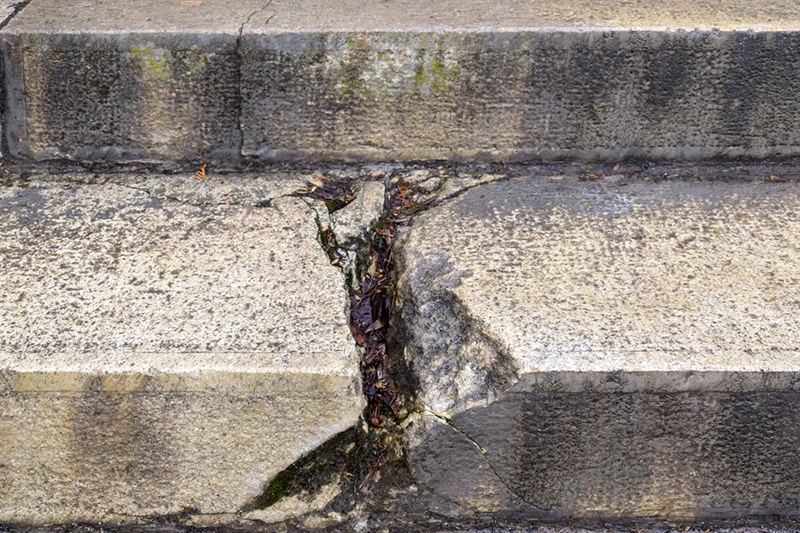
Crack detection is vital to structural health monitoring as missed damage can threaten the safety and lifespan of bridges, buildings, and other infrastructure. Traditional manual inspection is slow, labour-intensive, and open to human error, while many deep-learning approaches require large volumes of labelled data and often struggle to generalise when cracks appear under unfamiliar conditions, such as different surface textures or lighting.
Therefore, there is a strong need for deeper research on crack detection methods that are accurate, robust, and adaptable across diverse real-world datasets.
A crack detection system that needs less manual labelling and works well across materials and environments could support more scaleable inspection of bridges, pavements, walls, and aging buildings.
Such tools may help shift structural monitoring toward faster and more autonomous workflows.