Shape-memory alloy revitalises old bridges
Researchers are combining ultra-high-performance fibre-reinforced concrete (UHPFRC) with iron-based shape-memory alloy (Fe-SMA) bars.
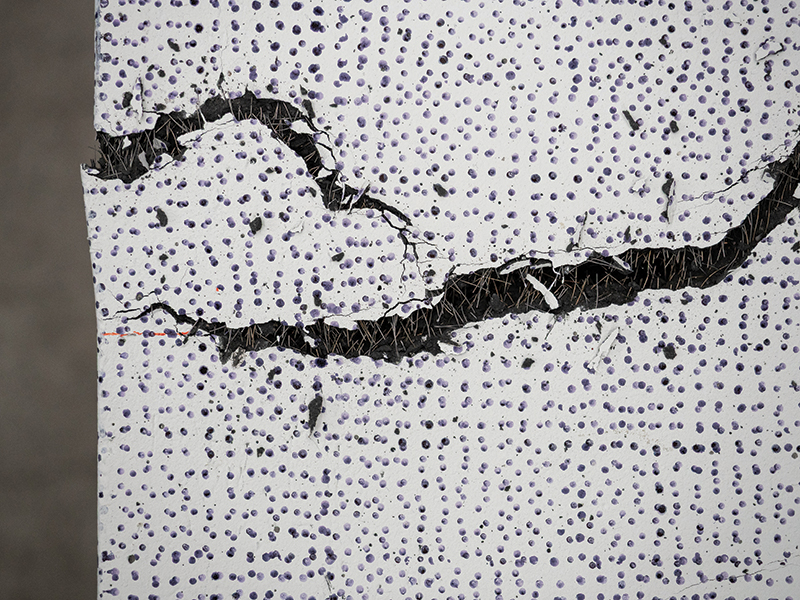
The alloy already exists in rebar form and contains iron, manganese, silicon, chromium and other elements.
The team from the Swiss Federal Laboratories for Materials Science and Technology (Empa) believes Fe-SMA can improve upon conventional steel in some cases.
Bridges approaching the end of their service lives are often strengthened with layers of UHPFRC, but this is typically reinforced with ribbed steel rebar to increase its load-bearing capacity.
The Fe-SMA alloy works differently by prestressing the concrete. It ‘remembers’ its original shape and when the bars are installed in the concrete and heated to ~200°C, the alloy attempts to contract. As it is restrained by the concrete, internal stresses develop that can reportedly close cracks, lift deformed elements and extend a bridge’s service life without complex tensioning devices.
The team has investigated how well the shape-memory alloy and UHPFRC bond to each other even after the alloy is heated, and what forces are transmitted.
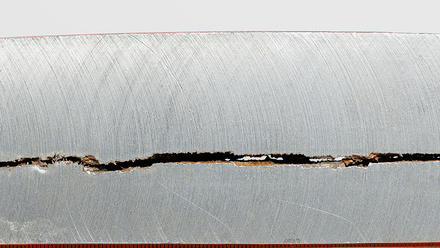
Large-scale tests were performed in Empa’s construction hall, using 5m-long concrete slabs to represent cantilevered bridge decks. Four were strengthened with a layer of UHPFRC, combined with conventional or Fe-SMA reinforcement, and one left unstrengthened. To simulate real bridge rehabilitation, the team cracked the slabs before strengthening.
The Fe-SMA samples were also heated after installation to prestress them. Existing cracks closed during this activation, while remaining deformations completely disappeared.
To track the process, digital cameras monitored surface cracks and fibre-optic sensors embedded in the bars analysed stress reductions within the parent structure.
Researcher Angela Sequeira Lemos explains how the sensors’ backscattered light ‘allowed us to measure the prestressing forces that developed during the application, which was never done before.
'Installing the sensors was challenging because the bars had to reach high temperatures to activate the shape-memory effect. We used a special epoxy and sandblasted the bar surface to ensure the sensors stayed in place. We also conducted tests to ensure the readings weren’t affected by previous temperature variations.’
Their research reveals that both the conventional and new strengthening systems increase the slab’s load-bearing capacity by at least a factor of two.
Under everyday conditions, the Fe-SMA system stiffens the slab further, delays permanent deformations, closes existing cracks and lifts bent components.
‘The beauty of this strengthening system is its simplicity,’ says Sequeira Lemos. ‘You anchor the bars, heat them up and they do the rest themselves.’
She explains that other shape-memory alloys like nitinol (nickel-titanium) are ‘widely used’, but ‘have lower stiffness and higher production costs’ compared to Fe-SMA, which has ‘suitable stiffness for structural applications and lower production costs’.
Although Fe-SMA is still costly compared to conventional steel, Sequeira Lemos anticipates ‘as demand increases, material costs are also likely to fall’. In the meantime, the team says it is suitable for applications where conventional rebar reaches its limits, particularly in heavily deformed or already-damaged bridges that need strengthening or repair.
The Fe-SMA bars can be manufactured like normal ribbed reinforcing bars and delivered to the construction site in a pre-stretched condition. They are positioned and anchored in the reinforced structure, heated, then covered with concrete.
Sequeira Lemos suggests the alloy could also be used to construct balconies or flat roofs, which require compact solutions and good sealing properties. ‘We just performed a pilot project to strengthen a building in Switzerland,’ she says.
Now, ‘we are looking for a pilot bridge project to implement this new strengthening method and monitor its long-term performance. If we can reinforce a real bridge with our system, interest from industry is likely to grow rapidly’.