Reviving ageing infrastructure
Unpacking the skills challenges at the foundation of managing ageing infrastructure.
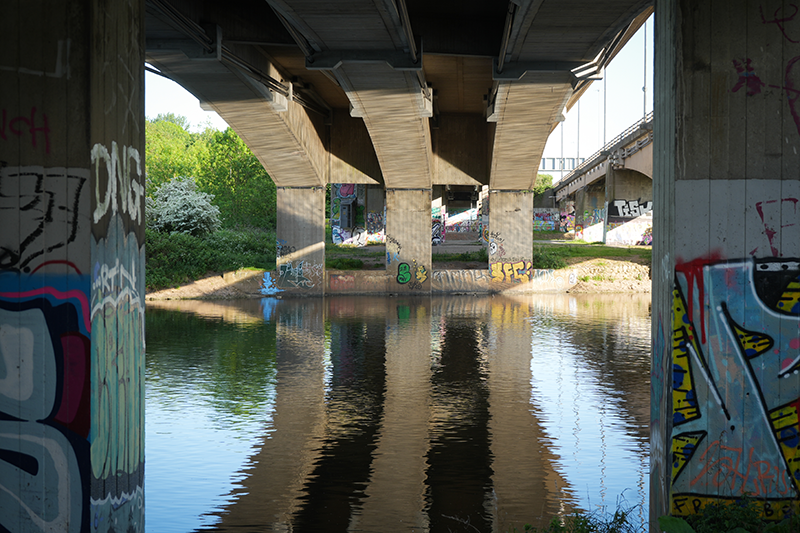
The UK has some of the oldest working infrastructure assets in the world. Much of its roads, railways and water infrastructure were built many decades ago – in some cases, centuries ago, during the Industrial Revolution of the 19th Century.
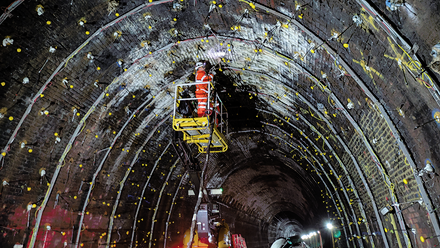
The associated challenges are clearly illustrated by recent closures of major landmarks, such as the 162-year-old Clifton Bridge in Bristol, the almost 200-year-old Hammersmith Bridge in London and the 176-year-old Nuneham Viaduct near Oxford. The resulting lack of access to these essential transport links caused widespread gridlock for people living and working in those areas.
Dr Steve Denton FREng, Vice President of the Royal Academy of Engineering and Chair of the National Engineering Policy Centre (NEPC) Working Group on Ageing Infrastructure, says that without timely and planned intervention, emergency outages and disruption to critical services will become more frequent.
'Many assets need immediate attention to ensure they can continue to support the services on which people and the economy depend. After years of underinvestment in maintenance, our approach to managing our ageing infrastructure must change,' Denton notes.
A recent NEPC report grapples with this challenge and calls on government and asset-owners to urgently prioritise maintenance and renewal.
Water and wastewater
- In England and Wales, around 60% of mains infrastructure was built before 1981.
- 19% of public water supply in England is lost to leaks.
- The average replacement rate of sewers and potable water mains is 0.1%, implying asset lives of up to 1,000 years.
Flood defences
- On average, around 700 flood events are recorded in England each year.
- Environment Agency assets are, on average, 60% of the way through their useful economic life.
- In 2023, over 250,000 homes were at an increased flood risk due to flood defence assets being below their required condition.
Rail and road transport
- 17% of the local road network in England and Wales is in poor condition.
- Congestion and deteriorating road surfaces are estimated to cost the UK economy £30bln per year.
- 25% of all rail delays are caused by faults with infrastructure assets, with a 50% increase in impacts from weather events recorded over the past five years.
Source: The National Engineering Policy Centre report on Reviving Our Ageing Infrastructure
Roadmap for change
Reviving Our Ageing Infrastructure highlights how climate change and extreme weather events are stressing structures like roads, bridges, water systems and flood defences.
The report sets out 15 immediate actions, including changing the approach to looking after our national assets from 'fix it when it breaks' to 'monitor and maintain'. This will mean investing more in maintaining and renewing existing infrastructure to extend its serviceable life and maximise value for money. The report estimates that preventative maintenance is five-to-ten times more cost-effective than repair.
Another major infrastructure challenge the UK faces is the ‘Great Grid Upgrade’, described by the National Grid as the largest overhaul of the electricity grid in generations. Growing the economy and decarbonising our energy system will depend on upgrading the electricity grid.
Sir John Armitt, former President of the Institution of Civil Engineers (ICE) and Fellow of the Royal Academy of Engineering, was the final chairman of the UK’s National Infrastructure Commission. He views an overhaul of the National Grid as 'the absolute critical area, without that, nothing else works'.
The report also recommends regulators and asset-owners appoint chief engineers to their boards. This would ensure engineering expertise is around the table when decisions are made to manage those assets and the risks they face, as well as decisions around infrastructure investment.
It’s interesting to note a recent government white paper on water sector reform. A New Vision for Water includes appointing a chief engineer at the soon-to-be-created water regulator. This new position represents a major structural reform intended to strengthen technical oversight across England and Wales’ water systems. It’s a move that has been welcomed by Denton. 'The commitment to build greater technical capability in the regulator is particularly positive.'
According to the white paper, 'The chief engineer will oversee a fundamental shift in the culture of the regulator and enable engineering-based supervision…with a clear remit to ensure technical capability exists throughout the organisation, especially as part of infrastructure supervision.'
Mind the gap
However, Denton is concerned there is limited mention of the skills shortages facing the water sector, 'A skilled workforce is critical to delivering a safe, resilient and innovative water sector, and we need a clear plan to address both recruitment and retention.'
The skills gap across all sectors is flagged as an urgent priority in the NEPC infrastructure report, specifically a lack of technical and specialised skills to carry out maintenance work.
Railways, roads, bridges, water systems, flood defences and other critical resources rely on a skilled workforce that is capable of balancing operational reliability, long-term resilience and innovation. Yet, across infrastructure sectors, organisations are facing acute recruitment and retention pressures at precisely the moment when expertise is most needed.
Jo Horton, Chief Membership Officer at the ICE, emphasises the big challenges facing UK infrastructure: 'Age, the impacts of climate change and the need to extend the life of existing assets, rather than build new, to manage carbon emissions, mean that civil and infrastructure engineers need to develop new skills in maintenance, asset extension and repurposing.'
The scale of the challenge is significant. Estimates suggest that, in the rail sector alone, up to 90,000 workers are expected to leave the workforce by 2030, risking a major loss of institutional knowledge. In the water sector, 66% of surveyed engineers report plans to leave the industry within three years, while nearly a quarter are set to retire within five years.
Similar trends are evident in flood management, where the number of registered civil engineers fell by a third between 2013 and 2018. These pressures are compounded by difficulties recruiting professionals with the right technical and asset management expertise, both within asset-owning organisations and regulators.
Jo Parker, former Vice President of Engineering at the Institute of Water and Director at Watershed Associates, says the water industry has been trying to tackle this skills gap for some time. She points to training programmes and targeted promotion at young people to show the value of engineering as a worthwhile career.
Despite this concerted effort, Parker points out that 'we are still not recruiting sufficient technical people, and even more should be done so that this essential infrastructure can continue to provide the services on which we all depend'.
The skills shortage is exacerbated by a scarcity of training on offer as well as a lack of visibility. The tendency is to focus on celebrating new infrastructure, while those responsible for keeping the existing roads, rail and waterways running do not get the recognition they deserve. Without targeted investment in skills and clearer career pathways into asset management, the UK risks falling short in maintaining safe, sustainable and resilient infrastructure systems.
Maintaining ageing infrastructure requires more than traditional engineering skills alone. We must develop an interdisciplinary workforce, integrating technical specialists, operational teams and strategic decision-makers, to effectively manage our ageing resources in all corners of the UK.
Professionals working in this area should combine technical knowledge with asset management capability, understanding whole-life performance, risk, deterioration and maintenance. Digital skills are also increasingly essential, including the use and understanding of data as well as new technologies.
Horton expands, 'Using digital twins to evaluate how extreme weather may impact assets, using large language models to optimise workflows, or other artificial intelligence to monitor water quality and road conditions.'

Pathways into the profession
Ideally, asset owners need to work with regulators and government skills bodies to conduct regular forecasts of the skills needed for infrastructure maintenance, renewal and enhancement, considering asset portfolio, geography and demographics. To be ready to respond to these gaps, professional bodies need to make infrastructure stewardship skills more prominent within course offerings.
Clear career pathways would enable individuals to enter the profession through apprenticeships, vocational routes or engineering degrees, and progress through aligned continuing professional development frameworks to chartered and leadership roles.
Encouragingly, there are signs of progress. Government commitments to reform public procurement and invest over £100mln in engineering skills in England aim to strengthen supply chains and workforce capability. We have also seen initiatives such as the Institute of Asset Management’s apprenticeships offering important routes into a career in asset management.
For professionals and students considering this field, infrastructure stewardship offers the opportunity to work at the intersection of engineering, society and sustainability. As the sector evolves, those equipped with the right blend of technical, digital and strategic skills will play a central role in maintaining the systems that communities depend on every day.
For those already working in this area, keeping abreast of new developments is key, Horton points to continuing professional development as part of the answer, 'The ICE has recently rolled out mandatory topics for members. These include ethical and professional behaviours, safety and risk management, and sustainable development, which includes decarbonisation and the use of nature-positive solutions.'
Main materials
No discussion of infrastructure construction would be complete without mentioning concrete. According to estimates, it’s the world’s second-most-consumed material, behind water, and accounts for 8% of global CO₂ emissions.
Low-carbon concrete is designed to dramatically cut those emissions, mainly by reducing or replacing cement content using supplementary cementitious materials, alternative binders, and cleaner or carbon-mineralisation technologies. In the UK, the Low Carbon Concrete Group (LCCG) is looking to socialise this material within the construction industry, and is working around benchmarking and stakeholder engagement.
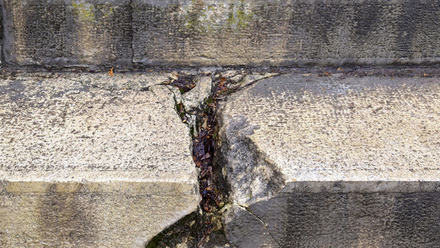
Within the realm of new materials, the ICE has a fund to help create innovations around materials for infrastructure. One recent project looked at fibrous plaster ceilings, which can be prone to collapse. They used advanced monitoring techniques to understand how they deteriorate, including acoustic emission monitoring.
On the whole, we don’t give a passing thought to any of these assets until there’s a failure – for instance, South East Water’s recent problem with drinking water supply to homes in Kent and Sussex. Extreme weather associated with Storm Goretti and ageing water infrastructure contributed to that outage.
As a significant number of UK assets age and extreme weather puts them under increasing pressure, the frequency of failures in our infrastructure is likely to increase. The UK was a pioneer of the Industrial Revolution and the resulting infrastructure – roads, rail and water. Our nation now has an opportunity to become a global leader in managing these structures safely at the end of their life.
Materials World speaks to two professionals about their careers working on ageing infrastructure.

Chartered Engineer Jo Parker, Director at Watershed Associates, with 50 years in the water and utilities industry.
How did you get into working on ageing infrastructure?
I’ve been working in the water industry for 50 years myself so you could say I’m a bit of ageing infrastructure! Seriously though, I love the challenge of running and maintaining the UK’s infrastructure. I am very happy to support anything that raises the important work that engineers do and makes people think a bit more about the importance of infrastructure in their everyday lives.
My very first major project was the one I submitted to become a Chartered Engineer – the design of a tertiary treatment plant for a sewage works in Oxfordshire. This was additional treatment, as the standards for the plant had been tightened up.
Since then, I’ve managed a lot of projects. One of my best was the renovation of a trunk main in the London Borough of Harrow, which we relined. It required very careful risk management, but we finished it ahead of time and below the original budget.
I find leakage management fascinating and have done a lot of work in this area. It’s an important way to keep older water network assets operating properly. The age of a pipe is not necessarily an indicator of its condition. Ground condition and water quality are important – as are the circumstances around the manufacture. Pipes made at the end of the two World Wars tend to be poorer quality.
What specific challenges does the work pose compared to other engineering projects?
The problem with managing and renewing assets is that they are out in the street and the issues of maintaining supplies, managing traffic and pedestrians, and maintaining access to businesses makes the work far more complicated.
At the moment, water companies are penalised if there is a break in supply to any customer of more than three hours, even if this is planned. This means more cost-effective approaches, such as relining, may work out more expensive when penalties are taken into account. The industry has been working to change the standards for pre-planned work, but currently this rule still stands.
There are also very strict rules regarding the use of materials in contact with water, which have to go through rigorous testing. This can make it difficult for new materials and techniques to be introduced.
What skills do you need?
One of my very experienced engineers said that mains renovation was the most difficult type of project to manage, so you need plenty of experience, a knowledge of street works and water quality legislation, and very robust project management skills. You also need to have good people skills to deal with customers, passers-by, local authorities and other stakeholders.
What materials knowledge is useful?
It’s really important to understand how the lining materials perform, as well as having knowledge of how that performance is affected by different weather conditions. Also, any issues related to water quality – for instance, is there any danger of taste or odour problems and what can trigger these?
Is there still a skill you would like to learn or expand to improve your efficacy in this area?
I now tend to manage research into new techniques or issues with existing techniques, rather than projects on the ground, so the skill I need now is research project management. This research is really important, as our capability to renew and renovate existing pipe networks used to be very well respected throughout the world, but we’ve rather fallen behind – partly due to the very limited expenditure on mains renewal for a couple of decades. We have the potential to rebuild our international reputation.
What have you learned from working in this area?
One thing I’ve learned, but it saddens me, is how ignorant the public are about the massive network of pipes and cables that lies below their feet. They have no concept. I’d love to have a painting in every town centre representing the network of utilities below people’s feet so they stop taking it for granted.
What is the most rewarding aspect of your work?
I love the fact that working in the water industry could be considered the most important job in the world. Keeping clean water flowing maintains public health far more than any medical breakthrough – in fact, doctors and nurses could not work effectively without a supply of clean water.
Katie Prior, Environmental Sustainability Manager, Skanska Construction UK Limited
How did you get into working on ageing infrastructure?
My career has evolved within this space, shaped not by the creation of new structures but by the stewardship of existing ones. Working with ageing infrastructure has shown me just how central materials knowledge is to responsible asset management and how sustainability is increasingly defined by the decisions we make about the materials we use – or choose not to use.
My route into this field was not a deliberate choice. Early roles in computer aided design (CAD), procurement and environmental management placed me close to the operational realities of the water and infrastructure sectors. Working with organisations such as JN Bentley introduced me to wastewater treatment works, pipelines and network assets that had been performing reliably for decades but were beginning to show the strain of age.
What captured my interest was the complexity. Unlike new build projects, ageing assets come with constraints – incomplete records, legacy materials, tight operational tolerances and the need to maintain service while works are underway. These constraints force a deeper level of thinking about materials compatibility, durability and environmental impact. I found myself increasingly drawn to the question of how materials choices influence not only project delivery but the long-term sustainability of the asset.
Over time, my work has spanned water, energy, highways and nationally significant infrastructure delivered under Development Consent Orders. I have supported clients including National Grid, Yorkshire Water, United Utilities, the Ministry
of Defence and National Highways – organisations responsible for assets that cannot simply be replaced when they age.
What specific challenges does this work pose compared to other engineering projects?
My roles have centred on environmental and sustainability management, carbon strategy, materials optimisation and compliance. This has meant challenging specifications, supporting work winning, engaging supply chains and embedding sustainability commitments into delivery. Increasingly, my work has focused on whole-life carbon and the ways in which material selection, reuse and refurbishment strategies shape long-term emissions.
For a materials-focused audience, this is where the work becomes particularly interesting. Ageing infrastructure forces us to confront the real-world performance of materials over decades, not just years. It demands an understanding of degradation mechanisms, compatibility issues and the practicalities of integrating modern materials with legacy systems.
Working with ageing infrastructure is fundamentally different from working on new construction. Perfect information is rare. Original design assumptions may no longer be valid. Materials may have degraded in unexpected ways due to chemical attack, environmental exposure, or operational stresses.
From a materials perspective, compatibility is one of the most persistent challenges. Repairs and upgrades must work with existing materials, not against them. A theoretically superior material may be unsuitable if it interacts poorly with what is already in place. This is where materials science becomes a critical enabler of sustainability – understanding how materials behave over time allows us to make informed decisions about reuse, repair, or replacement.
Another defining challenge is operational continuity. Many assets must remain live during refurbishment...These constraints often make low-carbon, low-waste solutions more complex – but also more necessary.
What skills do you need?
My background in procurement and waste management has given me a detailed understanding of aggregates, recycled materials, certification requirements and quality protocols such as WRAP. This knowledge is invaluable when working with ageing assets, where the opportunities for reuse and recycling can significantly reduce environmental impact.
Understanding how materials age is essential when assessing suitability for reuse or repair. Durability, protective systems, transport impacts and sourcing considerations all influence what constitutes the most sustainable option.
What materials knowledge is useful for this type of work?
For materials professionals, this is a space where technical expertise directly shapes environmental outcomes. The decisions we make about materials – how they are sourced, specified, reused, or substituted – can dramatically influence whole-life carbon and asset longevity.
Is there still a skill you would like to learn or expand to improve your efficacy in this area?
I am keen to deepen my skills in whole-life carbon modelling and explore digital tools that support predictive maintenance and materials-led asset management. As the industry moves towards net-zero, better data and stronger integration between materials performance and carbon assessment will be essential.
I am also working towards further professional development and chartership, recognising the value of formal recognition within a profession where technical credibility matters.
What have you learned from working in this area?
One of the most important lessons from working with ageing infrastructure is that sustainability is often achieved through incremental improvements rather than radical change. Better material choices, reduced waste, refined specifications and extended asset life frequently deliver the most meaningful long-term benefits.
I have also learned the importance of early intervention. Decisions made during tendering and design stages have a disproportionate influence on materials use and carbon outcomes, particularly in refurbishment projects where options narrow as work progresses.
What is the most rewarding aspect of your work?
The most rewarding aspect of my work is seeing tangible outcomes – carbon-reduction strategies implemented onsite, materials optioneering reflected in specifications and sustainability commitments carried through from bid to delivery. Knowing that these decisions help maintain critical infrastructure safely, while reducing environmental impact, gives my work a strong sense of purpose.
Ageing infrastructure may not always attract attention, but it is fundamental to society. For materials professionals, it offers a unique opportunity to apply technical expertise in ways that directly support resilience, sustainability and responsible stewardship of the built environment.