UK, US and Taiwan semiconductor manufacture more sustainable, study finds
Researchers recommend 'reshoring' manufacturing to countries with lower energy intensity.

Research from the University of Sheffield, UK, analysed 80 different global semiconductor supply chain scenarios, spanning 11 countries and looking ahead to 2030, 2040 and 2050.
The aim was to understand how the environmental impact of semiconductor production could change over time and place.
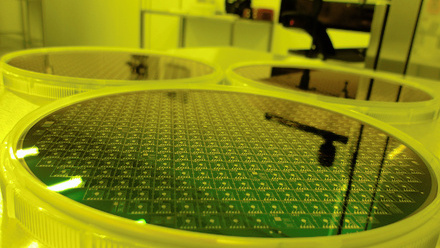
The team examined indium gallium nitride (InGaN) and indium gallium phosphide (InGaP), two key semiconductor materials. It also assessed the impact of the supply chain on global warming, marine ecotoxicity, terrestrial acidification and water depletion.
The majority of semiconductors are currently made in Taiwan, South Korea and China, but the study calls for manufacturing to be “reshored” to countries with lower energy intensity (energy used per unit of GDP).
Results show manufacturing in countries with “cleaner” energy systems, including the UK and the US, led to the lowest environmental impacts, while production in regions still reliant on coal power, such as China, produced higher pollution levels, even in future projections.
According to the study, shifting InGaN and InGaP manufacturing to the UK would have the greatest environmental impact reduction of ~70% and 66% from 2040 to 2050.
Meanwhile, scenarios of manufacturing in the UK, US and Taiwan consistently achieve the highest sustainability scores across global warming, toxicity and resource depletion categories, particularly in 2050.
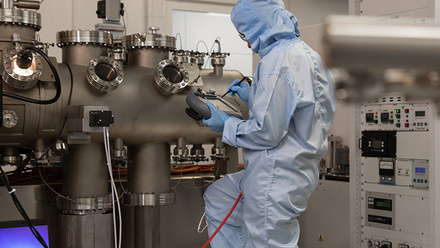
Processes such as crystal growth and material preparation are expected to become the biggest sources of sustainability challenges in the future, as they rely on complex chemicals and large amounts of energy and water.
Professor Lenny Koh at the university says, ‘Strategic reshoring, cleaner fabrication, and targeted innovation in high-impact processes like epitaxy and substrate preparation are essential if next-generation semiconductor technologies are to deliver on both performance and sustainability.’