Graphene reinforces damage-sensing polyurea coating
The coating combines mechanical protection with real-time damage and strain monitoring.
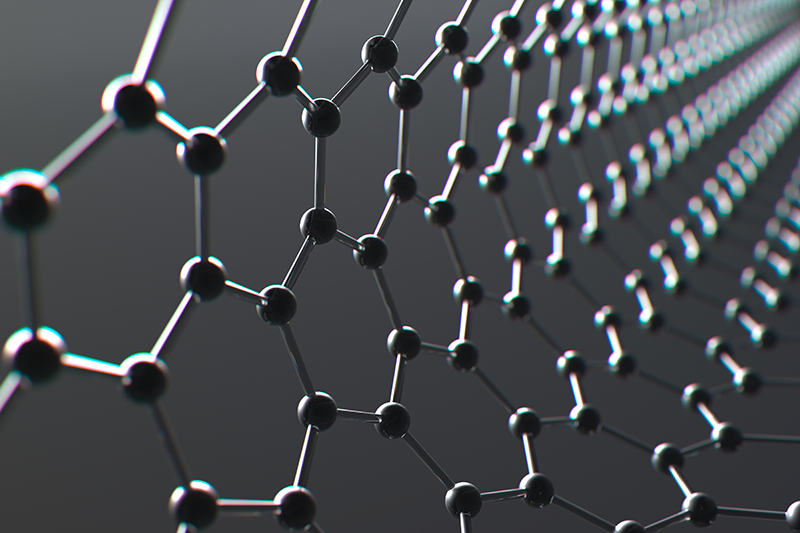
Designed for infrastructure and automotive structures, the ‘nanospray’ integrates covalently functionalised, graphene nanoplatelets (GNPs) into a two-component polyurea matrix.
The resulting material can reportedly carry out robust and resistive sensing while maintaining mechanical toughness, strong adhesion, and durable weather and corrosion protection on real and complex substrates.
Professor Qingshi Meng from Shenyang Aerospace University, China, says the use of GNPs 'improves processability for scaleable deployment, enhances weatherability for long-term outdoor service, and establishes a robust conductive network that delivers strong, reliable, resistive sensing'.
The joint research team comprises scientists from Northeastern University, USA, Shenyang Aerospace University and the Ministry of Education in China, and the University of New South Wales, Australia.
Conventional structural health sensors often have poor conformability, mechanical properties and weather resistance, making monitoring at scale difficult, especially in harsh environments and complex geometries.
The team’s findings have been published in a paper on Graphene nanoplatelet-functionalized polyurea coatings for high strength, corrosion resistance and smart sensing in Advanced Nanocomposites.
They use a hexamethylene diisocyanate trimer (HT) to covalently functionalise the GNPs, allowing them to disperse uniformly and chemically integrate into the fast-curing polyurea network. This strengthens the hydrogen-bonded microstructure to form a stable, low-threshold, conductive pathway, even under rapid spray gelation.
The researchers have found that the optimal formulation – providing the best balance of properties – is 2vol.% HT-GNPs. This coating displays robust piezoresistive sensing, as well as rapid response and recovery times.
It also demonstrates 'excellent adhesion to diverse substrates' and maintains 'stable performance after damp-heat, salt-spray and UV-ageing tests'.
Testing reveals a tensile strength of 43.4MPa and elongation at break of 707.8% for 0.1vol.% of HT-GNPs. Meanwhile, corrosion resistance has been confirmed through electrochemical analysis, with the coating exhibiting corrosion potentials of 0.23V, 0.12V and 0.15V for sulphuric acid, sodium hydroxide and sodium chloride, respectively.
The team hopes their findings will encourage wider exploration of molecularly engineered nanofillers to create durable, multifunctional coatings for monitoring infrastructure and automotive structures.
In the paper, they note industrial translation, particularly for automotive and aerospace applications, faces challenges in 'long-term durability under dynamic stresses such as thermal cycling and mechanical vibration', and 'cost-effective scaleability'.
Validation of long-term durability beyond static corrosion tests, as well as synthesis process optimisation, will ensure homogeneity on complex geometries.