US and Brazil make moves in critical minerals
Minerals sector sees an alliance between the US and Australia, while Brazil launches its National Council for Mineral Policy.
US President Donald Trump and Australian Prime Minister Anthony Albanese have signed a Critical Minerals Framework that intends to ‘support the supply of raw and processed critical minerals and rare-earths crucial to the commercial and defense industries of the US and Australia’.
This supply-chain cooperation involves the US and Australian Governments investing more than a combined US$3bln in critical mineral projects over the next six months, with the projects’ recoverable resources estimated at US$53bln.
The US Export-Import Bank is also issuing seven Letters of Interest for more than US$2.2bln in financing to advance critical minerals and supply-chain security projects between the two countries.
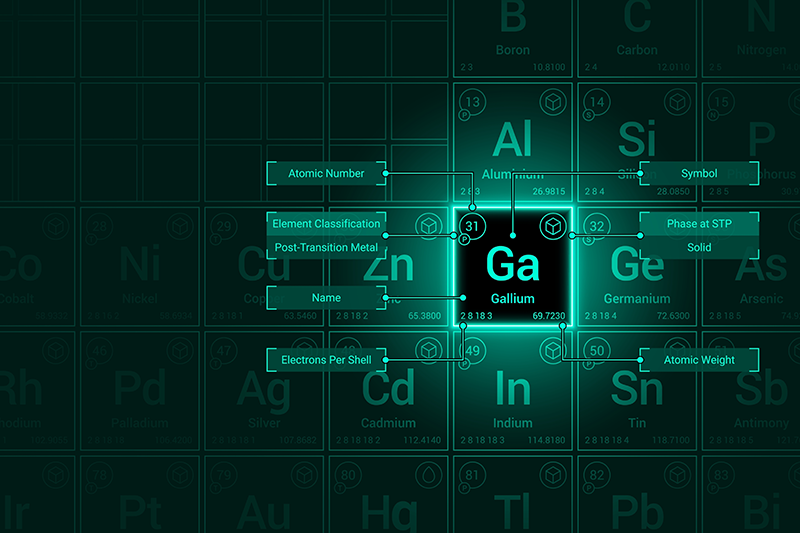
Furthermore, the US Department of War plans to invest in the construction of a 100t annually advanced gallium refinery in Western Australia for self-reliance in minerals processing.
The Framework includes a range of commitments for cooperation in defence investments, economic growth and technology, with the partnership seeking to drive innovation and bolster the countries’ alliance.
This follows Brazil’s launch of the National Council for Mineral Policy (Conselho Nacional de Política Mineral, CNPM) by President Luiz Inácio Lula da Silva and the Minister of Mines and Energy, Alexandre Silveira.
First announced in 2022, the Council is composed of 18 ministers of state and the President of the Geological Survey of Brazil.
The CNPM has already approved the priorities of the Brazilian Mineral Policy, seeking to promote more sustainable mining, in line with legislation.
It also defines guidelines for preparing national plans for the mining sector, such as the National Mining Plan (PNM-2050), with a focus on responsible use of mineral resources.
Alongside PNM-2050, five other proposed resolutions were approved, including the Council’s Internal Regulations and creation of four working groups. These will shape the body’s future actions, aiming to modernise and strengthen governance in the sector.
More like this...