The final destination? Achieving plastics circularity
Industry stakeholders gathered to discuss the progress and challenges in achieving plastics circularity.

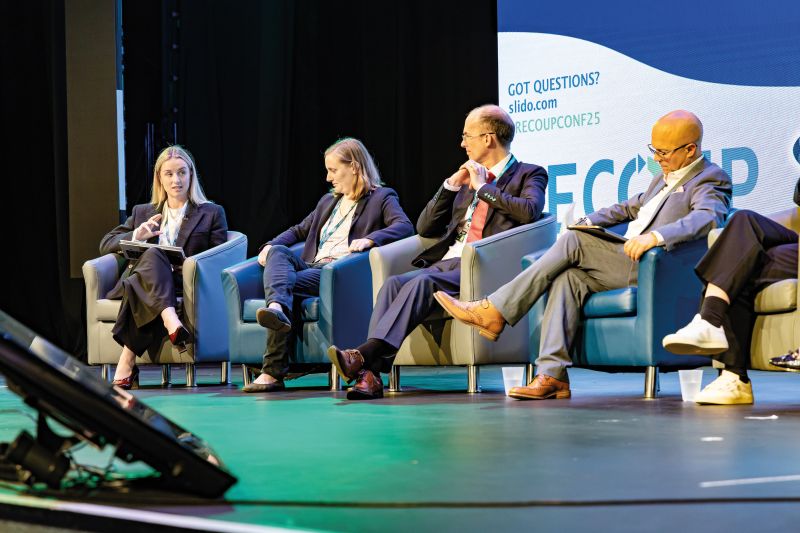
This year’s RECOUP Conference explored three themes that 'delve into the most pressing challenges and opportunities facing the plastics industry', asserted the organisers.
Speakers and delegates debated if plastic circularity in the UK can ever really be achieved amid ongoing market challenges and policy shifts. Discussions covered investment, innovation, policy, infrastructure and practical solutions to strengthen the UK’s circular plastics future.
Another session on ‘The Plastic Paradox’ noted the non-stop flow of evidence, opinions and research regarding the positioning and use of plastics, and their impact on the environment. The UK’s role in research and engagement, greenwashing and greenhushing, as well as material innovation were explored.
The third theme explored global learnings for achieving plastic circularity and governance.
Dig deep
Mary-Jane Hogg, Global Director of Feedstocks of the Future Strategy at DOW, asserted that there was no point targeting the 'low-hanging fruit'. She instead raised the issue of dissolution of polymers in a solvent as a step beyond both chemical and mechanical recycling.
Indeed, a 2024 report from IDTechEx explores how 'dissolution technologies (sometimes referred to as solvent extraction) offer a promising solution' to the challenges of chemical and mechanical recycling, with the ability to selectively dissolve the polymer, separating it from contaminants and other materials.
However, the publication outlines that hurdles remain, with question marks about polymer degradation over successive cycling, the environmental impact of the solvents used and the energy required to heat the solvents, as well as the economic viability and scaleability.
Whereas James McLeary, Managing Director of Biffa Polymers, pondered the path to 30% recycled content at the event and suggested within 18-24 months this could be achieved with mechanical recycling.
McLeary realised this might mean the material was downcycled and the model would not be perfectly circular. In short, he suggested starting 'with what we’ve got', rolling it out fast and accepting it will improve over time. McLeary queried, 'How many horses are we going to back?'
Jez Blake, CEO of PackUK, the scheme administrator for the UK’s Extended Producer Responsibility for Packaging (pEPR) legislation, stressed the importance of building meaningful change, rather than focusing purely on regulation and compliance.
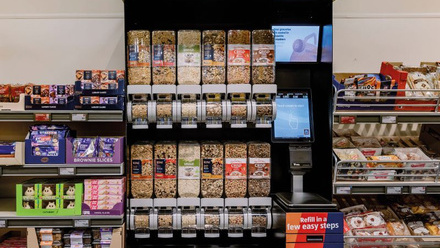
This collaborative outlook was echoed by several speakers throughout the event. Although, James Bull, Head of Packaging and Food Waste Strategies at supermarket retailer Tesco, asserted that a move towards reusable and refillable packaging would need policy change to help push it forward. '[We] can’t unlock the model by ourselves.'
Reasons for optimism
Hogg enthused, 'You guys don’t realise how high [a standard] you are [at] compared to the rest.' She stated that the materials science underpinning the industry will advance as the finance and business case gets better. McLeary echoed this, saying as the business cases start to move, finance will come.
Dan Cook, Director of Policy, Communications and External Affairs at the Chartered Institution of Waste Management (CIWM), noted, in the same vein, the reserved and modest nature of the UK waste management sector. He felt the need to state, 'The work we do is world-class and world-leading'.
With this in mind, Dana Clouston, Head of Growth and Specialist Propositions at Barclays, believes the bank’s main contribution is in financing SMEs specifically and capitalising on circular thinking to secure profitability.
Hogg followed on, 'If we could galvanise ourselves together as an industry, if we could start promoting the use of that future technology…then we turn it into a business case for the UK'. And this would move the story forward.
Alison Bramfitt, Head of Packaging at Nestle UK Ltd, discussed the successes they had made in flexible plastics, with what she believed equated to less packaging, better packaging and better systems.
However, she noted that, although in 2021 they were working with competitors, by 2023, this programme had closed. This highlighted their first-hand experience of why investing in flexible plastics recycling is difficult.
Troubled waters
Despite the industry 'doing the right thing', McLeary highlighted that UK recycling facilities are in trouble as they are losing money.
Public perception doesn’t help. Carlos Ludlow-Palafox, CTO at Greenback Recycling Technologies, recognised the need for transparency. 'We have lost the heart of the people. People don’t believe in recycling.' He reflected that a low percentage globally believe the contents of the recycling bin are actually recycled, and this problem was particularly stark in the UK.
Bull also admitted that there are some products that have had their weight reduced and, in the process, use more plastic, but he expressed a reluctance for Tesco to move in that direction. He noted this was within the context of a shift to a very convenient shopping model.
Pauline Metivier, Circular Innovation Specialist at ReLondon, warned that politics is undermining net-zero and she questioned what could be done in that situation.
Bull referred to this as a 'flux problem' with uncertainty on longer-term agendas. 'Yes, politics is a challenge, but quite honestly as an industry we have not done the right things…to help the politicians move forward in the right way.'
Voices abroad
Tom Gaynor, Chief Operations Officer at Repak, with a social mission to lead the recycling and sustainability of Ireland’s packaging, shared many of the same challenges from across the waters.
He flagged a 33% plastic recycling rate in Ireland, which was a 'country mile away' from their 50% target. He recognised a difficulty in the fact that the amount of plastics production keeps growing and holding a completely privatised industry to account.
He believes 60% of the market are engaging with EPR legislation, while the other 40% are not meeting their obligations. He said, 'We have a lot to learn. The sun does not rise and set in Ireland.'
Chris Dow, Global Business Development Director at Coperion Recycling, reflected that there are not many case studies in the world of companies paying over the odds for recycled over virgin material. He warned, 'We have to adjust to the fact we are going to live in a world of over-supply [of virgin plastics] for a number of years.'
He noted he had not seen a plastics levy anywhere else in the world and, as such, it was a great opportunity for the UK. 'It’s got a lot to offer.'
Lucie Charbonnel, Sustainability Director at Amcor Flexibles EMEA, agreed that the total cost of ownership drives some decisions. She cited the example of France’s recycling rate rising to 69% due to clear guidance on disposal.
Professor Steve Fletcher, of the University of Portsmouth, UK, believes that isolated changes to the system tend not to work.
He feels, 'each country needs a national action plan'.
Fact vs fiction
Cook expressed the belief that we are living in a 'post-truth' world. In line with this, many speakers wanted to dispel what they perceived to be plastics myths.
He warned that some companies are not as transparent and are 'wish-cycling at quite a scale'. He stated that as most people want to recycle more, 'we have to build on that'.
Robyn Macpherson, Project Manager at the University of Birmingham, UK, believes it is the 'responsibility of the academic community to try and demystify some of those mistruths'.
Denise Mathieson FIMMM, Head of Packaging Design & Programme Delivery at Waitrose, wanted to highlight the ‘paper vs plastic’ debate. She stated that paper is not always the most sustainable option, despite perceptions, based on carbon emissions analysis across the lifecycle.
She framed this with the belief that reuse is the best solution out of all. Waitrose has removed all single-use bags and introduced reusable bags at a cost. She stated there had been 'nothing in terms of noise' from customers in the form of complaints.
Clover Walton, Manager of Sustainability & External Affairs at Faerch UK Ltd, stressed that 'our failure to manage plastic waste properly is bad, but the material itself is not'. She noted high levels of recycled PET content can outlive ‘greener’ alternatives.
The speakers commented that there is much conjecture in the mainstream media about the global 9% plastics recycling rate. However, this statistic is attributed to all the plastic ever made and does not reflect modern plastic recycling rates. Indeed, more than 51% of plastics are currently recycled in the UK annually. Therefore, it was argued, that plastics recycling compares well to other recyclables and there was concern about misrepresentation of the 9% statistic leading to demoralisation among citizens.
Walton added that only about 4-5% of fossil fuels are used in plastic packaging.
Rosie Bartram, Senior Manager Public Affairs at Coca-Cola Europacific Partners, emphasised that deposit return schemes are set to launch in the UK in October 2027.
Walton also wanted to stress the importance of stopping plastic pollution at source, rather than sifting the oceans.
She raised the issue of washing machine filters. On this point, Mathieson added that filters are available for models in the higher-price bracket as they are expensive. She suggested that all new washing machines should 'absolutely' have a filter.
When it came to the UK’s All Party Parliamentary Group on Sustainable Plastics, Cook said, 'We should welcome this scrutiny'. He stressed, 'Transparency is everything.'
Hope on the horizon
The closing remarks recognised that while the conference would not have solved all the issues, they hoped that they had added transparency to the debate.
Expressing key wishes for the future, Ludlow-Palafox highlighted the need for more new technology investment. Whereas Charbonnel called for more industry demand for recyclates to support the sector, and Gaynor made a plea for fewer exports of material in a bid to bolster waning confidence. Mathieson was hopeful that EPR would also bring local authority accountability.
Bartram believes that the UK Government is leading the way. Cook was equally positive about 'the scale and ambition of the package of policy coming down the track in the UK'.
Boost to chemical recycling
Innovation in chemical recycling of plastics has reached an all-time peak, according to the latest patent data reported by IP firm Appleyard Lees.Global patent filings in 2023 totalled 794 – a 6% plus increase on 2022 (up from 746), and more than doubling the patent activity from five years before at 368 in 2019.
The Inside Green Innovation: Progress Report reveals that chemical recycling innovation is mostly aimed at polypropylene, recording 297 patent applications in 2023, followed by PET with 288 filings and PVC with 277. Recycling methods, including pyrolysis and thermal recycling, have mostly seen an upward trajectory in the past five years.
Technologies covered by the latest patents include processes for manufacturing aldehydes and alcohols from plastic waste using a hydroprocessing method, methods for producing a regenerated polyolefin resin using extrusion, and systems and methods for microwave hydrolytic dechlorination of mixed plastic waste.
South Korea has taken top spot in innovation activity, outpacing both the US and Europe with 215 patent filings – a more than 20% increase on 2022 (175 filings).
More like this...