Powering ahead with specialist electric vehicles
Why modularity is driving the next wave of specialist electric vehicles.

As electric vehicle (EV) technology matures, most large manufacturers are converging on standardised powertrain architectures. However, while a single electric drive unit or battery pack might serve an entire family of models, simplifying production and reducing cost at scale, one size does not fit all. Specialist and performance manufacturers for vehicles that differ dramatically in weight, packaging and performance targets often find standardisation creates more barriers than efficiencies.
For these low-volume producers, modularity enables unique requirements to be met. Engineering teams can reuse validated subsystems while reconfiguring components to fit each vehicle’s architecture and performance intent.
This is important, as specialist platforms often vary significantly. Some vehicles require ‘chest-type’ battery packs mounted behind the cabin, while others can only accommodate flat, underfloor modules. Drive unit configurations also differ between longitudinal and transverse layouts, with corresponding differences in axle design and available space for cooling, suspension and steering systems.
Even fundamental performance parameters differ greatly. A vehicle’s top speed dictates the upper limit of gear-ratio selection, while acceleration targets drive torque requirements and influence whether all-wheel drive is necessary. In front-wheel-drive vehicles, engineers also contend with the limited packaging envelope around the steering rack, anti-roll bar and pedal box.
The challenge is to address this diversity while minimising bespoke components. Modular architecture allows gear sets, casings and inverter interfaces to be scaled or rearranged to suit different applications. The goal is to enable maximum flexibility from a minimum number of building blocks.
However, flexibility must not come at the expense of manufacturability. Each component is designed with multiple potential interfaces so it can operate in a variety of orientations and drive configurations. For example, an electric drive unit might be engineered with symmetrical mounting points so it can be installed facing either direction, providing the same torque and speed characteristics whether driving the front or rear axle.
Components, such as gearbox housings, inverter mounts and cooling channels, can be shared across multiple applications, while variations come from modular inserts or spacer sets. Low-volume manufacturers can thus achieve levels of repeatability and quality control previously limited to large original equipment manufacturers (OEMs).
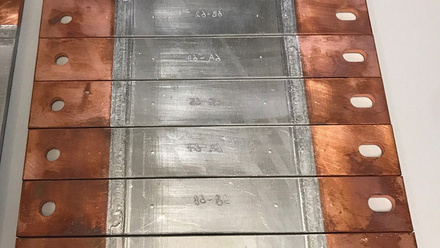
The battery system follows a similar logic. Instead of a single monolithic pack, a family of modules can be combined in different configurations to meet varying voltage, capacity and packaging constraints. Cylindrical cells are often chosen for their flexibility, allowing substitution between suppliers and chemistries without major re-engineering. Flat composite or aluminium enclosures, joined with right-angle strips, offer the potential for longer or wider packs without new tooling.
Software is the invisible link that enables modular hardware to function cohesively. A software-defined control unit can recognise which modules are installed, adjust torque delivery and regenerative braking characteristics, and maintain thermal limits across all operating conditions.
Simulation is equally critical. Before producing any hardware, engineers can model vehicle mass distribution, traction limits and aerodynamic drag to determine the torque and energy requirements for each application. These simulations cascade down to component specifications, ensuring that each combination delivers the required performance envelope without over-designing.
High-performance EVs present particularly complex thermal management challenges. Batteries, motors and inverters all generate heat at different rates and have distinct cooling requirements. A modular system needs a flexible thermal strategy. Multi-loop cooling architectures allow components to be linked in series, parallel or hybrid configurations depending on vehicle layout and duty cycle.
Software determines which circuits to activate for optimal energy efficiency, adjusting flow paths based on temperature, load and ambient conditions. In one situation, the system may prioritise cabin heating and battery conditioning, while in another, it may focus on inverter and motor cooling for sustained high-load operation.
Moving from prototype to production is a difficult transition in vehicle engineering. Each modular sub-system must be validated in isolation and in every possible combination across the vehicle family.
Safety and fault-tolerance are key. A well-designed modular system should degrade gracefully in the event of a component fault. If a thermal subsystem fails, the software should automatically reduce power and protect the hardware rather than shutting down the vehicle completely.
As the EV market diversifies, the need for adaptable engineering will only increase. High-volume OEMs will continue to benefit from economies of scale, but specialist manufacturers require a different path. Modularity allows them to deliver bespoke performance and design without reinventing the entire powertrain each time. This will serve as a framework for broader electrification, where agility in design and manufacturing becomes as important as efficiency in operation.