Nanoparticles deliver drugs to the brain
A patent for polymer nanoparticles for drug delivery to the brain.
Effectively delivering therapeutic agents to the brain is a significant challenge for modern medicine.
The central nervous system (CNS) is protected by the blood-brain barrier (BBB), a highly selective, semi-permeable boundary made up of wedged endothelial cells that form tight junctions. This barrier prevents toxins, pathogens and other potentially harmful substances from entering the brain from the bloodstream.
However, while essential for protecting the brain, a paper on The blood-brain barrier: Structure, regulation and drug delivery in Nature shares how it blocks more than 98% of small-molecule drugs and virtually all macromolecular biopharmaceuticals from reaching intended CNS targets.
Beyond the BBB, the brain’s own internal structure presents another obstacle to drug delivery for treating diseases such as tumours. The extracellular space (ECS) is a network of passages between brain cells that constitutes around 15-20% of total brain volume. It is a complex environment containing both charged and hydrophobic regions that can impede the diffusion of therapeutic molecules.
Various strategies have been developed to overcome these hurdles.
Some approaches involve lipid-soluble drugs that can passively diffuse across the BBB’s endothelial cells. Other methods use carrier systems, such as liposomes, exosomes or nanoparticles, to shuttle drugs across. More invasive techniques temporarily disrupt the BBB using focused ultrasound or permeability-increasing drugs, or bypass it entirely through direct intracranial injection.
These methods have limitations. Disrupting the BBB carries risks, and even direct injection does not guarantee widespread drug distribution throughout the brain tissue. Nanoparticle-based carrier systems have shown promise, but their effectiveness can be limited by particle size and a tendency to adhere to components within the ECS.
US patent US 12,496,279 B2, granted in December 2025 to Johns Hopkins University, USA, claims protection for a novel nanoparticle platform designed to overcome some of these challenges.
The claimed invention aims to provide non-adhesive, brain-penetrating, coated nanoparticles that can diffuse rapidly throughout the ECS, enabling widespread delivery of the encapsulated, therapeutic, prophylactic, or diagnostic agents following injection.
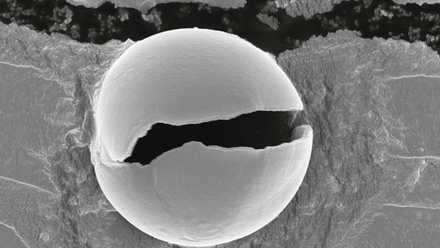
The patent claims protection both for the nanoparticles per se and related dosage formulations. The nanoparticles have a biodegradable and hydrophobic core formed from polymers such as poly(lactic acid-co-glycolic acid) (PLGA), polylactic acid (PLA) or poly(glycolic acid) (PGA).
A key feature of the invention is a dense coating of a surface-altering agent that contains a triblock copolymer of poloxamer 407, poloxamer 288, or a combination thereof. This coating is said to enhance the nanoparticles’ physicochemical properties for brain penetration, particularly by increasing colloidal stability, creating a non-adhesive surface with a near-neutral charge (specified as a zeta potential between -10mV and 5mV), and shielding any exposed hydrophobic core regions.
This surface chemistry reduces electrostatic and hydrophobic interactions between the nanoparticles and brain tissue to minimise adhesion and permit movement through ECS pathways.
The nanoparticles are made of materials ‘generally recognised as safe’ in compliance with US Food and Drug Administration regulations.
They have particle diameters ranging from 60-250nm. The size range is notable, as it includes particles significantly larger than were previously considered capable of diffusing within the ECS. This offers the potential for significantly higher drug payloads and more sustained release profiles.
The theoretical drug payload per particle increases with the particle radius to the third power, and larger particle volumes can encapsulate a wider variety of therapeutics.
The patent also describes a synergistic method to further improve nanoparticle distribution. This involves formulating them in a hyperosmolar solution with an osmolality of between 300 and 1,000mOsm/kg to temporarily draw water out of brain cells and into the intercellular space, causing the ECS to expand.
To support its claims, the patent provides experimental data from studies in rat brains. In one experiment, the volume of distribution for fluorescently labelled nanoparticles with different coatings was measured after direct intracranial administration into healthy rat brains by convection-enhanced delivery.
Suitably coated nanoparticles were found to exhibit enhanced volumes of distribution within the brain, as compared to uncoated nanoparticles that remained confined around the injecting needle track. The results also show that the volume of distribution for coated nanoparticles is inversely correlated to the surface charge.
In another experiment, the technology is shown to be effective in an orthotopic model of an aggressive brain tumour in rats. Poloxamer-coated nanoparticles achieve almost 100% tumour coverage, distributing widely both inside and outside the tumour core. According to the inventors, these results suggest that the coated nanoparticles could be useful in tackling highly invasive tumour cells that can migrate beyond tumour edges and infiltrate normal brain tissue.
Read the patent in full at iom3.info/nanoparticlesforbraindelivery
More like this...