In the mix
How anode active materials are shaping the future of battery performance and supply chains.

Accelerating electric vehicle (EV) adoption and achieving net-zero targets is increasingly shaped by innovation across the battery value chain. Cathode and anode active materials (CAM and AAM) sit at the core of that value chain, with their technologies fundamentally determining energy density, durability, charging speed and cost. Investment in CAM and AAM chemistries and technologies is central to unlocking EV scale-up, reducing critical materials risk and capturing value across the supply chain.
Recent progress in lithium-ion batteries, especially in cathode materials, has helped improve range, affordability and charging speed. Similar advancements are emerging on the anode side. Improving anode performance by increasing energy storage, reducing size and enabling faster charging is key to future EV battery technology. Key requirements for anode materials are good energy density, cycle-life, safety and manufacturability.
The Advanced Propulsion Centre UK (APC)’s Automotive Battery Value Chains Report 2023 details the typical value chain for graphite anodes. This is the current standard choice of anode technology, which includes the traditional process of extrusion, mixing and calendaring to prepare AAMs.
Generally, graphite anodes are made from a blend of synthetic and natural graphite materials, providing a cost-effective and reliable solution. However, there are technical limitations:
- Limited specific capacity – limited to a specific energy capacity of 372mAh/g
- Poor rate performance – the graphite electrode’s capacity drops considerably with higher charge rates
- Lithium dendrite formation risk – the potential for dangerous lithium crowding and growth of lithium dendrites at fast charge/low temperature
- Cycling concerns – the stability of the electrode interface layers falters under aggressive cycling conditions
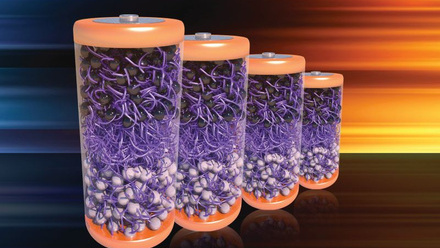
Alternatives are being explored. Compared with graphite, silicon anodes offer up to 10 times greater specific capacity at 3,600mAh/g, enabling higher energy storage. However, silicon anodes can undergo significant volume expansion of up to 300%, leading to manufacturing, technical and safety issues. Innovative methods to reduce the swelling are being developed, ranging from nano-engineering of the silicon materials to adding inorganic materials like carbon-based particles.
Another alternative technology is lithium metal anodes, which offer an even higher specific capacity than silicon at 3,860mAh/g. This represents one of the highest energy endpoints on the battery roadmap.
Lithium metal anodes are most closely associated with solid-state batteries. Solid-state electrolytes enable safer operation due to lithium metal’s high reactivity. But that higher reactivity means it is costly to develop and deploy the metal as an anode.
Driving diversification
But anode diversification is not solely a technology transition, it is a strategy influenced by supply chain competitiveness and material availability.
A quarterly automotive demand forecast from the APC provides a demand projection for batteries based on production volume forecast and powertrain split share. It also offers an outlook for key battery components and materials demands.
According to the forecast published in December 2025, European capacity for AAM and CAM shows a significant deficit versus demand over the next decade.
For example, European anode material demand, based on synthetic and natural graphite, is estimated to reach 870kt by 2035, with UK demand predicted to be just over 70kt. This shows a significant ramp up from equivalent demand in 2025 of 195kt for Europe and 4kt for the UK.
Yet, there are supply chain security concerns for graphite, with China controlling over 80% of the market, reports APC’s Anode Materials Value Chain Insight, creating exposure to export controls, trade restrictions and geopolitical risk. It is no surprise graphite is listed as a critical raw material in the EU and the UK, recognising its strategic vulnerability.
Cost competitiveness and volatility is another element of supply chain competitiveness powering diversification. Anode production costs are increasingly driven by energy-intensive processes, especially for synthetic graphite, which exposes producers to electricity and carbon costs. Alternative anode chemistries can offer different cost structures, enabling manufacturers to optimise total battery cost rather than rely on one material pathway.
Reaching their potential
Currently, the lion’s share of the EV anode battery chemistry market is held by graphite anodes at nearly 80%. Graphite-silicon composite holds 15-20% of the market share.
Graphite-silicon anodes have been a part of the market for several years, as a consistent feature of the Tesla line-up. The Model 3 and Y have been key drivers of demand up to this point. The remainder of the anode chemistry share, just below 5%, goes to silicon-rich and lithium metal anodes.
However, the outlook is continuously improving for silicon anodes, with new capacity coming online both in and outside of China.
Emerging technological trajectories suggest that high-nickel cathode chemistries favour the use of silicon anodes, trending towards full coverage of this cathode choice with some form of silicon anode material. However, the higher lithium iron phosphate (LFP) cathode market share in China limits the maximum potential of the silicon anode market, as the benefits of pairing with silicon anodes are less likely to make significant returns. As the LFP market share grows as a low-cost, entry-level cathode chemistry, it will continue to make sense for it to be paired mostly with a stable and cost-effective graphite anode material.
Outside China, a higher share of nickel-based chemistries and domestic development of silicon-engineered products will lead to a higher expected market share of silicon anode demand. This provides medium-to-longer-term opportunities for the UK and EU automotive batteries sector.
The global market share of silicon-rich anodes could reach as high as nearly 20% by 2035 and over 20% by 2040, with many European and UK original equipment manufacturers (OEMs) announcing silicon anodes in their medium-to-long-term battery roadmaps, such as Volkswagen, BMW, Mercedes-Benz and Jaguar Land Rover. Some Chinese OEMs have also announced silicon anodes in their longer-term plans, e.g. GAC, Geely and BYD, again in their medium-to-large vehicle segments.
Nonetheless, lithium metal is considered the ‘end goal’ anode material by many EV battery manufacturers, with its extremely high theoretical specific capacity. But there are still some hurdles in its commercialisation in terms of performance and production. The current forecast for this anode technology is almost 5% of the market share by 2035 and 5-10% by 2040.
The industry needs to accelerate its transition to zero-emission vehicle manufacturing and develop the technology needed to meet 2030 and 2035 ambitions, as well as net-zero targets by 2050. Anode diversification supports UK and EU industrial strategy objectives. By reducing reliance on concentrated graphite supply chains and enabling domestic materials capability, diversified anode technologies strengthen resilience, competitiveness and alignment with critical minerals policy, while supporting next-generation battery performance.