Evolving with the grid
Professionals from across the UK energy sector discuss consumer-led flexibility, digitalisation and grid decentralisation.
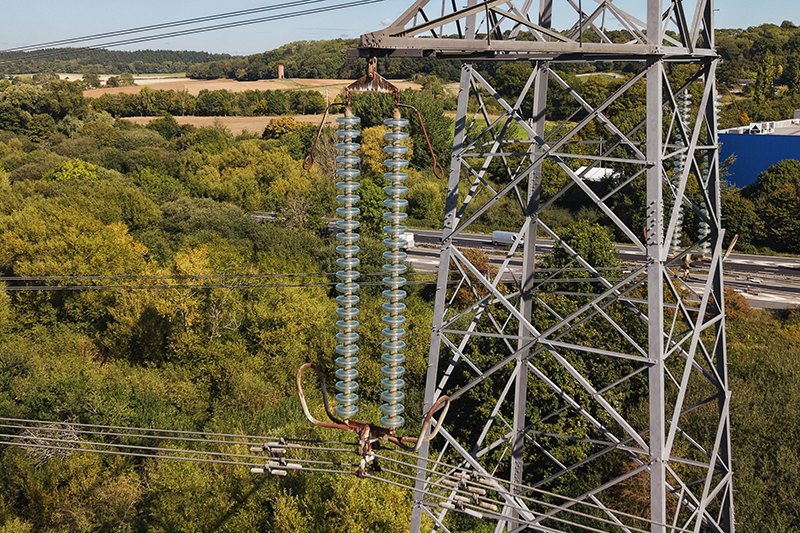
With the growing renewable energy market and ongoing phase-out of non-renewable sources, flexibility in the energy system has never been more important. Although the UK’s capacity for renewables is increasing, weather-dependent variability poses a challenge to the nation’s ever-increasing energy demand.
A Westminster Energy, Environment and Transport Forum seminar on ‘Next steps for energy system flexibility’ shared insights from experts across policy, infrastructure, energy providers and advisory bodies. The discussion followed the UK Department for Energy Security & Net Zero’s (DESNZ) Clean Flexibility Roadmap, published in July 2025 with contributions from Ofgem – the energy regulator for Great Britain – and the National Energy System Operator (NESO).
Duncan Stone, Deputy Director for Electricity System Flexibility at DESNZ, shared how in two forecasted energy scenarios for 2050, ‘one involving more flexibility, one involving less…the difference in terms of energy system cost savings was up to £10bln a year by 2050’. He added that embedding flexibility into the system would bring down costs and, in turn, consumer bills.
Ultimately, energy flexibility must be driven by changes in consumer demand, noted the speakers, which is currently increasing and putting pressure on existing grid infrastructure.
As Iona Penman, Market Design Manager at Octopus Energy, put it, ‘We’re seeing pretty much the largest transformation of the demand side since electricity in homes…As we electrify, more people are getting electric vehicles (EVs), heat pumps, etc, and…all of this is going to...exaggerate peaks and be pretty unmanageable if left alone’.
Professor Furong Li, Deputy Director for the Centre for Sustainable Energy Systems at the University of Bath, UK, noted, ‘Clean flexibility can play three key roles here – decoupling electricity prices from natural gas, reducing our dependency on gas-power generation for energy and security, and balancing and reducing our connection queue to make demand more compatible with the renewable generation and infrastructure network.’
Meeting in the middle
Although the UK’s renewable energy capacity has grown significantly in the last couple of decades, it still lacks the storage capacity to compete with oil and natural gas in terms of reliability.
‘Energy system flexibility will require…long-duration, grid-scale battery storage,’ stipulated Professor Maria Sharmina from the Tyndall Centre for Climate Change Research at the University of Manchester, UK. She shared that battery demand is projected to grow, but this means higher demand for critical minerals such as lithium and graphite.
Alternatively, there are ‘a lot of spent batteries reaching the end of first life, and that’s expected to surge just after 2030’. Domestic end-of-life recovery and reprocessing capabilities will be essential to ‘meaningfully reduce import dependence and geopolitical vulnerability’. This will require investments in ‘infrastructure and processing capacity’, through financing mechanisms such as the UK National Wealth and Circular Economy Funds. It will also call for relevant workforce and skills development.
Sharmina continued, ‘What’s needed is policy coherence across the Energy Strategy, Industrial Strategy and the UK Critical Minerals Strategy’, as well as investment commitments, ‘because it does take a while to put this infrastructure in place and before we start reaping its benefits’.
Nuclear power and small modular reactors (SMRs) are another solution for meeting residual energy demand. ‘One of the advantages of nuclear power is it is low-carbon…[and] it’s schedulable, you can plan its output,’ reflected Professor Keith Bell from the University of Strathclyde, UK, as well as Co-Director of the UK Energy Research Centre.
But he highlighted that once nuclear is switched on, it stays on for a while – one of its disadvantages is a lack of flexibility.
It can help meet high residual demand, but can also contribute to a greater surplus of low-carbon energy at peak generation times.
On SMRs, he said ‘there’s a huge range of different design options – the market is still developing. If they’re designed to be flexible – great, if they’re not, we just have to be aware of that’.
Lawson Steele, CEO of Haldane Energy, described the company’s technology to convert excess renewable electricity into hydrogen that can be stored.
Haldane’s integrated hydrogen for long-duration energy storage (H₂-LDES) system is a closed-loop process designed to provide low-carbon energy for the UK grid. The technology produces hydrogen via electrolysis, stores it in solution-mined underground salt caverns and then uses it in turbines to produce electricity on demand when renewables output is low.
He said the company is developing ‘a portfolio of gigawatt-scale, closed-loop, hydrogen-based, long-duration storage projects’ in suitable UK locations.
Steele added, ‘The gas fleet needs to be replaced. Whether it’s my system or any other system…those decisions are fundamental in terms of the extent of capital expenditure required…because if you leave it too long, you’re going to be forced down a certain road.’
All in it together
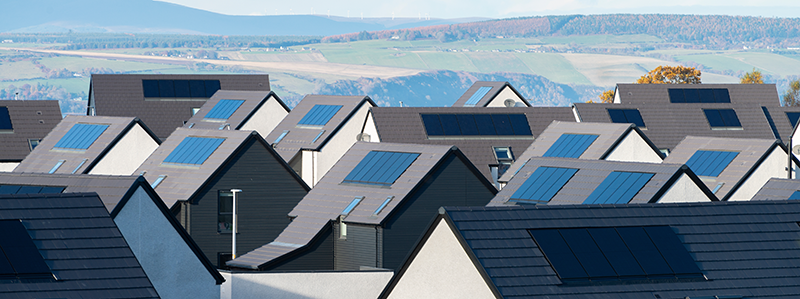
Consumer-led flexibility is a crucial stepping stone until we can increase battery storage capacity or develop reliable alternatives to natural gas that can meet demand when solar and wind supplies drop.
But for consumers to become proactive and motivated to switch the timing of their energy usage, incentives and transparency from both government and providers is crucial.
Sarah Honan, Head of the Association for Decentralised Energy: Demand, asserted that ‘every home, business and industrial site has a commercially viable route to decarbonisation’, and that it should ‘become the rational choice, not just something forced upon them.
‘The energy system needs to work around them and their needs, rather than expecting them to fit into these fossil-fuel-generation-shaped holes that are appearing.’
Penman described Octopus Energy’s offerings, which include tariff-led products and plunge pricing periods – when customers are paid to use electricity during ‘negative pricing events’. They are also incentivised to use less when there is grid pressure, and there are free electricity sessions when there is excess wind or solar supply.
Another incentive, which Citizens Advice has explored, is ‘time-of-use tariffs’. These offer consumers rewards or cheaper bills for using energy during off-peak periods.
Director of Energy at Citizens Advice, Gillian Cooper, said, ‘Most of the people we spoke to…felt they were getting really good outcomes…they were largely early-adopters and pretty confident in how they were using that technology.
‘But even among the cohort that we spoke to, there were people experiencing teething problems.’ These were related to setting up the technology, choosing the right value tariff and understanding how to best adapt their usage.
Cooper emphasised that ‘removing the hassle factor is really key to encouraging more people to take up these services’, while Alex Howard, Head of Flexibility Markets at UK Power Networks, simply said, ‘make it easy, and people will do it’.
Major players
Some of the speakers also highlighted areas of industry that could be conducive to more flexible energy usage.
Howard pointed out that data centres are a key consumer. ‘We have about a gigawatt of data centres connected in our region at the moment and several times [more than] that who want to connect.
‘Data centres have been very open about [how they could] make a contribution on the flex side, whether it’s from behind-the-meter generation or storage. Often, [they] have the capital to invest in those kinds of assets.’
Howard shared that data centres just need guidance on whether these power assets will offer sufficient reliability, and considerations around carbon impact are a significant driver of decision-making.
Bell suggested data centres and nuclear power ‘complement each other quite well’. ‘Data centre demand does flex, but a lot of it is a minimum level that would seem to be there all the time, which maybe complements the fact that nuclear power stations are difficult to turn up and down, or on and off.’
Head of Strategy and Transactions (Demand-Side) at LCP Delta, Phillip Twiddy, added that manufacturing is an additional source of flexibility for the grid, with behind-the-meter energy generation, storage and energy management supporting these kinds of industries.
He also sees more interest in commercial- and industrial-level battery solutions from EV charging hubs and marine applications, to help manage energy demand, costs and grid connections.

Data centres in Slough, UK
© Make more Aerials/ShutterstockDistributing the load
But flexibility should benefit the wider population, not just those who can afford it, have the time and ability to adjust their usage, or are more tech-savvy. So far, flexibility has largely targeted and benefitted users with smart systems such as EVs and heat pumps in place, but incentives need to extend to other consumers too.
Cooper said the industry needs to ‘recognise that some households face greater barriers’, such as those in the private rented sector, in flats, without EVs or heat pumps, or who need reliable electricity for medical devices.
She added that products designed for energy flexibility are part of an evolving consumer market, which involves people ‘switching to low-carbon heating’ and ‘upgrading the fabrics of their homes’, which needs ‘upfront investment in consumer protection’.
‘Sector regulators need to be working together’ to design ‘safe off-ramps’ for people who sign up to plans that don’t work for them. Cooper’s ‘plea to government’ is to make independent advice a core part of the system, rather than an afterthought.
Shraiya Thapa, Clean Energy Knowledge Lawyer at Freeths, explained there are ‘two sides to consumer protection’ – licensing related to suppliers and providers, and the products and assets themselves, which is normally where product safety and protection regulations are considered. Thapa said the industry should focus on licensing, rather than enforcement and penalties.
Cooper continued, ‘We need a world where everyone pays their share, we can’t have a world where the wealthy households can avoid paying towards system costs. People who can use flexibility should not be on the default vanilla price cap. EV users, for instance, we can’t have a world where they’re charging their cars at peak periods and driving up system costs for everyone else.
‘Better affordability support, such as targeted bill support, would help in taking some heat out of the wider debates…to ensure that everyone – especially the most vulnerable people in our society – benefit.’
Stone expressed the importance of appreciating ‘the different types of technologies that can be incentivised to flex, such as electric heating…rather than [just] necessarily heat pumps, which is open to a much larger segment of the population’.
He also mentioned how having ‘a lot of smart devices being used in a non-smart way’ makes everyone ‘worse off overall’.
Honan highlighted the potential of Motability, a company that provides cars to consumers in vulnerable circumstances, or who have disabilities. She cited this as a good opportunity for energy flexibility due to the consumers often having ‘predictable routines’.
She also discussed how the ‘beauty’ of heat flexibility lies in consumers who couldn’t previously afford to heat their homes now being able to, because they can soak up excess renewable energy from the system.
‘[It’s] not about energy rationing, it’s about using energy [at] the right time.’ Honan urges people to see flexibility as ‘a massive opportunity for the fuel poor’.
She described ‘whole system savings’ as meaning everyone benefits from cost savings, not just the consumers who are able to actively participate. She identified that these savings come from ‘avoided generation capital expenditure, not over-building wind turbines that we don’t need and not over-building gas for back-up’.
Lightbulb moments
The UK needs to ‘expand from economies of scale to economies of flexibility…[and] educate consumers with knowledge, information and tools, similar to a mortgage calculator’, according to Li.
Greater consumer knowledge and awareness is necessary to navigate the current energy grid, which Marzia Zafar, Deputy Director of Governance for Data and Digitalisation at Ofgem, said is ‘getting more complex’.
The ‘no longer one-directional’ grid is being ‘driven by an increasing number of energy assets participating in the energy system’.
She continued, ‘We need greater digital capabilities among sector participants to ensure that we are effectively planning and optimising for the operation of these millions of assets.’
A hot topic across the forum was a proposed change to the Balancing and Settlement Code (BSC) that governs the energy industry. Modification P441 Creation of Complex Site Classes would categorise complex sites and add a new type of site (Class 6) to allow approval of ‘non-standard’ complex sites.
Howard explained, ‘Ofgem will make a decision whether to take it forward or not.’ He explained how the P441 modification would mean substations that can match small, licence-exempt generation with local demand could avoid some of the costs that would normally be paid back by being passed down to consumers.
‘The big idea, really, is to clarify what can be netted off against each other in terms of generation demand…You can generate more [to] reduce the amount of retail electricity you need to buy and your exposure to all the levies and costs that get bundled into [it].’
Honan asserted, ‘The markets we have now were built around the needs and expectations of what large-scale, mainly gas generators can do, not what millions of distributed assets can do – that needs to change.’ Regulation modifications like P441 are sorely needed to account for changing infrastructure.
Appointment of a Flexibility Commissioner will also support the grid’s evolution. Stone said the Commissioner could provide leadership and coordination to help drive delivery across organisational and technical market boundaries. They could particularly focus on short-duration and consumer-led flexibility.
Stephen Goff, Head of Flexibility at Elexon – a not-for-profit organisation supporting the energy transition – also outlined how the company is stepping into its role as market facilitator, with a focus on coordination and reducing barriers to entry for flexibility assets and service providers.
Elexon will engage industry and key decision-makers in policy, such as DESNZ and Ofgem, through ‘strategic leadership’. It will also enact market coordination involving ‘flexibility market rules’ and ‘implementation monitoring’ for system operators. It aims to ensure data is ‘open, interoperable, and the single source of truth for flexibility assets’.
Trusting in technology
‘In an ideal world, consumer flex would be almost invisible to the customer, so everything would be fully automated,’ according to Penman.
However, automation of energy services requires more digitalisation, which involves ‘using digital technologies and digitised data to fundamentally change the availability and openness of data to allow for new services, cost reduction [and] innovation to come into play,’ said Zafar.
This comes with its own challenges, from centralised accessibility and the associated cybersecurity measures, to consumer protections and ensuring automated optimisation services can respond to the unpredictability of human behaviour.
Cooper said the protection regime ‘needs to be more focused on principles and much less on prescription’, because of the risks around load control and automation requiring people to ‘share more data with companies in this space’.
On the flip side, Li identified how ‘data digitalisation could help us to understand where flexibility might grow…for system operation and planning.
‘If we understand how much we can rely [on flexibility], we can be more efficient and customers can also directly know how their actions might help reduce energy price and improve national energy security. So [that includes] open data, open models, helping customers balance education and automation.’
Howard contributed that data integration from different markets can help people ‘objectively’ see where money can be made, and where there are inefficiencies in stacking. UK Power Networks is sharing more data between system operators at distribution level and NESO at transmission level.
Bell supports automation, ‘provided the software is intuitive in allowing you to control it, limit what it’s doing [and] express some preferences…A lot of automation could lead to some coherence of behaviour and step-changes that could have an adverse impact on system behaviour’.
As Goff said, ‘We can’t just take a technocratic view. There’s that cultural engagement aspect.’ He added that the energy sector needs to ‘make sure customers, consumers, small businesses [and] large businesses are comfortable’ interacting with complex, flexibility-compatible devices that might be partially automated.
Goff was also asked whether there are risks in using artificial intelligence to predict system spill prices in future, such as ‘millions of solar panels [being] told to switch off at exactly the same time’ due to negative export prices. To this he responded, ‘[There are] safeguards in terms of ensuring we’ve got the resilience and system security built in to make sure we don’t end up causing major resilience issues across the grid.’
Flexibility in focus
Bell rounded up the discussions, highlighting some of the key points touched on across the forum.
He said, ‘A lot of investment in the electricity system right now is needed just to stand still, because of the need to replace old network and generation assets. But that gives us an opportunity not just to do like-for-like replacement, but to target the capacity and climate resilience of the assets to what we need for the future, both making use of flexibility and enabling it.’
He emphasised that valuing flexibility isn’t ‘just about power capacity’ but about the ability to schedule and change status rapidly. ‘System operators and planners need to be confident about flexibility [to] rely on it being delivered and inform some of that planning.’
On innovation, Bell asserted, ‘A lot of money has been spent on it through things like the various network innovation funds and projects…and progress has been made, such as on network monitoring and modelling.
‘But one of the [ongoing] challenges…is how best to capture, disseminate and apply that knowledge.’ Education, both of sector professionals and consumers, remains key to unlocking future evolutions of the energy grid and distribution systems.
Stone summarised the path to increased energy flexibility, saying, ‘It’s definitely going to be a marathon rather than a sprint’. Despite the challenges posed by system changes, a lack of affordability and increased grid complexity, a combination of more robust regulations, increased transparency and knowledge, and automation can allow greater flexibility to be achieved.