Electrodes from waste batteries and lignin
Nickel and cobalt from spent phone batteries and carbon from waste industrial lignin are being combined for anode materials in sodium (Na)-ion batteries.
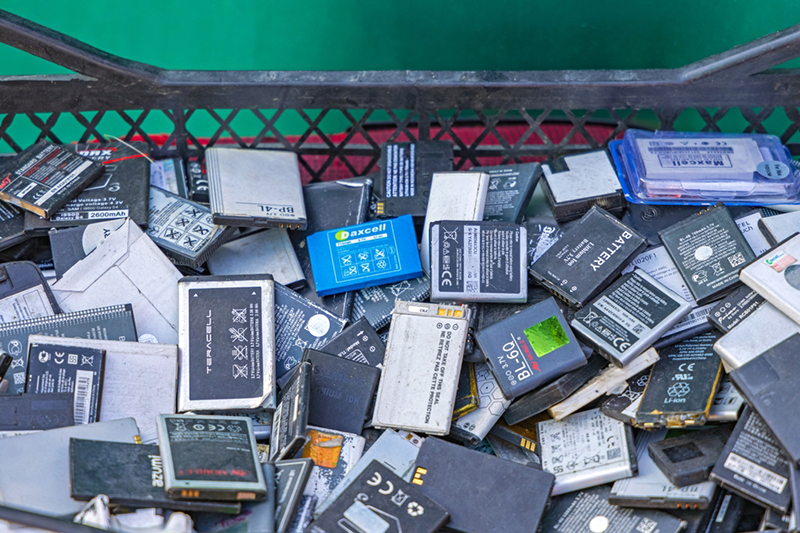
A team of researchers, from Henan Normal University and Qilu University of Technology, China, say the resulting composite material of nickel-cobalt sulphides coated in lignin-derived carbon – NCS/CS@LC50 – shows good electrochemical performance.
The paper, Synergistic conversion of spent mobile phone batteries and industrial lignin into the NiCo2S4/Co9S8@LC composite with enhanced sodium storage performance, is published in Biochar X.
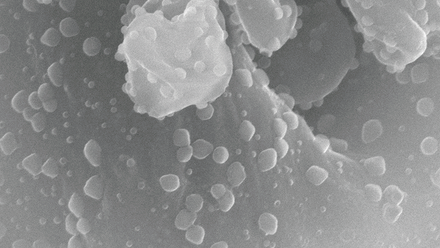
It says, ‘A hydrothermal method was employed to successfully fabricate NCS/CS@LC50, exhibiting a honeycomb-like morphology through the precise control of lignin content.’
An earlier study published in Ceramics International – Effect of polypyrrole-derived N-doped carbon coating on the sodium storage properties of NiCo2S4 synthesized by recycling discarded mobile phone batteries – documents the hydrothermal method used to obtain raw NiCo2S4 from phone battery waste.
Production of NCS/CS@LC50 involves depositing NiCo2S4 and lignin into separate ethanol-water solutions and treating them under ultrasonic conditions to achieve dispersions. These are combined and the pH regulated to 12 using sodium hydroxide solution. The mixture is then subjected to magnetic stirring at ambient temperature for a duration of 30min, and to ultrasonic processing for another 30min.
This procedure is repeated until a uniformly dispersed solution is obtained. Sulphuric acid is added to lower the solution’s pH to 2. It is then left for 12h and the resulting composite precipitated.
The paper explains, ‘The above-mentioned synthesised NiCo2S4-lignin composites were dispersed in 50mL of deionised water, and then potassium carbonate (K2CO3) was added as an activator at a K2CO3-to-lignin weight ratio of 1:1.
‘The resulting mixture was continuously stirred for 4h, subsequently dried at 80°C, and finally ground into a fine powder for collection.
'Next, the sample was heated under a nitrogen atmosphere from ambient temperature to 250°C at a heating rate of 10°C/min and held at this temperature for 30min. [Then] the temperature was further increased to 600°C at the identical heating rate of 10°C/min and maintained for 2h to achieve complete carbonisation of the lignin component.’
The resulting material was thoroughly rinsed multiple times with deionised water and then dried at 100°C to yield the final NiCo2S4/Co9S8@LC composite, ‘designated as NCS/CS@LC25, NCS/CS@LC50 and NCS/CS@LC75, respectively’.
The composite’s lignin-derived carbon layer is said to enhance electrical conductivity and stabilise the electrode, while the metal sulphide components provide reaction sites for sodium storage, enabling efficient ion transport and maintaining structural integrity.
The study demonstrates that the NCS/CS@LC50 composite exhibits an initial discharge capacity of 1,062.8mAh/g and maintains strong performance and stability over repeated charging cycles.
It also retains a high specific discharge capacity of 208.7mAh/g even at elevated current densities such as 2A/g, demonstrating ‘excellent rate performance’.
This is attributed to the ‘unique architecture’ of NiCo2S4 and Co9S8, which provides ‘a rich array of redox reaction sites’ for intercalation and deintercalation of Na+ ions. This preserves structural stability during repeated charging and discharging.
The team suggests their approach could ‘reduce the synthesis cost of anode materials’, lowering manufacturing costs for
Na-ion batteries and increasing commercial viability. It also notes both feedstocks are widely available industrial wastes.
They add that Na-ion batteries are ‘attractive because sodium is abundant and low-cost’, and ‘a promising alternative to lithium-ion systems for applications such as grid storage, electric vehicles and portable electronics’.