AI-driven materials discovery centre planned for 2031
The £100mln hub, part of the University of Liverpool, UK, will accelerate artificial intelligence usage (AI) in materials chemistry.
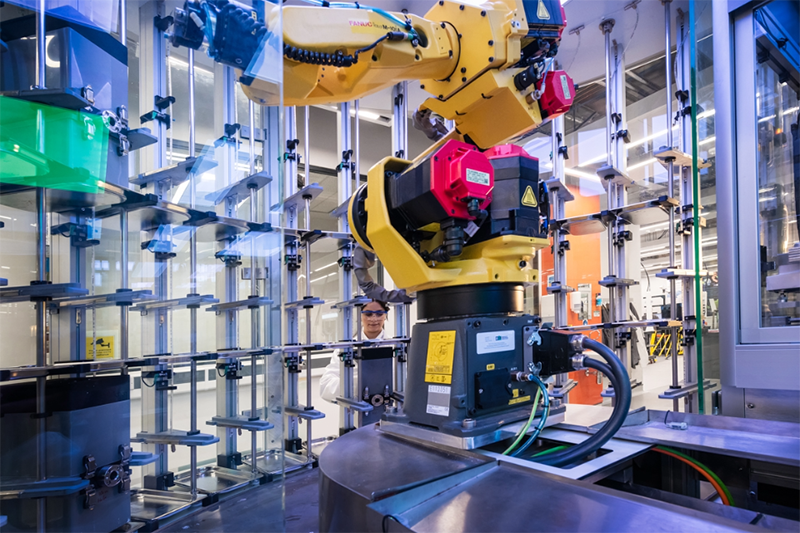
The AI Materials Hub for Innovation (AIM-HI) sits within the University of Liverpool’s plan to become a leader in AI-driven materials research, and will focus on areas such as catalysis, materials for net-zero, soft matter and product formulation.
The planned facility will feature research and translational spaces, and an innovation incubator designed for collaboration between academic and industry researchers. It aims to bridge the gap between the two to drive the adoption of AI and robotics in materials science and boost innovation.
Flexible, adaptable laboratory spaces can support technology-led research and teaching, allowing students access to ‘state-of-the-art’ equipment to help train future cohorts of scientists.
The AIM-HI will form part of a chemical sciences facility, located in Liverpool’s Knowledge Quarter, that is planned to open in 2031.
This will build on the opportunities offered by the University’s existing £81mln Materials Innovation Factory (MIF) for advanced materials chemistry research and development, co-created with Unilever in 2018.
Since then, it has reportedly generated £120mln in grant funding, as well as supporting job creation and SME growth across the region.
Professor Matthew Rosseinsky OBE FRS, from the University of Liverpool’s Department of Chemistry and MIF, says, ‘By developing new tools to identify outperforming materials from the vast space of chemistry, we will open new scientific directions and drive forward technology.’
According to the University, the AIM-HI is expected to create and support up to 900 high-value jobs in the UK, as well as generating over £400mln from AI-supported advanced materials innovation.