The YPWLC is an extension of the Young Persons' Lecture Competition (YPLC) and is organised by the IOM3 Student & Early Career Group.
The winners of the finals, held in countries and regions where IOM3 has international branches or sister institutions, compete in the world final. The first YPWLC was held in London in 2005, and since then has travelled to different locations in four continents. Since 2020, the Young Persons' World Lecture Competition is being held online.
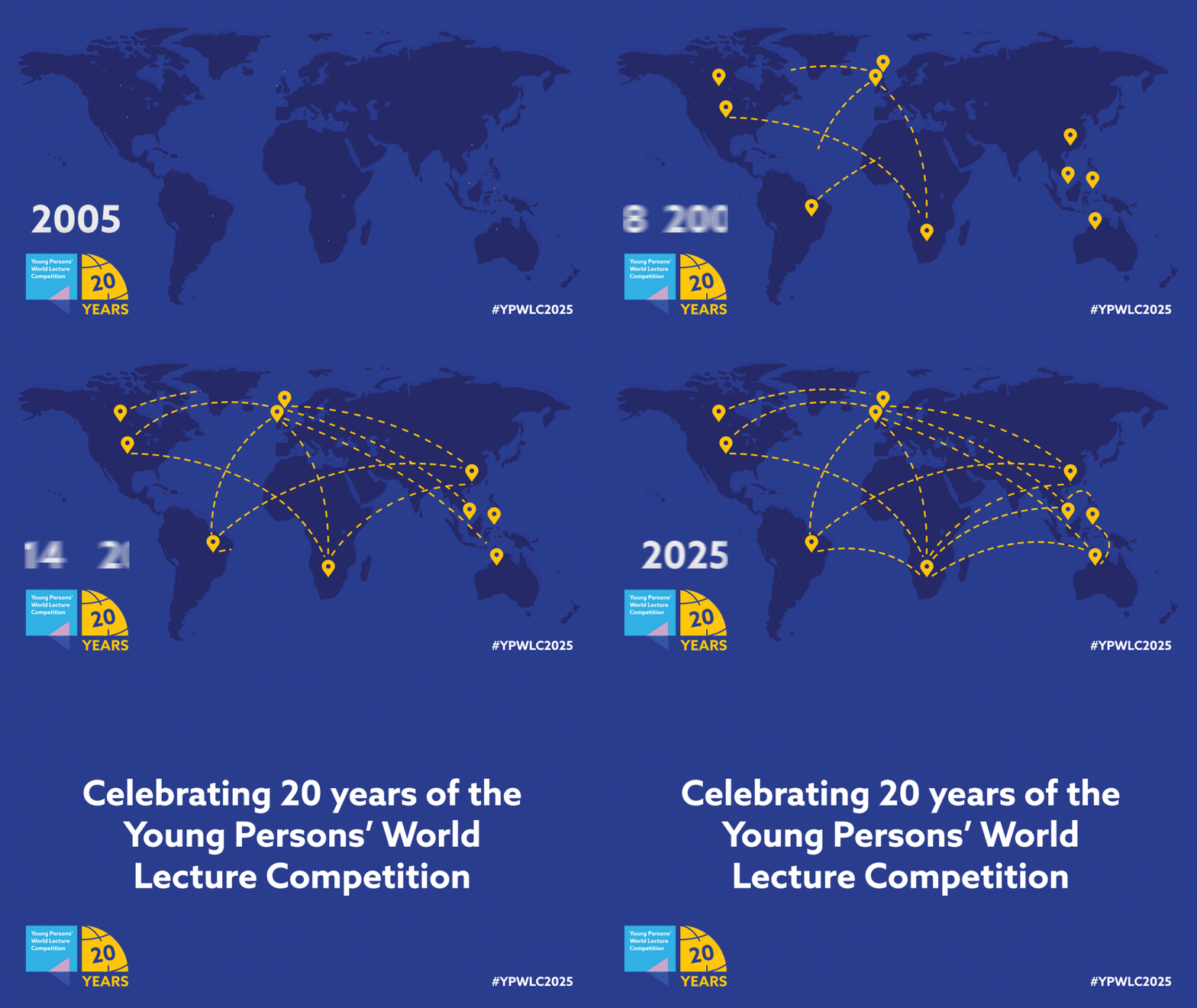
20 years of YPWLC
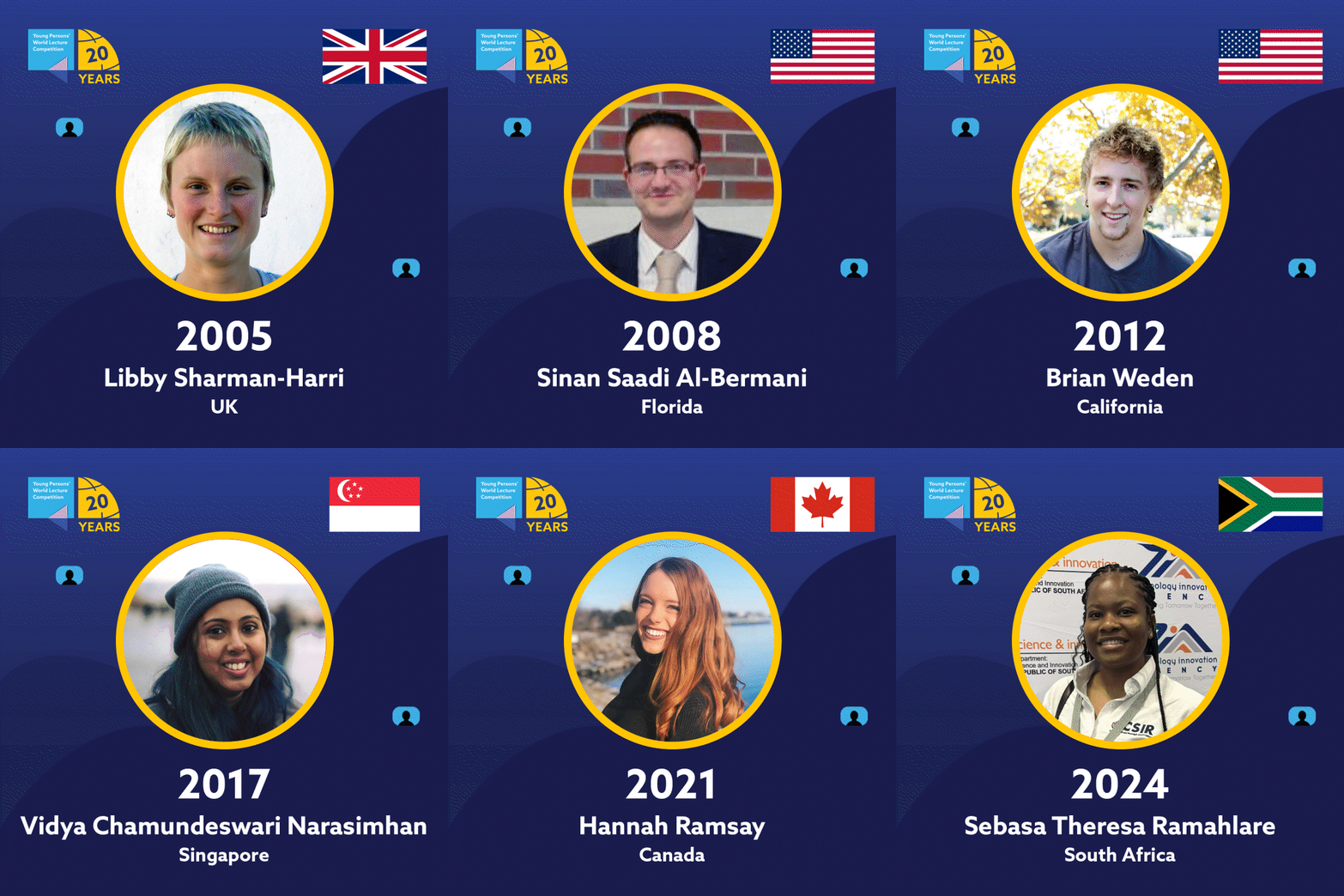
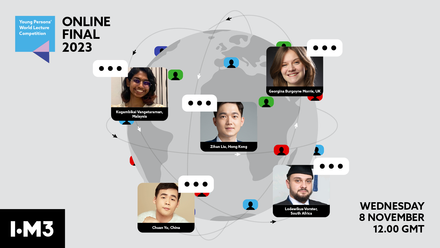
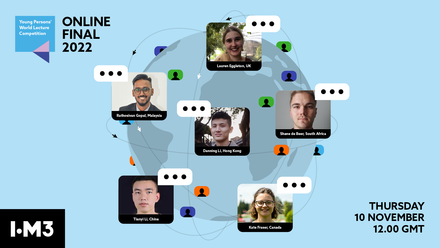
20 years of YPWLC winners
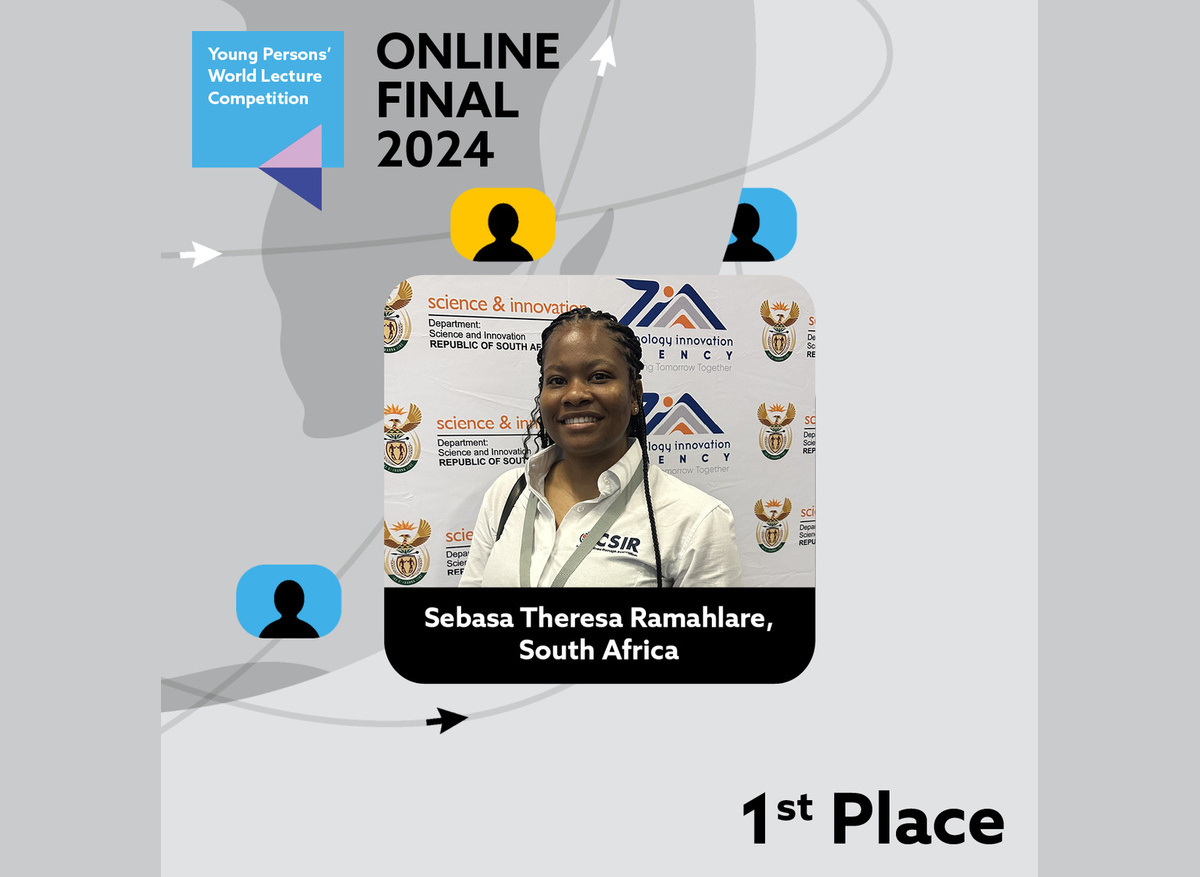
Sebasa Ramahlare
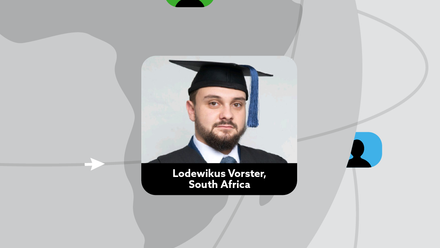
Lodewikus Vorster

Hannah Ramsay
Rathosivan Gopal
2025 YPWLC finalists
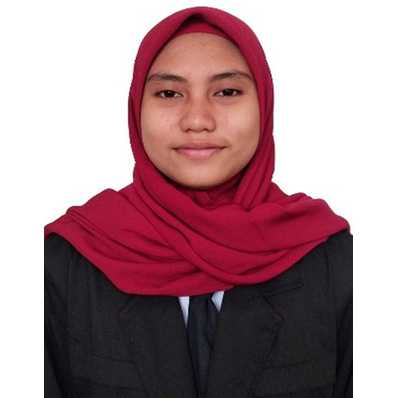
Winner - Malaysia
Natasya Salsabiila

2nd Place - UK
Hamish Dow

3rd Place - China
Xiaoxi Zeng

Hong Kong
Kouer Zhang
Winner - Malaysia
Natasya Salsabiila
Natasya Salsabiila is currently pursuing her PhD in Electrical Engineering at Universiti Tun Hussein Onn Malaysia (UTHM), where her research focuses on the scalable deposition of Aluminum Nitride (AlN) buffer layers using industrial-grade RF sputtering for Gallium Nitride (GaN)-based high electron mobility transistors (HEMTs). She previously earned her Master’s and Bachelor’s degrees in Electrical Engineering, both supported by competitive scholarships from the Malaysian Ministry of Foreign Affairs and the Indonesian Ministry of Education and Culture. Her academic interests span nanomaterials, sensors, and thin-film technology. Throughout her journey, Natasya has actively engaged in national and international research platforms. She was awarded a consolation prize at the 2023 National Nanotechnology Innovation Research Project Competition (PIN) by MOSTI Malaysia and was recognized as Best Oral Presenter at the 2024 International Conference on Advanced Functional Materials and Devices (AFMD) organized by the Nanotechnology Research Centre, SRMIST, India.
Aluminum Nitride Thin Film Deposition Using Industrial-Grade Sputtering System: A Uniformity Study
Aluminum Nitride (AlN) thin films are crucial for high-frequency and high-power electronics due to their high thermal conductivity, wide bandgap, strong piezoelectric response, and stability. One of the most promising techniques for depositing AlN is radio frequency (RF) magnetron sputtering, producing uniform and high-quality AlN films with strong adhesion. However, achieving consistent film quality on larger wafers, particularly using 12-inch industrial targets on 8-inch silicon wafers, remains challenging. Hence, this study investigates the effect of target and substrate rotation speeds on AlN film properties, including thickness, surface roughness, and crystalline quality. The influence of rotation dynamics on film uniformity across 2-, 4-, and 8-inch wafers is analyzed, alongside the underlying mechanisms of atomic flux distribution. Optimizing these parameters provides a practical and scalable approach to enhance film uniformity on large wafers, bridging the gap between laboratory research and industrial fabrication and enabling more efficient, cost-effective production of advanced electronic devices.
2nd Place - UK
Hamish Dow
Dr Hamish Dow is a Research Associate at the University of Strathclyde’s Department of Civil and Environmental Engineering. His research investigates novel AI-based imaging methods for detecting and quantifying concrete structure defects. Hamish's lecture will explain how AI can be used for visual inspections, highlight innovative concrete inspection methods developed at the University of Strathclyde, and present real-world, Strathclyde-led, case studies demonstrating AI-driven inspection applications.
Lights, camera, action: Automated visual inspections of concrete structures
Early identification of defects in concrete structures is vital to ensuring their longevity and resilience. However, traditional visual inspections are expensive, inconsistent, labour-intensive, and dangerous.
Our invention, Adaptive Lighting for the Inspection of Concrete Structures (ALICS), is a new inspection platform: it is an automated, and robot-mountable concrete visual inspection device that uses lighting and artificial intelligence to detect, classify, quantify, and monitor concrete defects with unprecedented speed, accuracy, and precision.
ALICS’s lighting-enhanced inspection method enables fast, targeted concrete defect repair and monitoring of concrete infrastructure, extending asset lifespans and reducing carbon-intensive new-build construction.
This presentation will showcase ALICS’s lighting-enhanced inspection method and concrete defect detection abilities. Results from on-site deployment will also be presented, validating ALICS’s methods in a real-world environment.
3rd Place - China
Xiaoxi Zeng
Xiaoxi Zeng is a final year Joint BEng student in Polymer Materials Science and Engineering at Northwestern Polytechnical University and Queen Mary University of London, with a minor in Business Administration. His research focuses on interface engineering and multifunctional high performance polymer composites, particularly carbon fiber/PEEK systems. He has contributed to 3 journal papers and is the first author of a published article in Journal of Materials Science & Technology reporting a biphenyl-branched poly(aryl-ether-nitrile) strategy for enhancing CF/PEEK interfacial performance.
Xiaoxi has extensive experience in polymer synthesis, composite processing, and advanced materials characterization. He is also the developer of a registered software system for traffic flow measurement. Xiaoxi is the winner of the 2025 IOM3 Young Persons’ Lecture Competition China final.
Study on the Preparation of Poly(arylene-ether-nitrile) Modified Carbon Fibers/Poly(ether-ether-ketone) Composites
The weak interfacial adhesion between carbon fibers and the poly(ether-ether-ketone) matrix limits the overall performance of CF/PEEK composites. This study introduces a biphenyl-branched poly(arylene-ether-nitrile) (BPEN) as a molecularly engineered interfacial compatibilizer. BPEN was synthesized through one-pot polycondensation and applied onto carbon fibers to form CF@BPEN/PEEK composites via powder-impregnation hot-pressing. The biphenyl and nitrile units of BPEN promote π–π stacking and hydrogen bonding at the fiber–matrix interface, enhancing stress transfer and interfacial stability. The resulting composites exhibit improved mechanical integrity, thermal conduction, and electromagnetic shielding performance. This work demonstrates an effective molecular-scale strategy for achieving multifunctional, high-performance thermoplastic composites.
Hong Kong
Kouer Zhang
Kouer Zhang is a PhD candidate in the Department of Mechanical Engineering at The Hong Kong Polytechnic University, with an MPhil from the same institution and a BEng in New Energy Science and Engineering from Xi’an Jiaotong University. Her research focuses on electrochemistry, energy conversion, and wastewater management, yielding impressive outputs of 13 journal papers and 4 patents.
Academically distinguished, she has won awards including 2025 Best Research Postgraduate Student and in 2024 she was the 3-Minute Thesis Competition Champion of PolyU Engineering Faculty. Beyond research, in 2025 she founded NanoPulse Technology Co., Ltd., served as a part-time athlete for Hong Kong’s National Rowing Squad. Kouer has earned medals like the 2024 Asian Rowing Cup Bronze and the 2023 U23 Asian Rowing Championships Silver, excelling in both academia and sports.
Closing the Loop: Transforming Wastewater Nitrate into Sustainable Fertilize
Producing ammonia, a key ingredient in fertilizers, is traditionally relied on the energy-sensitive Haber-Bosch process. Imagine if we could make ammonia more sustainably, using electricity and wastewater nitrate instead. However, this process faces challenges from competing reactions, such as hydrogen evolution, which reduce efficiency.
Our solution is a specially designed nano-material catalyst made of copper-cobalt nanowires, grown directly on copper foam. Think of these nanowires as a team where cobalt sites start the nitrate reduction, and copper sites finish the job, guiding the reaction smoothly toward ammonia while blocking the unwanted hydrogen production. Using advanced in-situ characterization and computational tools, we have mapped out how this tandem mechanism works. Our catalyst delivers high efficiency and long-term stability, pointing the way toward greener, scalable ammonia production for the future.
Entrants compete in regional and national finals organised by international co-ordinators and the winners will compete in the 2025 online YPWLC final on Thursday 27 November.
Submit your abstract to enter the final of your choice.