Wood-based formulations for thermal paper
The formulations could reduce reliance on bisphenols while keeping print performance.
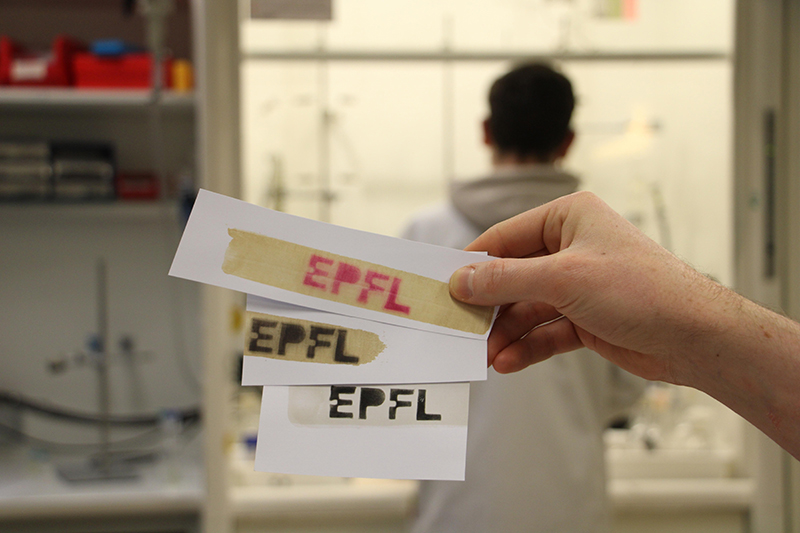
The paper formulations from EPFL, Switzerland, are for cash receipts or shipping tags using wood-based chemicals
For decades, the most common developers for thermal paper have been bisphenol A (BPA) and, more recently, bisphenol S, according to the team. They report that both affect living organisms by disrupting hormone signalling for people who handle receipts frequently.
Thermal paper has to be stable, printable and cost-effective. The researchers say that in 2022, the global thermal paper market was valued at around $4bln and is expected to grow to about $6bln by 2030.
A less toxic alternative must also react to the right temperature, be stable when stored, mix well with other coatings and avoid background discolouration.
The team have experimented with lignin, a component of wood, with a sensitiser from plant sugars for thermal paper coatings.
'We have developed thermal paper formulations - which are commonly found in daily products like cash receipts, package labels, airline tickets, etc. - made from plant-based molecules that have very low or no toxic signatures,' says Prof Jeremy Luterbacher, Head of the Laboratory of Sustainable and Catalytic Processing and lead author on the study.
As lignin is usually dark and chemically messy, they note, making it unsuitable for printing, they used sequential aldehyde‑assisted fractionation to produce light-coloured polymers with fewer dark, colour-absorbing groups that can interfere with printing. The group says their chemistry allows it to be well mixed in the thermal layer, a key requisite to proper reactivity.
The sensitiser is a compound that melts when heated and helps the dye and developer interact. Instead of conventional petroleum-based ones, they used diformylxylose, a molecule made from xylan, a sugar found in plant cell walls.
The team reports that the lignin‑based coatings produce clear printed images when heated, with colour density values in the same range needed for commercial thermal paper.
The coatings were found to be stable when stored near a window for months, and printed logos remained readable after a year.
While image contrast was said to still be lower than that of fully optimised commercial paper, the performance matched that of BPA-based thermal papers.
Also, the lignin developers are found to display oestrogen‑like activity of more than two to four orders of magnitude lower than BPA. Meanwhile, the sugar‑based sensitiser reportedly showed no oestrogenic or toxicity profile under the tested conditions.