Will it be plain sailing for AI?
UK firm digiLab partners with Next Step Racing to explore the use of uncertainty-aware machine learning in offshore sailing.
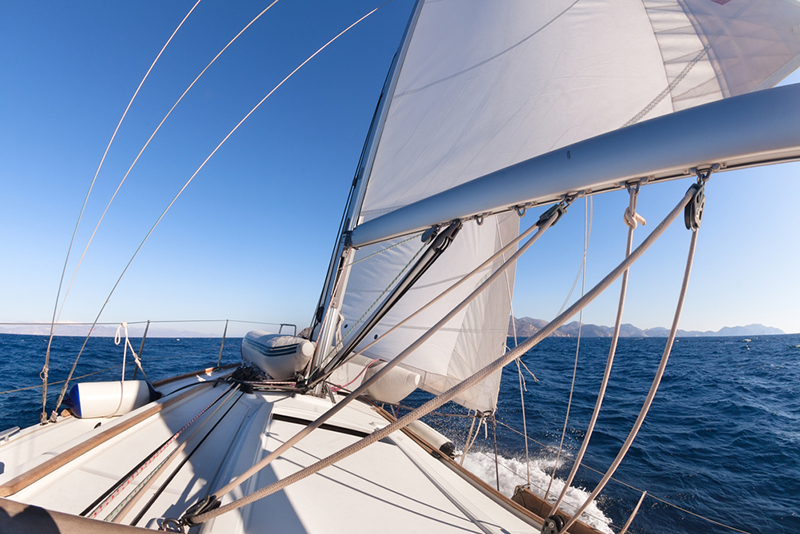
This summer, offshore sailing will be a proving ground for next-generation AI, as digiLab partners with sailors Joss Creswell and Charlie Warhurst. Together, they’re deploying uncertainty-aware machine learning in the open ocean. This collaboration may ultimately benefit commercial shipping, route optimisation and maritime decarbonisation.
The system faces its first real-life challenge in the 2025 Défi Paprec, a rigorous offshore race from Rouen to Roscoff using high-performance boats that partially lift out of the sea at speed, especially when surfing, setting them apart from conventional offshore race craft.
Unlike conventional AI that offers a single prediction, uncertainty-aware AI also measures how confident it is - a crucial advantage in the unpredictable conditions of ocean racing.
By flagging deviations from expected performance and indicating confidence levels, the system helps sailors focus on what matters most in high-variance situations.
The platform relies on what is known as the Uncertainty Engine, which uses probabilistic machine learning to model how the boat is likely to behave across varying wind and sea conditions - and how sure those predictions are. This insight guides sail trim, set-up and strategy, thereby supporting the human helm.
Looking ahead, the team plans to expand into route optimisation under uncertainty, integrating weather forecasts and using advanced algorithms to explore tactical trade-offs.
There are also ambitions to trial real-time decision-support interfaces for both high-performance sport and commercial marine operations.