UK lithium extraction plant operational
The facility in Runcorn, England, marks the first commercial deployment of direct lithium extraction and crystallisation in Europe.
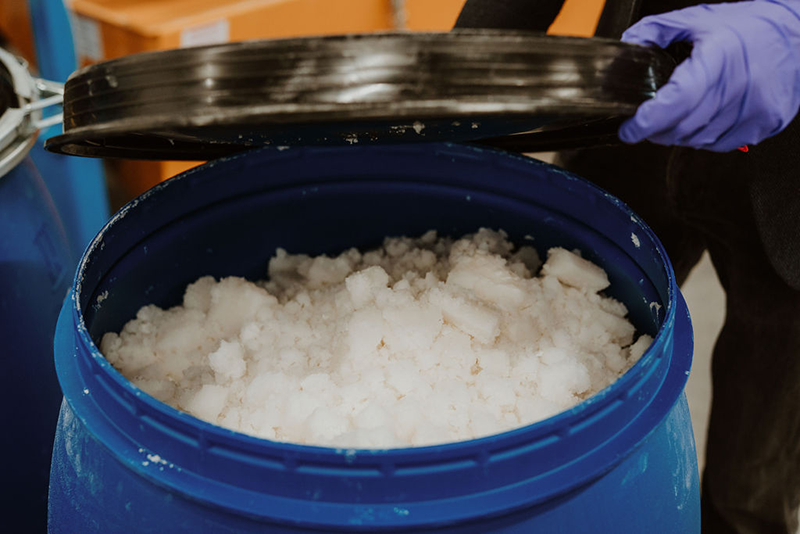
The opening of this direct lithium extraction (DLE) plant by waste-recovery systems company Watercycle Technologies supports the UK Government’s Critical Minerals Strategy.
It addresses the Strategy's targets of meeting at least 10% of annual UK critical minerals demand through domestic production and 20% through recycling by 2035.
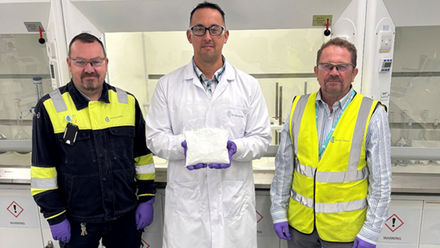
Watercycle Technologies, a spin-off from the University of Manchester, has scaled up its proprietary DLE and crystallisation (DLEC) technology to produce hundreds of kilogrammes of lithium carbonate on a continual basis from UK sources.
This exceeds the quantities currently achievable by conventional, competing DLE technologies such as ion-exchange or adsorption processes.
The Runcorn plant is currently producing enough lithium carbonate equivalent to support the manufacture of 50 mid-sized electric cars per month, with output expected to increase throughout 2026 with deployment of additional modular systems, both in the UK and internationally.
DLEC can also operate on both subsurface brines and industrial wastewater streams, including from chemicals processing and batteries recycling, offering a circular and profitable pathway to securing lithium.
Watercycle Technologies CEO Dr Seb Leaper says the team ‘spent the last three years perfecting a process that operates on every brine type [they] tested, including low-lithium geothermal brines, saturated South American brines and organics-laden industrial wastewaters’.
Leaper added, ‘Our purpose is…to secure access to critical resources for all. We do this by thinking in terms of supply loops instead of supply chains, which feeds into our low-impact and circular design ethos. While resources like lithium are finite, they can be recycled infinitely, with the right technology.’