UK copper and tungsten waste flows assessed
A study from the UK Critical Minerals Intelligence Centre (CMIC) explores opportunities in circularity for these metals.
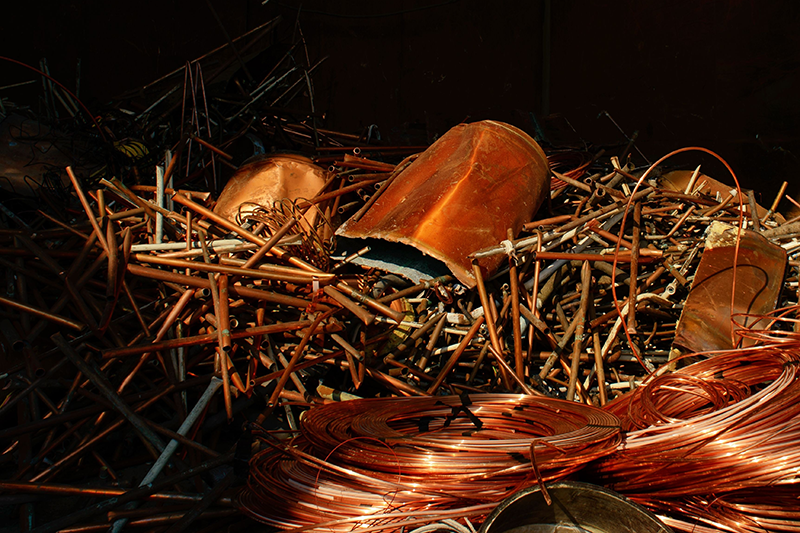
Waste and Scrap Flows in the UK: Assessing Copper and Tungsten investigates imports, exports and uses for criticality and the circular economy.
It assesses how the available economic and trade data could inform the circularity of resource use in the UK.
Published by the Natural Environment Research Council, the study was delivered by the CMIC, funded by the Department for Business and Trade and hosted by the British Geological Survey.
Although copper is not designated a critical mineral for the UK, the study acknowledges concerns about the future of global copper mine supplies.
Tungsten is designated a critical mineral for the UK, with a concentrated global supply chain dominated by China. The UK has one of the world’s largest tungsten deposits (at Hemerdon, Devon), but parts of its supply chain remain an enigma due to poor data resolution.
Key findings and opportunities include:
- Current exports of copper waste and scrap are valued at £1.06bln, yet the contained copper is worth £1.45bln, so the UK is not capturing the value that the secondary copper resource represents.
- There are currently no refinery facilities to process secondary copper waste and scrap in the UK, presenting an opportunity for refining copper circularity.
- Various uncertainties or inconsistencies remain in the available data for tungsten, but the amounts of it are typically modest.
- Finding clear opportunities for improving tungsten circularity requires further research (especially extensive stakeholder engagement, collaboration and data synthesis).
- These cases demonstrate opportunities for future improvement, including increased collection, separation and functional recycling, as well as product development to reduce dissipation loss.
- The waste and scrap from manufacturing processes can be managed so that it can be kept as a resource for future use if new technology makes recycling possible.
The results of the study demonstrate the benefits of improving circularity through new infrastructure, such as a secondary copper refinery. It also identifies areas where more detailed research is needed, such as in tungsten circularity.