Step forward in circularity for wind energy
The REFRESH project has shown that glass fibres from decommissioned blades can be used in the manufacture of new ones.
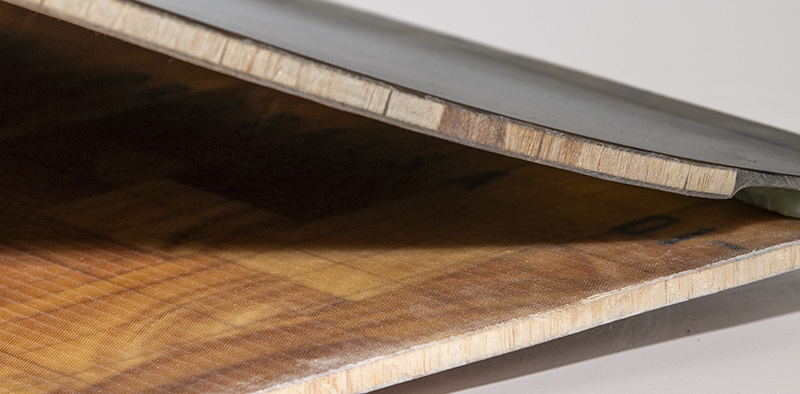
The composite skins of the upper shell of this blade section were manufactured using recycled glass fibre
© CETMA / ÉireCompositesIn this EU funded study, partners CETMA and Gjenkraft AS have collaborated with Cormatex and ÉireComposites to convert glass fibres that are recovered through Gjenkraft’s thermal recycling process. They are recycled into a nonwoven mat for a non-structural application in a new blade.
Other work has also shown that turbine blade circularity is possible.
Marcin Rusin, CEO of Gjenkraft AS says, ‘We have now moved from laboratory testing to a component that demonstrates how recycled fibres can be used in new blades.’
Entering its fourth year, REFRESH is scaling up the recycling processes and designing products using the recovered materials. One promising approach under investigation is the reprocessing of recycled fibres into the nonwoven mats.
CETMA evaluated the mat’s compatibility with the vacuum infusion process, which is widely used to manufacture composite parts for wind energy and other markets.
Tests reveal that composite laminates manufactured using the recycled glass fibre mat exhibit mechanical properties close to those of laminates manufactured using commercial virgin glass fibre mats, with similar characteristics.
While the recycled glass fibre mat has a range of potential applications, returning it to the wind energy sector as an alternative to virgin materials is viewed as the optimal solution. Its suitability for use in a non-structural element of a blade was therefore evaluated.
A 13m long blade was selected for this study. ÉireComposites manufactured a section of the blade tip, approximately one metre by 1.5m in size, by vacuum infusion. The top and bottom shells were produced separately and bonded together, one employed triaxial glass fibre, while the other used the recycled glass fibre mat.
This prototype blade section demonstrates the feasibility of incorporating recycled glass fibre into new blades without altering the manufacturing process. Further experimental validation is now in progress at CETMA to evaluate the mechanical performance of the part.
CETMA is also developing applications for the secondary raw materials resulting from the mechanical recycling process.
Life Cycle Assessment and Life Cycle Costing analyses conducted by RINA Consulting will ensure the sustainability of all the REFRESH solutions, while a blockchain traceability platform will enable tracking of blade components and materials through the value chain.