Sheffield gaining altitude on SAF production
The University of Sheffield is to head up a project to speed up sustainable aviation fuel (SAF) production.
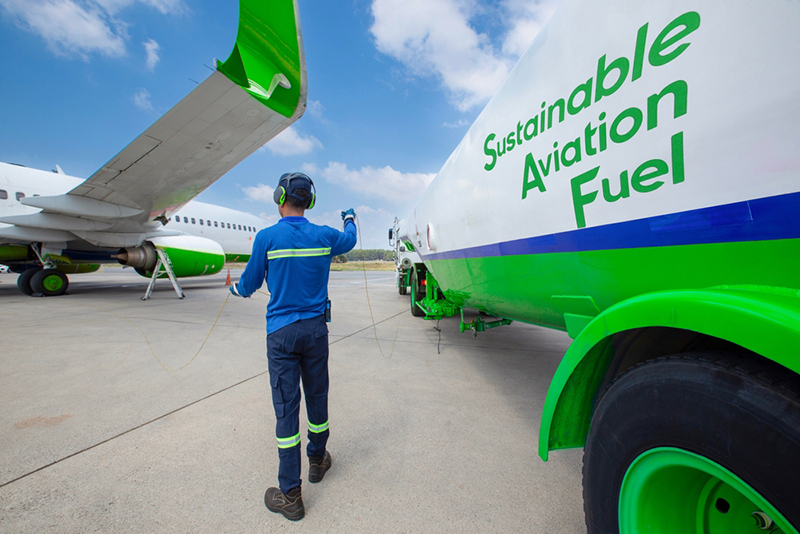
The £1.5mln project to commercialise its new SAF production technology eliminates the need for bio or waste feedstock, as it can produce SAF using a combination of renewable energy sources and next-generation carbon capture technology.
The pathway is called Power to Liquid (PtL). It uses renewable electricity to produce hydrogen and captures carbon dioxide from the atmosphere or industrial processes. The hydrogen and CO2 are then combined to create synthetic hydrocarbons, which can be refined into SAF.
NextGen-SAF, as the project is known, aims to build a world first demonstration plant combining two innovative technologies to produce SAF - a Molten Carbonate Fuel Cell (MCFC) and an Advance Fischer-Tropsch (AFT) reactor.
The fuel cell can generate hydrogen and capture CO2 and the reactor converts the mixture into the synthetic hydrocarbons that are then refined into SAF.
The project will be delivered by a consortium, including Fuel Cell Energy, USA, Green Lizard Technologies, UK, Drax Power, UK, IMI Vivo, Italy, Gardner Consulting, UK, and Leeds Bradford Airport, UK), And is supported by several major airlines.
In addition, the government has awarded 17 companies a share of £63mln to accelerate SAF production. Winners include OXCCU Tech, which is developing a demonstration plant at Oxford Airport, and LanzaJet, which is building a commercial-scale plant in Teesside.