Scientists join Europe-wide food packaging project
Researchers from Kings College London have combined with international partners to develop biodegradable food packaging.
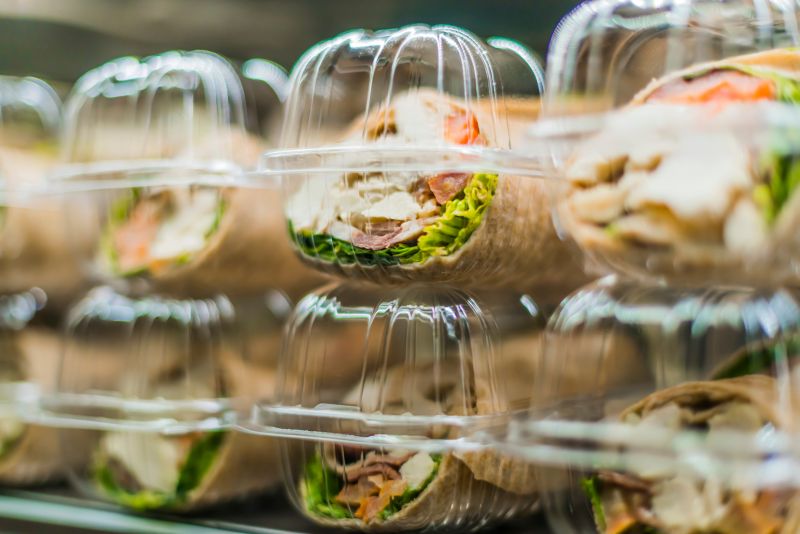
A €3.7mln four-year project, SATISPHACTION, aims to develop high-quality biodegradable food packaging made from a decomposable polymer, polyhydroxyalcanoates (PHA), to provide a robust and scalable alternative to plastic food packaging.
The nine-institute consortium believe PHAs provide a credible alternative to food packaging plastics as their raw materials are naturally produced by bacteria, suitable for food contact.
However, currently these materials are difficult to work with and produce cheaply, so companies blend them with other bioplastics that limit PHAs' biodegradability and capacity to be recycled.
To help solve this, computational chemistry, artificial intelligence and modelling techniques are used to simulate and design PHA polymers with bespoke properties.
By knitting together individual chains of hydrocarbons with key attributes such as decomposability and stability, they hope to create credible candidates that are both biodegradable and scaleable.
Also, they seek to model new recycling methods for this new plastic, both chemically and using enzymes, to break it down into its raw components to be made into packaging once again.This is in the hope that this cuts the cost of the plastic’s production and its environmental impact through its lifecycle.
Following the design of the prototype polymers, industry partner Polykey will produce them and feedback on the initial designs and ascertain the ones that could be scaled up to a full PHA solution.