Rare sequential rippling shown in drinks cans
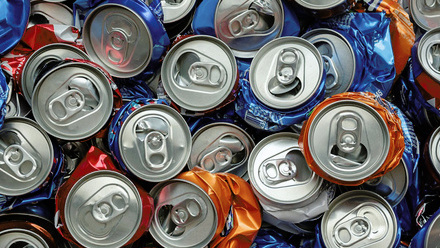
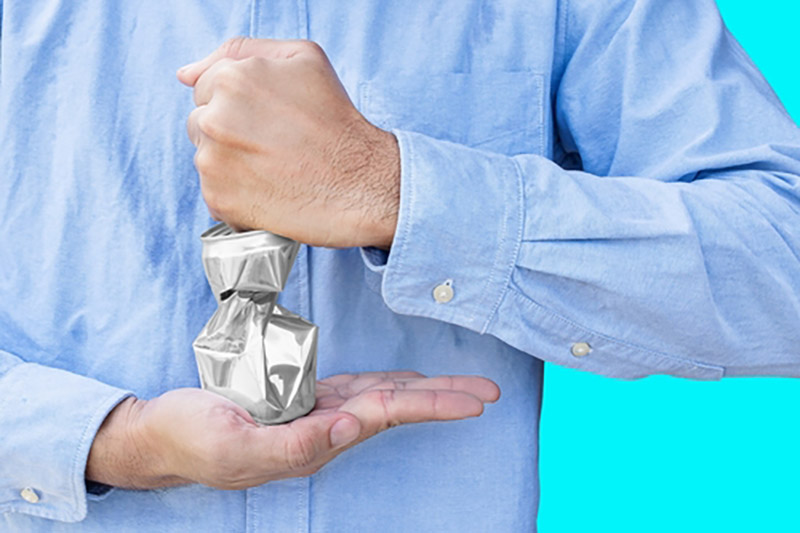
Full aluminium cans follow a rare mathematical process when crushed, says a team at the University of Manchester, UK.
The research team says the findings could have safety implications across multiple industries.
They found the formation of corrugations is homoclinic snaking, where bumps or ripples appear sequentially in a precise, controlled order. The researchers highlight that while mathematicians have suggested this behaviour could underpin the buckling of cylinders, uncovering its trace in a real system is exceptionally rare.
The group believes this could have broader implications as liquid-filled metal cylindriclal shells are used throughout modern engineering - such as industrial storage, transportation, construction, energy systems, and even in parts of rockets.
Shresht Jain, PhD researcher at the university and lead on this study, observes, 'Most of us have stamped on an empty can and watched it collapse instantly. But a full can behaves completely differently. It forms one buckle after another in an orderly fashion, until the whole can is wrapped in evenly spaced corrugations.'
They found that because the liquid inside the can is almost incompressible, it changes the way the aluminium can carries force.
'A standard can usually starts to buckle near the middle,' explains Dr Draga Pihler-Puzovic, Reader in Nonlinear Dynamics at the university. 'But tiny variations in shape or size of the can, can shift where the first ring appears. After that, however, the physics takes over, and the sequence becomes extremely predictable.
'As the can compresses, the metal softens and then stiffens again – this cycle naturally forms the rings. Even changes in the can’s internal pressure don’t alter the overall pattern much. That tells us that the buckling sequence is a fundamental property of any liquid-filled cylinder made from metal, not just a quirky effect of a drinks can.'