Producing rare-earth metals without hydrofluoric acid
Patent-pending process demonstrated for metallisation-grade rare-earth fluorides.
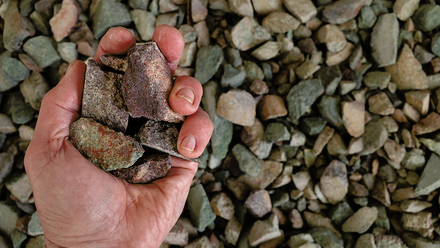
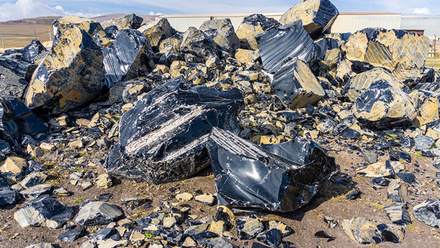
Xenotime ore, which contains yttrium (Y), dysprosium (Dy) and terbium (Tb)
© BJP7images/ShutterstockREalloys Inc., an American mine-to-magnet company, says the process will support the development of a scaleable North American rare-earth supply chain.
Rare-earth fluorides are a critical intermediate used in the production of rare-earth metals.
The hydrofluoric acid (HF)-free process was validated by independent laboratory testing of the resulting rare-earth fluoride material.
Laboratory analysis confirmed the production of fluoride with a final oxygen content of 0.34wt.%, attributed primarily to surface-absorbed water, a level consistent with rare-earth fluoride feedstock used in industrial rare-earth metal production.
Metallisation-grade rare-earth fluoride feedstocks typically require oxygen levels below 1wt.%.
The results demonstrate that rare-earth fluorides suitable for rare-earth metal production can be produced without HF, one of the most hazardous chemicals traditionally used in rare-earth processing, enabling a safer and more scaleable approach to rare-earth metallisation.
They also show the ability of REalloys’ proprietary process to produce low-oxygen rare-earth fluoride intermediates suitable for downstream metallisation and alloy production.
Hydrofluoric acid is widely considered one of the most hazardous and difficult chemicals used in industrial metallurgy and remains a standard reagent in conventional rare-earth fluorination processes. In addition to improving safety, the HF-free process has the potential to reduce operating costs, simplify plant infrastructure, lower environmental and regulatory burdens associated with hydrofluoric acid handling, and support more resilient rare-earth processing supply chains, claims REalloys.
REalloys has filed patent applications covering aspects of the HF-free fluorination chemistry and process design.