Light-activated adhesive patch for neurosurgical sealing
The monolithic Janus adhesive reportedly offers fast, watertight, neurosurgical sealing of dural tears, with high biocompatibility.
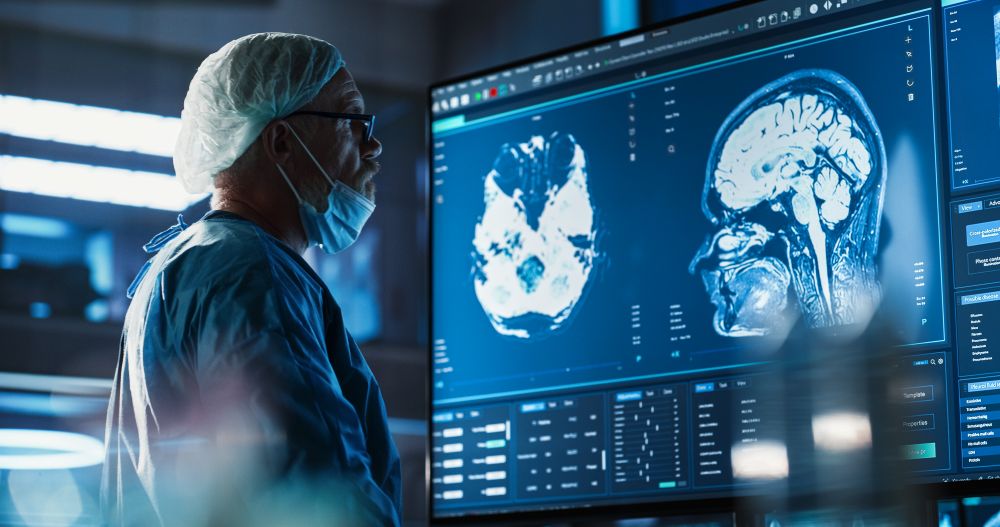
Durotomy is a common neurosurgical complication involving a tear in the protective membrane surrounding the brain and spinal cord. Damage can cause cerebrospinal fluid leakage, leading to delayed healing, headaches and infection, making a reliable, watertight, dural closure necessary.
Tissue adhesives are increasingly seen as alternatives to suturing, but many existing glue-based sealants suffer from excessive swelling, leading to mass effect and unwanted tissue adhesion, which can lead to postoperative complications.
Researchers have explored Janus tissue patches, which feature two distinct surfaces – one that adheres strongly to tissue and another that prevents unwanted adhesion.
Most existing Janus patches rely on multiple materials and complex, multi-step fabrication processes, limiting their practical use.
In a study Pusan National University has developed an innovative light-responsive, monolithic Janus dural patch using photocurable hyaluronic acid (HA).
‘Made from natural biopolymer HA, our dural patch provides strong wet adhesion, along with a lubricating surface that prevents unwanted tissue adhesion, after exposure to non-toxic visible light,’ says Professor Seung Yun Yang from the university.
The researchers selected HA because of its excellent biocompatibility, as well as its intrinsic anti-adhesive and lubricating properties.
To enable light activation, HA was chemically modified with photocrosslinkable groups – methacrylate (MA) and 4-pentenoate (PA).
The resulting HA-based solution was then lyophilised to form a patch with two distinct surfaces - a dense surface with a high polymer concentration and a porous surface with a lower polymer concentration. To further enhance conformal adhesion to wet tissues, the patch was compressed to a thickness of approximately 0.2mm.
Laboratory tests reportedly show that the patch can fully seal the wounds within five seconds using low-energy visible light.
The dense outer surface exhibits strong wet adhesion, achieving high burst pressure and approximately 50% lower friction than conventional dural sealants.
The adhesion strength is said to be up to 10 times higher than commercially available tissue adhesives.
The patch is also said to demonstrate minimal swelling and a reduced mass effect – less than 200% swelling and an approximately 0.1g increase in weight – along with 'high stretchability, flexibility, and excellent biocompatibility'.