Leaving a legacy?
The UK’s nuclear legacy and what it means for future generations

The UK’s efforts to achieve net-zero and deliver energy security for future generations relies on the success of the nuclear renaissance. Much as France counteracted the effects of the 1970s oil crisis and embarked on an ambitious civil nuclear construction programme, the UK now has an opportunity to demonstrate and develop its engineering capabilities and encourage the next generation to join the nuclear journey.
But why is nuclear special and unique? Thermal power generation has been well developed and refined, harking back to the Victorian age. However, one does not simply switch off a nuclear reactor. The high-energy density and management of latent decay heat, coupled with high-ionising radiation potential, means that the principles of control, containment and cooling must continue to be robust during and after decommissioning.
The need to demonstrate structural integrity claims and arguments via substantiating evidence – through robust testing, inspection and assessment programmes in all stages of the nuclear lifecycle – has been a cornerstone of the UK’s nuclear landscape for some time. It is a challenge faced by each successive generation as we leave our mark on our nuclear legacy.
UK regulators have developed the generic design assessment (GDA) process to assess designs that could be deployed at sites in England and Wales. This process has potential benefits for requesting parties of the GDA – it allows risks to be identified and assessed at an early stage in a project, when this can be done relatively efficiently and effectively. Also, a single GDA can be used for more than one site.
Forging your own path
The UK has had a historic habit of pursuing its own path when it comes to engineering solutions, and nuclear is no different. While the rest of the western world was heavily invested in pressurised water reactor (PWR) development, Britain developed various iterations of gas-cooled reactors. First, with Magnox – named aptly due to the magnesium non-oxidising cladding used on the uranium fuel assemblies – and later with the Central Electricity Generation Board’s (CEGB) – now EDF Energy’s – fleet of advanced gas-cooled reactors (AGRs).
The graphite-cored, graphite-moderated, carbon dioxide-cooled designs were adopted for commercial operations in the UK, with two reactors exported to Japan and Italy, while France developed similar technology at the same time.
The use of this reactor technology highlighted the need to understand material ageing and embrittlement, spawning successful collaborations with a network of academic institutions and the then CEGB’s technical offices. This legacy is retained with continued work by EDF Energy with partner universities.
The UK Magnox reactors are being decommissioned with a 100-year strategy, in which the reactor cores are defuelled then kept in storage to allow the short-lifetime isotopes to decay, prior to dismantling and site clearance.
The continued operation of the AGRs beyond their initial design life of 30 years, supported through plant life extension, has presented opportunities to further our understanding of material behaviour after prolonged periods of service. This includes boiler oxidation and corrosion, flow-accelerated corrosion, creep of steel components and challenges to the graphite cores – including dimensional changes and the formation of cracks.
Such challenges have also been instrumental in developing new methods to support integrity assessments, such as advanced non-destructive testing and maintaining margins for structural assessment methodologies. A precedence for demonstrating structural integrity from a UK context has been set, supported by various academic institutions and industrial partners.
As the halcyon days of AGR power generation approaches its twilight, with increasing numbers of units shutting down and entering defuelling, the highly skilled workforce is presented with an opportunity to peacefully retire, taking its tacit knowledge of a unique reactor technology with it, or transfer and adapt to support and develop PWRs, small modular reactors (SMRs) and/or advanced modular reactors. AGRs are at a Concorde moment in the UK’s nuclear journey.
Under pressure
The legacy of high-temperature reactor designs could be retained through the development of advanced modular reactors and high-temperature gas-cooled reactors.
However, to capitalise on the wealth of operational experience held by the rest of the world, it was prudent to adopt the widely used PWR technology, both on the gigawatt-scale and recently to fit the progress for down-selection of SMR technology.
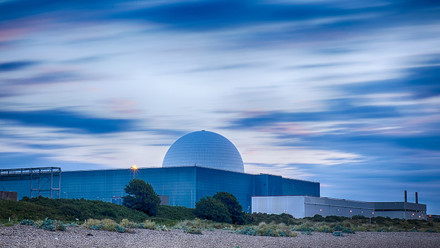
The first civil PWR in the UK was constructed in Suffolk, namely Sizewell B. This Westinghouse-developed unit marked a departure from CEGB and Nuclear Electric’s expertise in operating and maintaining Magnox and AGR units.
The global operational experience of PWRs is shared through various symposia and forums, as well as through the World Association of Nuclear Operators. While all PWRs are designed in accordance with an established design code – such as ASME or RCC-M – much like the precedence set by AGR and Magnox operations, UK-specific requirements have been developed through the evidence-based, pragmatic approach to structural integrity.
The design assessment and licensing process for Sizewell B prompted a much deeper understanding of materials property characterisation, defect tolerance assessments and enhanced inspection techniques, with a strong view to demonstrating the structural integrity safety case throughout operation, lifetime extensions and eventual decommissioning.
The learnings gained through the various testing and development programmes – not limited to thermal-ageing assessments, irradiation-embrittlement characterisation, the effects of pre-strain on synergistic degradation mechanisms, primary circuit-stress corrosion cracking, and creep – have all been essential in ensuring safe, reliable operation.
While there have been many opponents and critics challenging the need for gigawatt-scale reactor designs, citing cost and schedule overruns, it is important to signify that, within the industry, nuclear safety is the overriding priority – where it is paramount to do the right thing when nobody is looking.
Keeping standards high
For example, one does not simply turn off a nuclear reaction. The energy harnessed by nuclear fission and the consequences of when control, containment and cooling fail have been infamously catalogued through events such as Three Mile Island, Chernobyl and Fukushima.
In Great Britain, nuclear sites are regulated by a system in which the nuclear safety regulator (ONR) applies a set of standard licence conditions.
Within the realms of materials and structural integrity, the ONR seeks confidence that the plant is designed, operated and maintained in respect to the code and design intent, with oversight on the governance processes enforced by the licensees.
Additionally, for UK nuclear sites (as elsewhere in the UK), there is a requirement for risks to health and safety to be as low as reasonably practicable (ALARP).
Across the UK nuclear industry, engagement in various forums helps ensure understanding and knowledge is captured and considered to prevent the next near-miss and uphold the highest standards for reliability and nuclear safety. These forums include the UK Forum for Engineering Structural Integrity (FESI), the Operating Experience to LWRs’ Safety, Performance and Reliability, and the Technical Advisory Group Fontevraud Symposia on Contribution of Materials Investigations.
However, cascading of this tacit knowledge and inciting the curiosity of subsequent generations needs to be explicitly pushed to avoid the perennial generational brain drain.
Supply chain challenges
With the remaining golden oldies soldiering on and eking out their final years of safe, reliable generation, large-scale infrastructure projects such as Hinkley Point C and Sizewell C have revived the UK nuclear industry. They are prompting a resurgence in global manufacturing to support European pressurised reactor construction, commissioning and operation in the UK.
Steelworks, foundries and fabricators have sprung into action within the last decade, manufacturing mammoth components in the race to achieve net-zero by 2050.
The technical skillsets required for the nuclear renaissance to be successful is promoting an uptake in traditional skills and techniques that have stood the test of time, while also pushing the development and refinement of materials and their manufacturing routes. However, the brief hiatus in the manufacturing of nuclear new builds globally has impacted the supply chain.
With the pressing need to build larger-capacity power stations, to meet the demands for the large Gen III+ reactor designs, forgemasters are at the limits of their capacity for handling single-piece large forgings for primary circuit components.
In the UK, regular interaction with the ONR has overcome these challenges.
As mentioned, ALARP principles are instilled during nuclear system design. Eliminating welds within a pressure vessel or piping system, for example, will reduce the potential for operator exposure to ionising radiation doses and the potential for contamination during in-service inspections.
However, this necessitates larger ingots to produce the dimensionally larger forgings. Resultant investigations and developments with manufacturers have led to a better understanding of forming techniques due to experiences encountered with prototype parts and manufacturing acceptance tests.
Such examples include positive macrosegregation in the thick section, low-alloy ferritic steel forgings and their effects on weldability and mechanical properties including fracture toughness, or the impact of forging ratios on grain sizes in austenitic stainless steels during ultrasonic testing attenuation.
Knowledge transfer
It is therefore essential that this tacit knowledge is passed on to the next generation to retain the valuable lessons learnt and elicit the development of a new wave of nuclear technologies, while also enticing youngsters into areas of materials science and engineering.
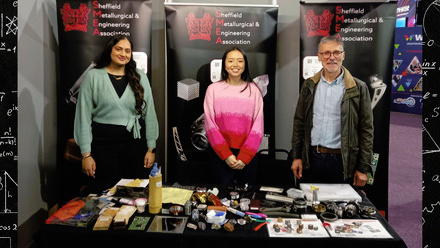
The importance of industrial STEM engagement in schools to promulgate interest in engineering and promote diverse routes into the heavy manufacturing and energy sectors for early careers must be encouraged and prioritised to maintain the throughflow of knowledge.
Furthermore, it is paramount to encourage apprenticeship and degree-apprenticeship schemes to offset the financial hurdles of going into higher education and provide an alternative avenue into the industry, while gaining essential skills through training.
Noting that, proportionally, the number of graduates with materials and metallurgy backgrounds have historically been fewer than from other engineering disciplines, such as mechanical and civil, the diversification and transition of skills within engineering is necessary to enrich and maintain understanding within this industrial sector. It is up to industrial actors and academic institutions to ensure that the nuances of materials and welding continue to be amalgamated within the bigger structural integrity picture.
As codes, methods, manufacturing techniques and technologies continue to be refined and developed, maintaining growth through people will ensure success in delivering a carbon-neutral future.
A nuclear family
The nuclear journey is generational, both in terms of the evolution of diverse nuclear technologies, but also in terms of the retention of skills and knowledge. With modern reactor designs and technologies expected to have a design life of 60 years prior to plant-life extension, it would require generations of a highly skilled workforce to ensure that the legacy remains strong and positive – generating clean energy without costing the earth for generations to come.
The ever-present need to encourage, nurture and develop consummate nuclear professionals starts now, driving towards net-zero while doing the right thing when nobody is looking.
Both academia and industry need to have a call to arms so our great grandchildren, who will inevitably be decommissioning the new power stations, will have thorough insight of our decisions and thought processes. They are our nuclear future.