Going upstream - maritime decarbonisation
Navigating UK maritime decarbonisation.
The UK Government’s Maritime Decarbonisation Strategy was published in March 2025 with a route plotted to 2050, including interim greenhouse gas (GHG) reduction goals for 2030 and 2040.
At a Westminster Forum event on ‘Next steps for maritime decarbonisation in the UK’, five key policy areas were highlighted – emissions pricing, fuel regulation, decarbonisation at ports and at berth, measures for smaller vessels, and energy efficiency. Attendees and speakers felt progress along that course was steady, but with more to do.
The UK Emissions Trading Scheme (UK ETS) Authority has expanded the scheme to include maritime emissions, which will take effect from 1 July 2026. The hope is that placing a price on GHG emissions will incentivise reductions.
On fuel regulation, Dr Eamonn Beirne, Deputy Director of Maritime Environment and Decarbonisation at the UK Department for Transport (DfT), said a transition away from conventional fuels to low-carbon and zero-emission fuels, or near-zero fuels, is 'critical'. He said the DfT intends to introduce domestic fuel regulations and noted that the right regulatory framework should be fit for purpose for new fuels and technologies.
Beirne also highlighted the need to consider interdependencies between international shipping and domestic shipping before implementing legislation nationally. The DfT plans to consult on the topic to ensure stakeholder involvement.
Moreover, Beirne expressed a commitment to the International Maritime Organization’s short-term measures, which were agreed earlier in 2025, including a range of technical, operational and innovative solutions. These measures are intended to reduce GHG emissions and further incentivise energy efficiency.
Raising the mast
Beirne quoted the Global Maritime Forum’s estimate that the sector’s energy transition could deliver about £130-180mln worth of gross value added in the UK and 1,400 to 2,100 jobs on average annually between now and 2050.
Martyn Gray, Director of Organising at Nautilus International, also flagged that the UK’s maritime sector is in fact the largest enabler of domestic growth. 'It adds the best part of a quarter of a trillion pounds to the UK economy, and money invested in maritime training more than pays for itself.'
Kara Brydson, Executive Director of Fisheries Innovation and Sustainability, explains how this coalition is driving innovation for a prosperous and sustainable UK seafood industry. It has jointly leveraged more than £3.5mln for businesses and communities across the UK.
For the past few years, the coalition has been trying to tackle the practicalities of decarbonising the UK fishing fleet. Boats range from 6m porters to 80m pelagic vessels.
With support from Marine Fund Scotland, Brydson’s team created its first detailed concept designs of net-zero fishing vessels. 'These allow skippers to look at their vessel operating at sea today and compare it with what that would look like if you were using methanol, hydrogen [or] battery electric options.'
Anna Krajinska, UK Director, European Federation for Transport and Environment, also sees a revenue-raising opportunity for the UK, 'equivalent to around £1bln a year, which could be invested into a green shipping sector in the UK, via the National Wealth Fund, driving measures that deliver growth and jobs in clean maritime [and] revitalising coastal communities, where new growth and new jobs are desperately needed'.
Since 2022, the UK Shipping Office for Reducing Emissions (UK SHORE) programme in the DfT has allocated £240mln in R&D funding to develop clean maritime technologies.
In this programme, Innovate UK has funded more than 240 projects across the Technology Readiness Level scale aimed at addressing various barriers to maritime decarbonisation.
Match funding has benefitted all UK nations and regions, supporting over 500 organisations, including over 250 SMEs. This has enabled the sector to develop electric and efficiency solutions for various vessel types like ferries, cargo ships and offshore wind boats, and progressed zero and near-zero greenhouse gas emission solutions, such as hydrogen, ammonia and methanol.
In September last year, the DfT announced a further £448mln of R&D investment between 2026 and 2030. A statement from the Minister for Aviation, Maritime and Decarbonisation, Keir Mather MP, said, 'Subject to business case approval, this will unlock innovation and investment potential in UK technologies, in UK businesses, at UK ports and in UK shipyards (see box-out below).'
Turning the tide
The second phase of the Department for Transport’s UK Shipping Office for Reducing Emissions (UK SHORE) programme aims to allow industry to plan the next five years of clean maritime innovation. In collaboration with Innovate UK, UK SHORE will:
Accelerate the commercialisation of developed technologies, including through a future round of the Zero Emission Vessels and Infrastructure competition to be launched in 2026. This will fund the build and commercial trial of clean maritime solutions.
Develop emerging technologies through to readiness for market, including through a seventh round of the Clean Maritime Demonstration Competition to be launched in 2026, focusing on real-world demonstration projects concluding in 2030. This will be followed by two more rounds to be launched between 2027 and 2029.
Support early scientific research of novel technologies through the ongoing work of the Clean Maritime Research Hub until at least 2028, in collaboration with the Engineering and Physical Sciences Research Council.
Enable development of whole-system solutions and penetration of international markets through international R&D. This includes participation in the global Eureka research programme to conduct pre-deployment trials.
Focus efforts on tackling the barriers to scaling up the technologies and companies supported through this funding, working with Innovate UK, across government, the National Wealth Fund and the British Business Bank.
Beirne also highlighted how the Maritime and Coastguard Agency is launching its UK Maritime Innovation Hub in April 2026. He says the hub will offer tailored support to vessel operators, shipbuilders, start-ups and technology developers seeking to bring novel ideas into safe, real-world operations.
Whether an organisation is working on autonomy, alternative fuels, or smart shipping, experts will guide them through the regulatory journey, from prototype to sea trials, helping generate the evidence needed for approval under frameworks such as MGN 664, MGN 550 and the Workboat Code Edition 3.
Coast-to-coast opportunities
On the skills transition afoot in the sector, James Lovett, Innovation Lead for Future Maritime Technologies at Innovate UK, said, 'We know there’s a skills shortage in many areas associated with industrial development in the UK, and maritime is no exception, particularly when it comes to alternative fuels.'
Gray further stressed the nature of the challenge. 'We are talking about new volatile fuels, high-voltage hybrid systems and completely new operational protocols. The workforce reskilling, training and capacity building required is not a minor update, it is a complete overhaul of the maritime professional competency and frameworks needed in our education and training.'
He asked, 'Are we investing in our people at the same rate we are investing in our technology right now? I would argue we are not, and this creates a critical implementation barrier.'
It risks new ‘green’ vessels being tied up at the quay without certified, competent crews. And infrastructure being established that cannot be operated safely, effectively, or maintained adequately.
He continued, 'What’s going to be the biggest challenge is making sure that everyone can keep pace with that as well as the pace of change that’s happening in wider technological development', while already facing a recruitment challenge.
He sees vast capabilities for renewable energy in the UK and offshore and believes green hydrogen should be something the UK can specialise in and develop, 'but the investment needs to be made now'.
Steady course
But there are challenges in decarbonising shipping. The vessels are not owned by the ports but by third parties. Marlene Mitchell, Commercial Manager at Port of Aberdeen, explains that all they can do is to support, influence and work alongside the operators 'as they move through their decarbonisation journeys'. This means they 'cannot drive the next-generation fuels and need to be responding to changes in the marketplace'.
However, ports are looking to be more self-sufficient and less grid-reliant, Mitchell said, 'Grid capacity is a challenge as we decarbonise, because most of the time we are looking at operating with an electricity source, and if we cannot have a reliable, cost-effective source of grid power, then we are really going to struggle.'
They are also exploring battery storage integration. She continued, 'They give us some stability, potentially when the grid supply is challenging…But all of these moves to become greener and to become energy hubs have a very significant capital investment requirement, and we need to understand how to make this more efficient for ports.'
Lovett pointed out that the UK, like other transport networks, 'does not readily lend itself to quick power connections in particularly congested urban settings where ports are historically located', and this impacts overall R&D deployment time.
Mark Simmonds, Director of Policy and External Affairs at the British Ports Association, echoed that, like other sectors, moving from using relatively small amounts of electricity to, in future, needing significant amounts of power is challenging for ports. 'Ports are finding that this is constraining their ability to decarbonise their own operations.'
He was pleased 'the recent Industrial Strategy published by the government defines ports as a foundational sector, which we understand should give us access to the Industrial Competitiveness Scheme, allows for cheaper power to ports and prioritisation in terms of grid connection'.
Krajinska added that a transition in liquefied natural gas (LNG) is not seen as 'possible', because of timelines for vessel implementation and how long ships stay on the market (more than 25 years). If they start now 'there’s no way that we can decarbonise that sector of shipping by 2050'.
She also indicated the need for clarity on biofuel’s sustainability, especially those fuels based on food crops.
To ensure ‘green’ fuels are used, she suggests shipping operators must be mandated to avoid bunkering somewhere else with no such fuel requirements.
Thomas Davies, Director of Analytics at CORE POWER, asserted that 'progress will depend on alignment across the industry. Trials of alternative fuels like ammonia and methanol are clearly advancing, but several barriers could persist, including volumetric, low-energy-density production constraints, which will be tied to renewable electricity availability and safety and handling risks with bunkering infrastructure, much of which remains a pre-final investment decision.'
He sees 'marine nuclear energy as one of the most robust pathways to overcoming the delivery and infrastructure barriers at the heart of this discussion'.
Professor Tony Roskilly, Director of the Durham Energy Institute and UK National Clean Maritime Research Hub at Durham University, UK, examined the various power and propulsion systems.
He said modular electrical architecture, DC microgrids and superconducting electric systems can be developed to improve system integration. He believed energy efficiency measures should be in place to encourage hybrid systems that combine technology. He believes these will reduce port and voyage emissions and the support is needed for demonstration projects.
He added, 'Lean combustion engine technology is crucial if we are due to decarbonise the power and propulsion system.'
Although he believes the sector will gradually increase the availability of low-carbon marine fuels, he says supporting further development of dual-fuel engine systems, retrofit solutions and producing methanol-, hydrogen- and ammonia-ready engine technology is needed in the short-term.
'Ultra-lean, low-NOx, ammonia, hydrogen combustion and new zero-emission, oxygen, hydrogen, closed-cycle engine technology is being developed and will provide the megawatt-scale power required for shipping with high energy efficiency in the future.'
Roskilly also noted that carbon capture and storage could support continued e-field production, and mentioned accelerating the development of fuel cell technology and its marine environment application.
'This needs to demonstrate hybrid powertrains and focus on modularity, waste-heat recovery and increased overall efficiency. Methanol and ammonia fuel cell operation, with durability testing under maritime conditions, needs to be supported, and recycling frameworks for fuel cell stacks would minimise lifecycle impact and improve the sustainability of this technology.'
Interconnectivity
The potential for integrating vessel and propulsion design using artificial intelligence (AI) and digital twins to improve hydrodynamic efficiency was also explored at the event.
Roskilly encouraged industry data sharing and believed support for integrating advanced vessel technologies could greatly improve vessel efficiency.
Port and infrastructure decarbonisation could also benefit from roadmaps linking electrification, hydrogen refuelling and smart logistic systems.
Roskilly thinks it’s 'crucial' to provide incentives for zero-emission port equipment upgrades and hydrogen-ready port operations to accelerate the integration of renewable micro-grids and short-side power with intelligent energy management – power systems that can accommodate the growing demand for electricity, particularly from renewable sources.
Furthermore, he saw value in establishing green shipping corridor agreements and coordinating fuel supply infrastructure and freight logistics.
Mitchell was optimistic. 'We have renewable sources like wind and solar being deployed. We’ve seen significant activity and awards across the whole UK network – in England, Wales, Scotland, Northern Ireland.'
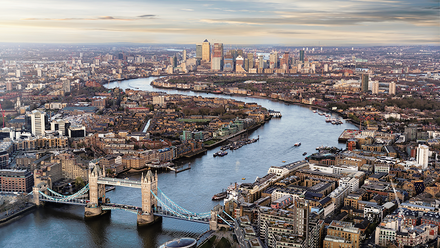
Julia Makin, Head of Sustainability Projects and Partnerships at Port of London Authority, outlined, 'Rivers like the Thames are where global climate and environmental issues become real – rising sea levels, storm surges, flooding, air quality concerns, health impacts and biodiversity loss are already placing pressures on London’s river and surrounding communities…the Thames represents a microcosm of challenges faced in many places.
'We have diverse stakeholders, overlapping regulatory jurisdictions and constrained industrial and residential infrastructure. So, collaboration is essential, because no single organisation has all the technical, financial, regulatory or logistical capacity needed to enable the transition.'
She continued, 'Many of the elements of decarbonising maritime are interdependent…vessels need fuel. Fuel needs supply and safety regulation. Shore power requires electricity, grid capacity and connections, and the impacts from emissions cross over into public health planning and transport policy.'
Alice Hall, also Head of Sustainability Projects and Partnerships at the Port of London Authority, highlighted that the Authority is already working with stakeholders to turn ambition into action on the Thames, with a goal for achieving net-zero emissions from operators and across its value chain by 2040. Most recently, the Orbit Clipper was the first fully electric passenger ferry in the Uber Boat scheme operating on the Thames. The DfT and Innovate UK funded its development.
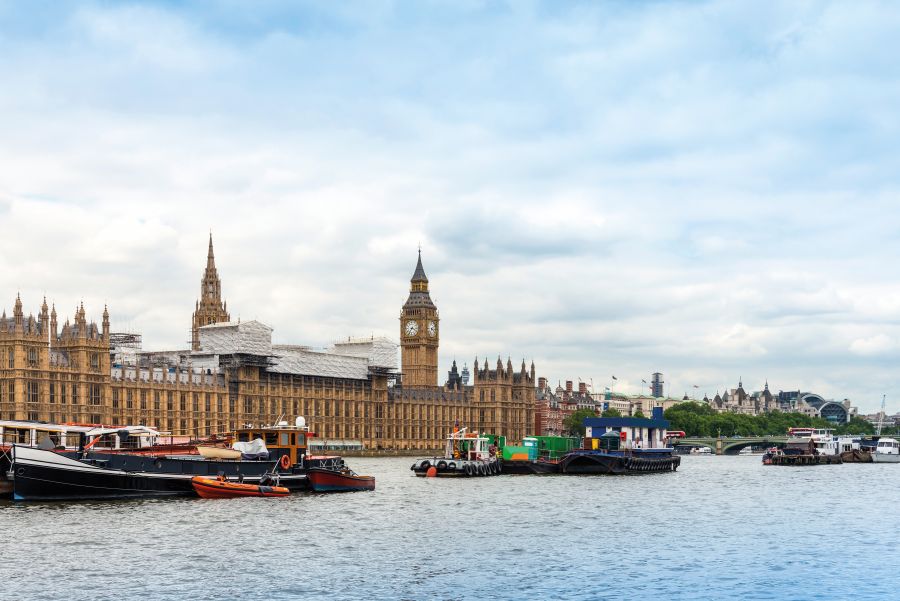
Makin sees reaching net-zero on the Thames as 'not just an environmental imperative' but 'an economic opportunity'.
Across the waters
Viewing the competition internationally, Simmonds stated, 'I’m not particularly optimistic our fuel, our energy, is going to be cheap enough to compete in future.' If the price of fuel goes up, 'will there still be the incentive to plug into assets that they’ve [already] invested significant amounts of money in, and that will typically have a 20-to-30-year payback?'
Roskilly wanted to emphasise safe innovation. He stressed the need to develop international safety codes for ammonia, hydrogen and methanol storage and handling. He revealed data produced in the 1960s is being used for a lot of research into safe storage and bunkering systems. New data is needed, he flagged, as well as innovation around cryogenic hydrogen systems and cold energy recovery to enhance overall efficiency and energy optimisation.
But there are positives too on the UK’s contribution to the global problem of decarbonising shipping. He said, 'We’re impacting directly in the new vessels that are being built in South Korea, in China, elsewhere. We’re not actually doing the physical build, but we’re contributing new AI tools, software tools. We’re demonstrating [how] to combust ammonia in the most efficient and effective way. All these areas we’re contributing to, that’s creating jobs and creating opportunities across the UK.'
The UK can act as a hydrogen hub, Mitchell asserted.
'We will look at importing and exporting of green hydrogen, utilising renewable electricity to produce hydrogen for fuel and for industry. We’re also, as a port, going to be critical locations for the construction and operation of offshore wind farms, and that operation starts long before we see the turbines going into the water.'
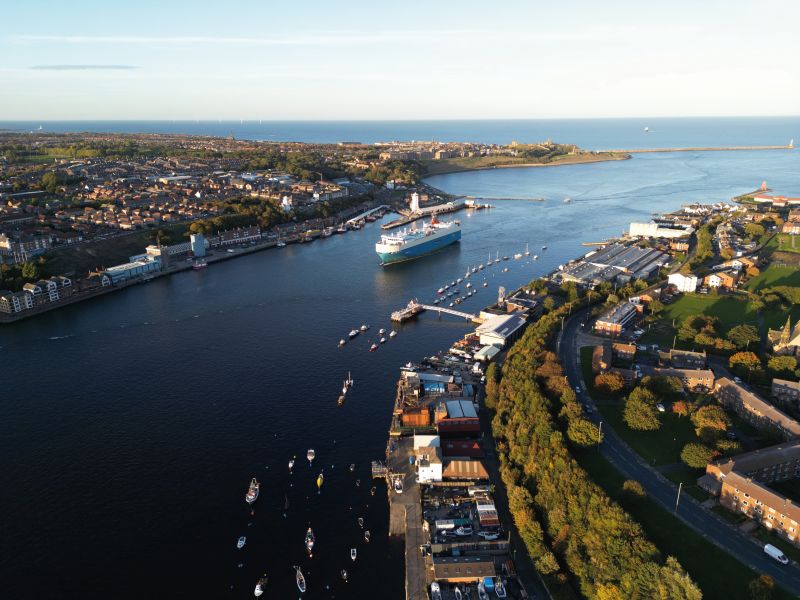
Lovett highlighted green shipping corridor projects with Norway, Denmark, the Netherlands and Republic of Ireland that involved port participation. 'The Port of Tyne has been working very closely with Port of IJmuiden in the Netherlands to be able to develop the concept of the green shipping corridor and understand each other’s supply chains…the actual ability of a vessel to be able to refuel with an alternative fuel at both ports and the local regulations that go with those ports.'
Krajinska underlined, 'The government’s own maritime decarbonisation plan makes a very clear promise, if international measures are delayed or insufficient, the UK will take domestic action, especially on tackling international emissions.'
As part of the UK-EU reset agreement, there are plans to look at including international shipping emissions.
She concluded, 'We’ve waited long enough for international consensus. It’s really time now for the UK Government to act and sail ahead of the current, rather than to drift with it. The technology is ready.'