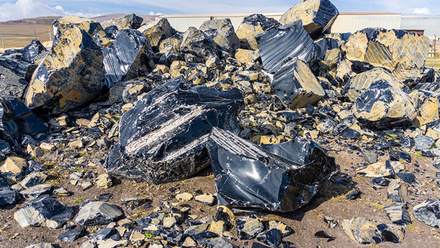
Generating hydrogen fuel from wastewater
Acidification could allow wastewater to replace clean-water consumption in hydrogen production.
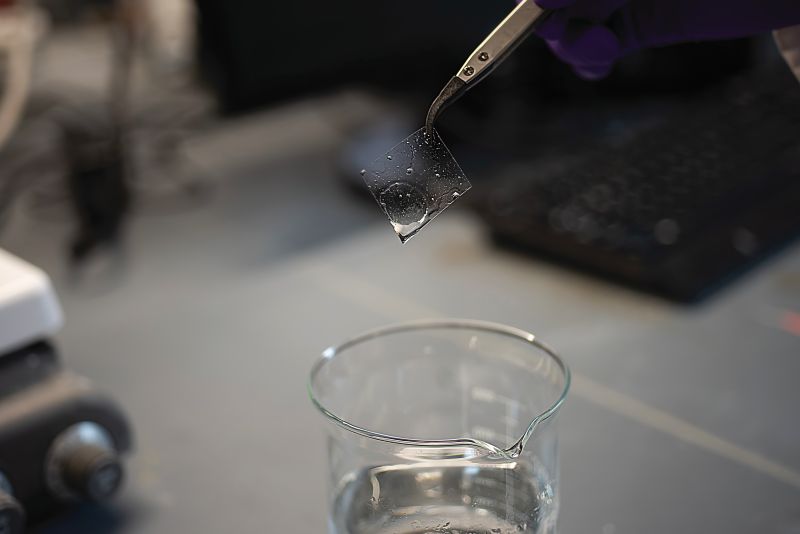
A research team at Princeton University, USA, has added sulphuric acid to treated wastewater, creating an acidic buffer that acts as a rich source of protons. These are said to outcompete other ions to maintain ion conductivity, sustain electrical current and enable continuous hydrogen production.
The scientists suggest reclaimed water from wastewater plants could be used in this way after it has been treated to the point where it could be discharged to aquifers, or used for irrigation or industrial cooling.
'Every town has a wastewater treatment plant…That’s a very distributed source of water for the hydrogen economy,' says Professor Z. Jason Ren at the University.
He explains that wastewater has previously been explored for hydrogen production, but typically fails after a limited time. Ren’s team sought to understand why by analysing different components of the system, including catalysts, electrodes and membranes, mapping out the potential corrosion and fouling pathways.
They also performed diagnostic experiments in a proton-exchange-membrane water electrolyser to compare pure water to reclaimed wastewater.
Through electrochemical tests and advanced microscopic imaging, a rapid decline in system performance was observed over less than eight hours with reclaimed wastewater when it had not been treated with sulphuric acid. The main cause identified is the calcium and magnesium ions sticking to the exchange membrane. This turns it from a porous pathway to a solid barrier blocking ion transport.
Ren says it would usually be 'expensive to remove all those ions', but through acidification, they can reduce the cost of treating water for hydrogen production by about 47% and the energy cost of the treatment by around 62%.
'We identify mineral cations as the key cause of rapid performance loss in reclaimed-water electrolysis and show that a simple acidification step effectively prevents membrane contamination.'
This is especially critical in regions where fresh water is scarce, yet hydrogen potential is high.
Furthermore, the acid can be recirculated for use. The system can last for 'more than 300 hours without apparent issues', shares Ren. The calcium and magnesium ions reportedly remain in the soluble phase without interfering with circulation.
The team says their approach has potential to be scaled up, but they are still working with industry partners to test how this might be possible. They need to address long-term durability testing, optimise corrosion-resistant components and test across varied wastewater quality. Scaling up will depend on integrating acid management and detailed technoeconomic analysis.
However, once scaled up, the researchers claim their work should be applicable anywhere, as 'almost all countries use similar wastewater treatment processes, and impurity compositions fall within comparable ranges'. It would still be necessary to test for site-specific validations, as salinity, contaminant types and pre-treatment standards can vary.
Possible avenues for further work include validation of the approach in larger, longer-duration electrolyser systems, development of other fouling-resilient membranes, optimisation of acid recycling and assessment of system performance in real wastewater conditions.
They are also exploring whether ultra-pure water could be replaced with pre-treated seawater or brackish water in hydrogen production.
Ren adds that this acidification strategy might have 'broader value in [other] wastewater reclamation processes where mineral ions hinder membrane performance, such as membrane desalination, resource recovery, or advanced oxidation systems.
'Hydrogen is straightforward as it is a gas product, which doesn’t mix with wastewater impurities in the liquid'.