Boost to UK offshore wind
Funding for floating infrastructure, Crown Estate promotes upcoming licensing round and UK wind generation hits new high.
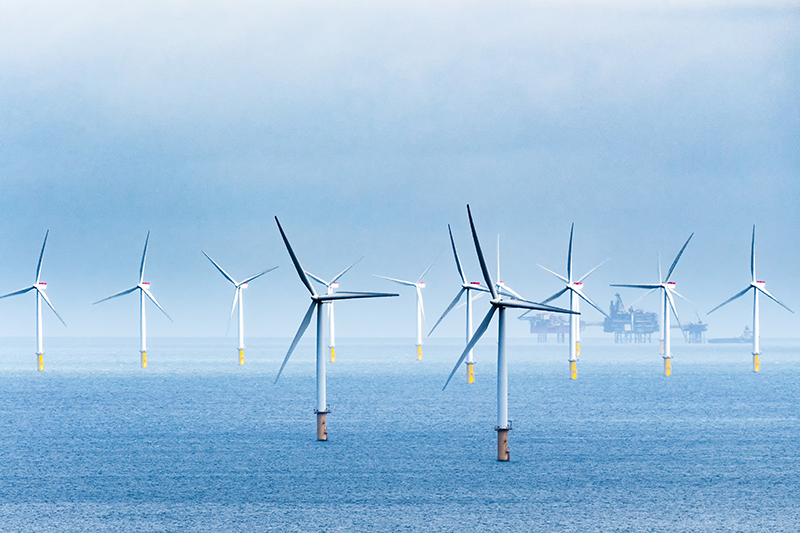
Port Talbot is receiving £64mln in investment to become the ‘first port in the Celtic Sea’ specifically for floating offshore wind.
The Celtic Sea reportedly provides some of the best conditions in Europe for floating offshore wind turbines, which are usually built in deeper waters to harness stronger and more consistent wind speeds.
The government believes this will add at least 4.5GW of domestic electricity, protecting households from fossil-fuel volatility, creating up to 5,000 jobs and unlocking over £500mln in further investment for the port.
The funding will enable Associated British Ports to complete the design and engineering work needed to build the floating offshore wind infrastructure at Port Talbot.
The site was secured in a 2025 seabed leasing round by The Crown Estate.
The investment aligns with the allocation of £122mln in funding for training Tata Steel workers in Port Talbot and to support local businesses and community, as well as providing £500mln for delivering a state-of-the-art electric arc furnace.
The floating offshore capacity will also support the British wind energy sector more widely, which has recently set a new record for energy generation.
A high of 23.88GW generated in a day was confirmed on 25 March by the National Energy System Operator (NESO), beating the previous record of 23.825GW.
CEO of RenewableUK Tara Singh claims this is enough power for 23 million homes, ‘with gas falling to its lowest level of generation for nearly two years, providing just 2.3% of our electricity’.
Seabed manager The Crown Estate has also begun a programme of market engagement ahead of the official launch of the Offshore Wind Leasing Round 6 (LR6), set for the first half of 2027.
It expects this next round to accommodate a capacity of around 6GW or more, mainly in the North East of England and in water depths suitable for fixed-bottom turbines, taking into account NESO’s strategic energy and electricity network plans.
The Crown Estate says the leasing round could create up to 10,000 direct jobs and add a boost of over £12bln to the UK economy.
This will be the first leasing round brought to market using The Crown Estate’s new seabed management tool, the Marine Delivery Routemap.
The Routemap considers spatial data from a number of sectors dependent on the sea space, providing greater long-term visibility on how the seabed can be developed and to inform future leasing, licensing and sector plans.
Further seabed opportunity areas have been identified across the South West, Wales and other regions. These could form the basis of subsequent leasing rounds.
Greater visibility is also supporting collaboration with NESO, reportedly ensuring LR6 is the first to fully align with the UK’s evolving energy system through NESO’s Strategic Spatial Energy Planning.