Black metal boost to solar thermoelectric generators
US researchers have deployed three connecting strategies to engineer high-efficiency solar thermoelectric generators (STEGs).
They believe this could result in greater take-up of this power source for solar electricity generation.
Compared with the roughly 20% sunlight-to-energy conversion rate that residential solar panel systems deliver, STEGs typically produce less than 1%, even though they can harness different types of thermal energy besides sunlight.
A team at the University of Rochester’s Institute of Optics has developed a femtosecond laser surface processing technology to overcome these energy efficiency limitations. The process converts regular metals used in a STEG device to either super-absorptive or super-emissive.
A lab-based demonstration of the technology reportedly delivered 15 times more power than STEG devices currently in operation.
Typically, STEGs are sandwich-like, with one hot and one cold side and semiconductor materials provide the filling in between. A physical phenomenon known as the Seebeck effect explains the device’s ability to generate electricity – a thermoelectric phenomenon occurs when the temperature difference between the two sides creates a voltage.
The Rochester researchers have reduced the efficiency gap by modifying a test device’s hot and cold sides, leaving the semiconductor materials untouched.
Professor Chunlei Guo at the University explains how this involves optimising the parameters on its single-step femtosecond-laser process, to maximise solar energy absorption and heat trapping on the hot side and heat dissipation on the cold side.
The team deploys three strategies to achieve the power generation improvements they report.
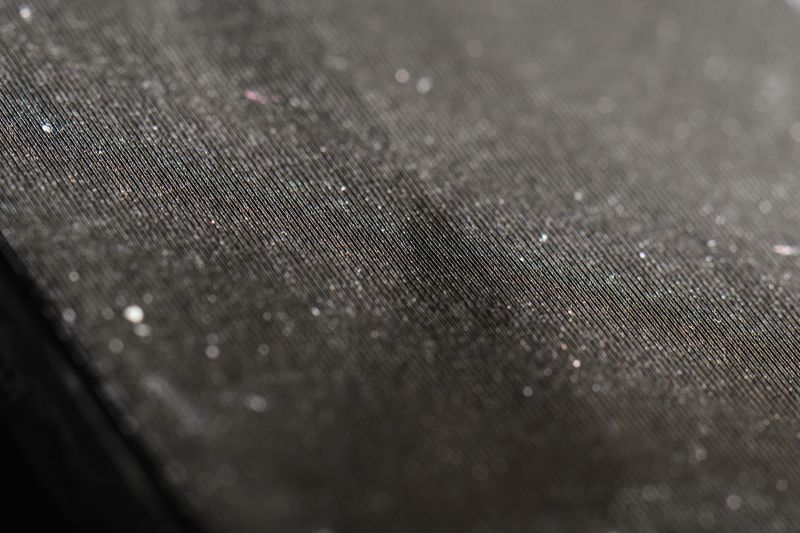
The modification to the hot side centres on a lab-developed black metal that improves how regular tungsten can absorb sunlight at the solar wavelengths. By deploying powerful femtosecond laser pulses to etch metal surfaces with nanoscale structures, the black material serves a dual purpose – enhancing the tungsten’s light-absorbing capability while minimising infrared heat loss at other wavelengths.
Next, Guo says the team covers the black metal with a transparent polyethylene film a few millimetres above the surface to trap a thin layer of air, which creates a mini, lightweight ‘greenhouse’ effect.
'The film passes most sunlight while the air gap insulation is thin enough to curb convection but thick enough to avoid direct conduction,' he explains.
'Simulations and experiments showed that this set-up significantly reduced convective and conductive heat losses, raising the hot-side temperature and boosting the device’s electrical output.'
The third and final strategy targets the STEG’s cold side. Here, the femtosecond laser fires pulses to create microscopic grooves on aluminium. The resulting heat sink creates a ‘micro-structured dissipator’ with a larger surface area that Guo says enhances convection. At the same time, the dissipator’s micro- and nanoscale roughness boosts infrared emission.
The study indicates this final strategy can double the cooling performance of a typical aluminium heat dissipator.
'This micro-dissipator delivered much higher electrical output than a device with a regular aluminium heat dissipator while maintaining a light weight and compactness,' says Guo.
In a demonstration, Guo’s team built four identical STEGs – an unmodified one; one with only the cold-side micro-structured dissipator; one with only the hot-side black-metal absorber and plastic cover; and one featuring both improvements. The researchers tested all four under a controlled solar simulator while each powered a single red LED.
Guo reports that 'the untreated STEG could not light the LED; the cold-side-enhanced one gave only a faint glow; the hot-side-enhanced one lit it brightly; and the fully combined STEG drove it at full brightness with far less sunlight than the control required'.