Adhesive inspired by sucker fish sticks to soft surfaces underwater
The device has been demonstrated to adhere to the lining of the GI tract, where the mucosal layer makes attaching any kind of drug-delivery capsule very difficult.
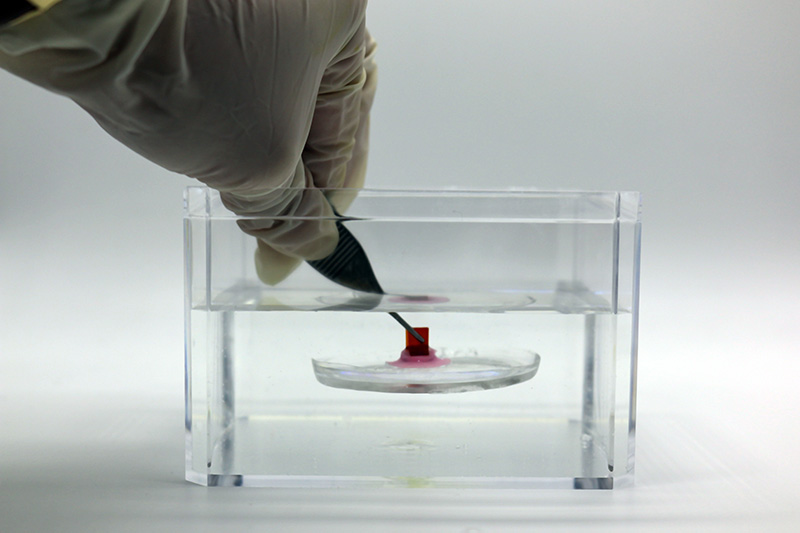
MIT engineers have devised a novel adhesive system that can attach firmly to soft surfaces, even underwater
© Courtesy of the researchersThe researchers at MIT, USA, have shown the system to have automatic self-adhesion, without motors, to deliver HIV antiviral drugs or RNA to the GI tract, and say it could also be used as a sensor for gastroesophageal reflux disease.
They think it could also be attached to a swimming fish to monitor aquatic environments.
It is inspired by a hitchhiking fish called a remora that uses a specialised suction organ to latch onto sharks and other marine animals. Also known as a sucker fish, it clings to its hosts for free transportation and access to food scraps.
MIT engineers collaborated with scientists from Boston College, USA, to find out how the fish attaches itself to dynamic soft surfaces so strongly.
They discovered the large suction disc uses pressure, like a plunger, and each one is divided into small adhesive compartments by rows of plates called lamellae wrapped in soft tissue. These can independently create additional suction on non-homogeneous soft surfaces.
There are nine species, and in each one, the rows are alighed a bit differently. Some have unparallel, highly tilted orientation of the lamellae, others have highly parallel orientations, and they can slide without losing adhesion as they are rapidly dragged through the water.
The MIT team has used silicone rubber and temperature-responsive smart materials, which they are calling MUSAS – mechanical underwater soft adhesion system. The disc has rows of lamellae, with the researchers finding the tilted rows the most effective.
Within them are microneedle-like structures that mimic the spinules in the remora. These are made of a shape-memory alloy that is activated when exposed to body temperatures, allowing them to interlock and grasp onto the tissue surface.
The researchers say it attaches to a variety of soft surfaces, even in wet or highly acidic conditions, including pig stomach tissue, nitrile gloves and a tilapia in a fish tank. After adding a temperature sensor to the device, the researchers have attached it to a fish and can accurately measure water temperature as the fish swam at high speed.