A world of resources
Minerals Matter is an industry-backed initiative connecting young people with the mineral products and mining sectors.

The UK’s minerals and mining industries are at a crossroads. With the global drive for net-zero increasing demand for critical minerals and sustainable construction materials, the need for skilled, informed people has never been greater.
Against this backdrop, Minerals Matter, the cross-sector education and outreach programme supported by the Mineral Products Qualifications Council (MPQC) and the Institute of Quarrying (IQ), has delivered a year of transformational growth.
Over the past 12 months, the initiative has helped tens of thousands of young people, educators and communities understand the vital role of minerals in society.
New data reveals a dramatic expansion in ambassador activity, school engagement and digital reach, setting a new benchmark for industry-education collaboration. The number of ambassadors carrying out outreach activity has more than doubled and student engagement is up eight-fold.
'This year’s figures show the powerful impact of what can be achieved through collaboration between industry and education,' says Hannah Higley, Future Careers Manager at Minerals Matter. 'We’re proud to be reaching more young people than ever before and helping them discover exciting career opportunities in our sectors.'
The power of partnership
Minerals Matter was founded on a simple premise – that the future success of the minerals and mining industries depends on a strong, visible connection with the next generation.
The initiative provides a collaborative platform for companies, educators and professional bodies to showcase the sector’s relevance, diversity and sustainability credentials.
Spanning aggregates, lithium, cement and more, the mineral products sector underpins everything from clean energy to infrastructure. Yet, awareness of its importance remains limited among young people. Minerals Matter is working to change this, not through abstract promotion, but through authentic encounters with real people, real materials and real opportunities.
The organisation’s partnerships now encompass the Mining Association of the UK (MAUK), the University of Derby’s Centre for Mineral Products (C4MP), The Careers and Enterprise Company (CEC), and numerous regional employers. Together, they are embedding materials education into classrooms, career pathways and community programmes nationwide.
This approach aligns directly with government priorities. The 2022 UK Critical Minerals Strategy (which has recently been updated) explicitly commits to 'rebuilding our skills in mining and minerals' and training 'the next generation of miners, geologists, engineers and beyond'.
Did you know?
The 2025 numbers from Minerals Matter tell a compelling story:
115 approved ambassadors, up from 62 the previous year.
207 outreach activities, almost three times last year’s total.
78,710 participants reached (an 881% increase).
163 schools engaged (a 279% increase).
641 ambassador hours delivered
Ambassadors leading the way
At the heart of this success lies the Minerals Matter Ambassador Network, a growing team of professionals volunteering their time to inspire others.
'As an ambassador, it’s been incredibly enjoyable and rewarding to inspire students who had never even heard of our industry before,' says Ian Cross, an ambassador from Heidelberg Materials. 'These outreach sessions are changing perceptions and opening eyes to careers they wouldn’t otherwise consider.'
Companies such as Imerys Minerals exemplify this approach, with seven ambassadors acting as Enterprise Advisors to local schools and hosting 38 work experience placements across Devon and Cornwall. Students gain first-hand exposure to roles across engineering, finance, IT, geology, surveying and logistics, turning curiosity into career intent.
'Our outreach isn’t just about promotion,' adds Lisa Saunders, Director of Lisa Saunders Consultancy. 'It’s about providing meaningful experiences, resources and role models to help students and teachers see the real-world value of what we do.'
From classroom to quarry face
The year of 2025 has seen hands-on engagement. Minerals Matter has partnered with Tarmac, Heidelberg Materials, Cemex, Future Is Mine and C4MP to deliver major national outreach events.
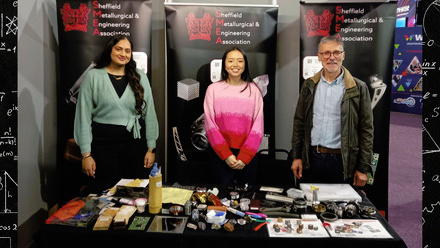
At the Big Bang Fair in June, more than 5,000 students and teachers interacted with the team over three days, learning about the science, sustainability and career potential of the mineral products sector. Earlier in the year, a Careers Live broadcast reached 8,000 students during National Apprenticeship Week, bringing apprentices and professionals directly into classrooms via live Q&A.
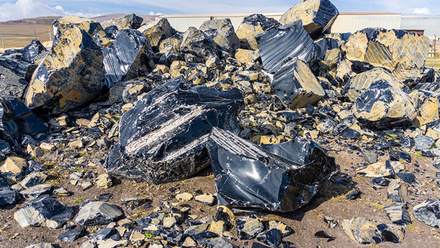
Practical resources underpin this work. Mineral Mission boxes, created with Future Is Mine and inspired by Ben Lepley MIMMM at SLR Consulting, bring real minerals into the classroom. Donations from Imerys and Cornish Lithium have stocked these boxes with quartz, malachite, wolframite and lithium granite, connecting students with the materials that are essential in shaping a greener future.
Educating the educators
Teachers are often the gatekeepers of career awareness. To equip them with accurate, up-to-date insight into the minerals and mining sectors, Minerals Matter has also significantly expanded its teacher engagement programme.
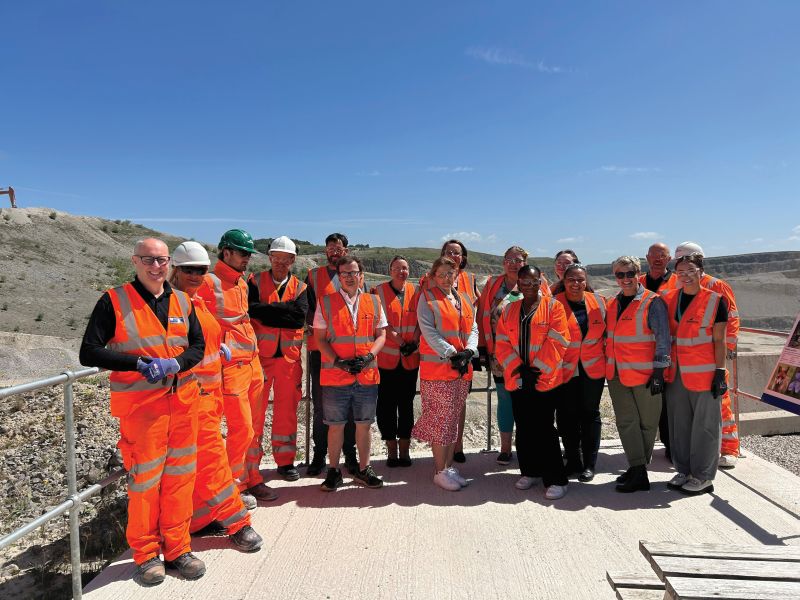
A standout event in July this year saw Breedon, the East Midlands Combined County Authority Careers Hub and the University of Derby host 12 teachers and career leads at Dowlow Quarry in Buxton. The day combined operational tours, apprenticeship discussions and conversations with young employees about their career journeys.
'The resources and hands-on experiences provided by Minerals Matter are exactly what teachers need to link classroom learning with real-world opportunities,' says Kelly Brown from Shirebrook Academy.
A national UCAS campaign followed, reaching over 4,000 educators, while a dedicated sector webpage is now in development to consolidate pathways, job profiles and industry resources.
Digital connections and expanding reach
Minerals Matter’s online presence continues to grow, with 687 new LinkedIn followers (a 42% annual rise) and 3,700 new website users downloading more than 400 resources.
A new TikTok channel, launched in 2025, will provide engaging short-form content for younger audiences – a strategic move to meet students where they are and dispel misconceptions about mining and minerals being old-fashioned industries.
Championing diversity and inclusion
The future workforce must reflect the communities it serves. A landmark Memorandum of Understanding with Women in Mining UK has cemented Minerals Matter’s commitment to gender diversity and inclusion.
This partnership will see joint visits to Longcliffe Quarry, Ecton Mine and the National Stone Centre, as well as a 2026 initiative called Females in Mineral Products and Mining. This will seek to profile women leading change across technical, operational and leadership roles.
Meanwhile, funding from MAUK has supported the appointment of an Industry Ambassador Coordinator, Suzie Doe, bringing in additional expertise and networks from the mining sector.
'Visibility matters, [and] when students see people like themselves in these roles, it transforms what they believe is possible,' says Doe.
Succession, skills and the future workforce
The mineral and mining industries face a pressing challenge, with an ageing workforce and a limited pipeline of new entrants. According to the IOM3 report, The Talent Gap: Critical Skills for Critical Materials, 80% of the UK’s mining and mineral processing engineers are aged over 50 and 39% are over 66. Similarly, an Agg-Net review of workforce demographics found that 55% of people working in the quarrying and mineral products sector were over 45.
These statistics underline a critical need for succession planning. Without targeted efforts to attract and retain young professionals, the sector risks losing expertise faster than it can replace it.
The UK Minerals Strategy 2028 also warns of 'an ageing workforce and difficulties in recruiting and retaining skilled staff', highlighting a potential bottleneck in future materials supply chains. Minerals Matter’s outreach directly addresses this gap by inspiring early interest, supporting apprenticeships and creating visible entry routes into the industry.
At a 2025 Ambassador Network meeting, Abdul Bathin from The CEC discussed forthcoming government reforms to work experience, extending placements across Years 7-11 in primary and secondary schools. This aligns closely with Minerals Matter’s work to help companies offer meaningful, progressive experiences that reveal the breadth of roles available across the mineral and mining value chain.
'The growth in participation this year shows that Minerals Matter is not only reaching more people, but also making a measurable difference in how the industry is perceived by the next generation,' says James Thorne, Joint CEO of IQ and MPQC.
Having proven its impact, Minerals Matter is entering a new phase, one focused on depth, sustainability and data-driven outcomes. Key priorities for the coming year include:
- Expanding ambassador training to include presentation and interviewing skills, sustainability and curriculum-based resources.
- Focusing on equity, diversity and inclusion to ensure as an industry we are attracting a diverse workforce and appealing to females.
- Collaborating across the industry for maximum benefit, including the Big Bang Fair, teacher encounters, National Apprenticeship Week and National Careers Week broadcasts.
- Further developing relationships with the mining industry to ensure we are representing the whole minerals sector.
The initiative’s goals align with the UK Government’s broader skills agenda, including the Net Zero & Nature Workforce Action Plan, which emphasises the development of 'green skills in foundational sectors such as construction, minerals and manufacturing'.
As Higley notes, 'Our mission is about more than awareness. It is about shaping a sustainable future for the minerals and mining industries. Every young person we reach, every teacher we equip, every ambassador we support brings us one step closer to that goal.'
From doubling its ambassador base to reaching 80,000 young people, Minerals Matter has shown what coordinated, purpose-driven collaboration can achieve. Its work is not only changing perceptions, it’s actively building the foundations for the next generation of geologists, engineers and environmental professionals.
Ambassador
Claudia Malam, Community Engagement and Education Officer at Geothermal Engineering
Which part of the sector do you work in and how did you get involved in it?
I work in the geothermal sector, doing community engagement and education for the UK’s first geothermal power plant. I studied geology and then did an MSc at Camborne School of Mines. Then I worked in mining environmental consultancy for a while, but found that I missed the social aspects of work. When I was made redundant, I was lucky enough to find Geothermal Engineering, joining the team as Community Engagement and Education Officer.
What inspired you to get involved with Minerals Matter?
I first heard about Minerals Matter through the STEM Ambassador programme. As a scientist who works in education, it made sense to become an ambassador, because it would provide extra resources and a network to aid me in my work. But as a geologist, I’m also aware of the importance of promoting careers in geoscience so we can close the growing skills gap. Being a part of Minerals Matter benefits both the employer and future workers.
What do you enjoy about being an ambassador?
I love connecting with young people and getting them excited about their futures. When I was younger, I knew I wanted to be a scientist, but wasn’t sure what path to go down. Many of the young people I meet feel the same way – they have a love of exploration and learning, but don’t know what would suit them as a career. Being an ambassador means I can help them formulate a way to pursue what they love, while also inspiring them to pursue something they might not have considered before.
What has surprised you about outreach work?
The biggest surprise about outreach is the amount I learn from other people! I might come in to teach others about geothermal energy and geology, but always leave having learned so much about other industries and people’s lived experiences too. It’s a fantastic way to connect with your local community and really get a feel for the culture of the area.
Can you share an example of when you felt your outreach work had an impact?
I often work with students at alternate provision academies. When we start the session, they’re often unsure and anxious about participating. But throughout our sessions I can see their confidence grow, and it’s lovely to watch. These students are often treated differently to those in mainstream education, so I make a point of encouraging them to believe in themselves. Most of these students are fully capable of achieving their goals and pursuing their passions, but just need the support to get there.
What have you personally gained from being an ambassador?
Being a Minerals Matter Ambassador has given me a wonderful network of like-minded people within the geo-resources industry. Within this group, we share ideas, support each other and organise events – providing me with more opportunities to reach young people and encourage them to consider geoscience as a future career.
Ambassador
Mark Yates, Operations Manager at Heidelberg Materials
Which part of the sector do you work in and how did you get involved in it?
I’ve been in the industry since I left school, and started an apprenticeship as a Mechanical Engineer at what was Castle Cement in Ribblesdale, North Yorkshire. I spent several years there before I moved to Tarmac to develop my change management and continuous improvement skills as part of a lean project working across aggregates, asphalt, ready-mix concrete, recycling and cement.
I then moved to British Gypsum in a Plant Manager role, running their specialist powders business at Newark, before taking on a UK Operations Director role for Ibstock, producing precast and pre-stressed concrete elements. From there I moved to Laing O’Rourke, working as General Manager of their flagship, precast concrete and modern methods of construction factory in Worksop, before finally coming full circle and returning to Ribblesdale three years ago.
What inspired you to get involved with Minerals Matter?
I believe I’m fortunate to have had the career I’ve had in the industry, and feel passionately that young people should have those same opportunities. It’s essential that we attract the best talent to our industry so we have a sustainable business model and can continue to produce home-grown construction products for many years to come.
What do you enjoy about being an ambassador?
Without our industry there is no built environment, so it’s great to play a part in a sector that ensures we have the day-to-day infrastructure we all need. Also the people – over the years, I’ve made some great friends who share the same passions, which has ensured that I’ve had a lot of fun in my work. Finally, the variety – no two days are the same. We’re constantly evolving as a sector, particularly in our efforts to decarbonise and ensure we’re a sustainable industry, so that constantly throws up new challenges that stretch us, but in the right way.
What has surprised you about outreach work?
I get involved with schools in several different ways. I attend careers fairs, support them with mock interviews and have taken part in ‘speed-dating’ sessions, where the schools get a few different industries in and each speaker has 20 minutes to sell the industry to the children. In addition to this, I host local schools and organisations when they visit our site, again outlining the varied careers on offer and the value we add as a sector.
Can you share an example of when you felt your outreach work had an impact?
Along with my operational responsibilities, I now recruit all our apprentices and graduates, getting them involved in Minerals Matter and our school engagement activities, as well as organising work experience for young people. I’m starting to see young people we’ve engaged with at careers events and via work experience successfully apply for apprenticeships with us – a sure sign that we’re making the industry more attractive for the next generation.
What have you personally gained from being an ambassador?
Minerals Matter has given me access to resources, on top of the materials I’ve collated over the years, and to a network, so that we can all share ideas and best practice for the good of the industry.
In a world increasingly defined by materials, Minerals Matter has shown that investing in people is just as vital as investing in production. The UK’s future infrastructure, sustainability and resilience will depend on those who understand and are inspired by the world beneath their feet.
Two ambassadors and two recipients of outreach share their experiences of the Minerals Matter initiative overleaf.
Outreach recipient
John Austin FIMMM, Senior Lecturer at the Centre for Mineral Products, University of Derby
How has Minerals Matter outreach influenced your awareness of the minerals industry?
I am impressed with the approach that Minerals Matter is taking. Many people have outdated or limited views of the minerals industry, and Minerals Matter is helping to shift these perceptions by emphasising the essential role of minerals in everyday life, career pathways in quarrying, mining and minerals processing, sustainability and innovation within the sector.
What surprised you about the sector?
The creation and active implementation of Minerals Matter is a significant milestone for the minerals industry. It represents a proactive, sector-wide commitment to tackling key challenges, from workforce diversity and skills shortages to public perception and sustainability. The fact that Minerals Matter is not just an idea, but a fully operational initiative, delivering real impact through outreach, education and strategic partnerships, is something the industry genuinely should be proud of.
What did you enjoy about the outreach experience?
Most recently, I have enjoyed the Big Bang Fair at the NEC, Birmingham, and Teacher Encounter session held at Dowlow Quarry, Derbyshire. They were both great opportunities to connect directly with young people and educators, sparking curiosity and conversations around the minerals industry. The Big Bang Fair was energising – seeing students engage with hands-on activities and ask insightful questions reminded me of the importance of making science and engineering tangible and relatable. The Teacher Encounter event was equally rewarding, as it allowed for meaningful dialogue with the educators who shape future career choices. Sharing the breadth of opportunities in the minerals sector was incredibly fulfilling.
What three takeaways would you share with colleagues or peers?
Get involved in Minerals Matter by becoming a STEM Ambassador. It’s a powerful way to inspire the next generation and promote awareness of the minerals industry. Your experience and enthusiasm can help challenge misconceptions and showcase the sector’s relevance and opportunities.
Don’t forget to log your efforts through the STEM Portal. This helps Minerals Matter track your impact. It’s a simple, but meaningful way to amplify your contribution.
Support and promote Minerals Matter. Understand its strategy, whether through outreach, mentoring or employer engagement. This will help strengthen the industry’s future and make it more inclusive and resilient.
Is there anything you would like to see more of from Minerals Matter?
Minerals Matter has laid a strong foundation, so now it’s about building on that momentum. Continued refinement and expansion of the strategy will help sustain its long-term impact across education, outreach and workforce development.
Increasing the number of engaged STEM Ambassadors will amplify the reach of the initiative. More ambassadors mean more voices, more role models and more opportunities to connect with students and educators.
The Teacher Encounter events are invaluable for bridging the gap between industry and education. More frequent and geographically diverse encounters would help educators better understand the sector and pass that insight on to their students.
Outreach recipient
Moira Shaftoe, Head of Professional Institutions and Partnerships at EngineeringUK
How has Minerals Matter outreach influenced your awareness of the minerals industry?
It has broadened my understanding of the minerals and materials sectors. Seeing the crucial role that minerals play in everyday items – from smartphones and batteries to construction materials and medical equipment – has been truly eye-opening. Engaging with the Minerals Matter team, alongside some of their industry partners, has given me a new appreciation for the sector’s vital role in modern life.
What surprised you about the sector?
I was most surprised by the advanced innovation and technology applied throughout the sector. The team from Minerals Matter highlighted how materials science, recycling and sustainable practices are shaping the future. I was also struck by the diversity of careers available, demonstrating that the sector offers pathways for people with a range of different skills and interests.
What did you enjoy about the outreach experience?
Visiting the Big Bang Fair in 2025 was such a rewarding experience. It was amazing to see the Minerals Matter ambassadors engaging with young people at the event, delivering hands-on activities, and experts sharing their insights to bring the subject to life. It was inspiring to see how much interactive learning can motivate students and encourage them to think critically about sustainability and technology.
What three takeaways would you share with colleagues or peers?
The minerals and materials sectors are far more innovative and diverse than many people realise.
Minerals Matter outreach is a powerful way to inspire the next-generation workforce for the sector.
Understanding the role of minerals in everyday life fosters a deeper appreciation for the technologies and infrastructure we often take for granted.
Is there anything you would like to see more of from Minerals Matter?
The team does fantastic work. I’d love to see more people from across the sector join their ambassador scheme, helping to expand outreach activities, connect more students with industry professionals and show young people the real-world impact of minerals and materials.