A planely circular way to print
Converting old titanium fighter jet parts into powder for 3D printing new components.
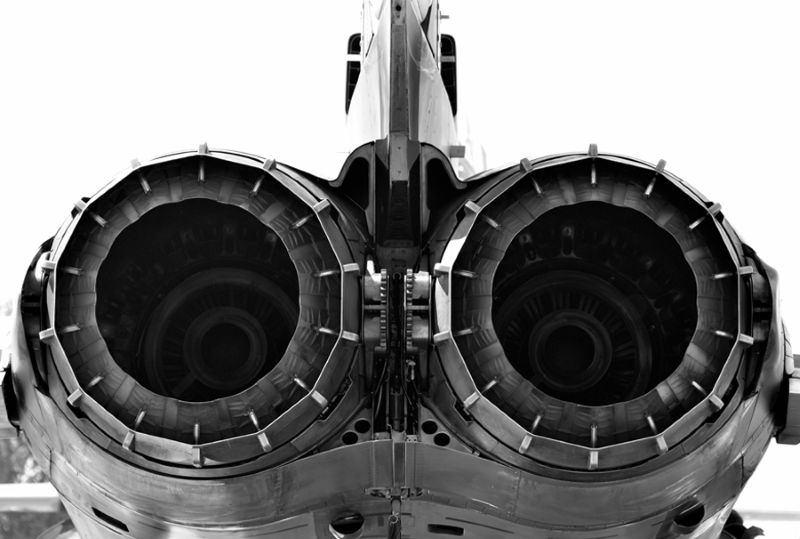
While titanium and its alloys have been readily used in many industries to great effect, it is the aerospace sector that has seen the main benefits. Titanium has a very high strength and low mass, offers chemical and corrosion resistance, and can be used in high-temperature environments. Therefore, titanium has and continues to be an important alloy across civil and defence aviation.
Yet, the UK and Europe are still almost completely reliant on imports for titanium. Post-Brexit, the UK’s dependency on imported semi-finished metals became even more precarious. In a post-Brexit, post-COVID world, with conflict in Ukraine and increasing tensions in the South Pacific, there is a geopolitical situation in which the future supply needs for titanium within our aerospace sector are put at risk. Russia and Ukraine have long been key contributors to the titanium supply market.
It’s a massive vulnerability. If supply is disrupted – due to geopolitical events, tariffs, or cyber threats – there is currently no Plan B.
In the US, the Department of Defence has acted on similar concerns by providing significant funding for operations that aim to produce this critical mineral domestically.
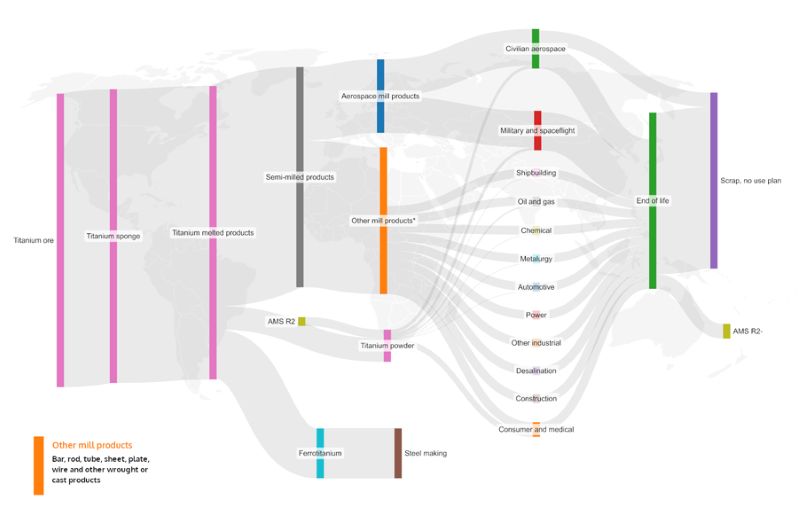
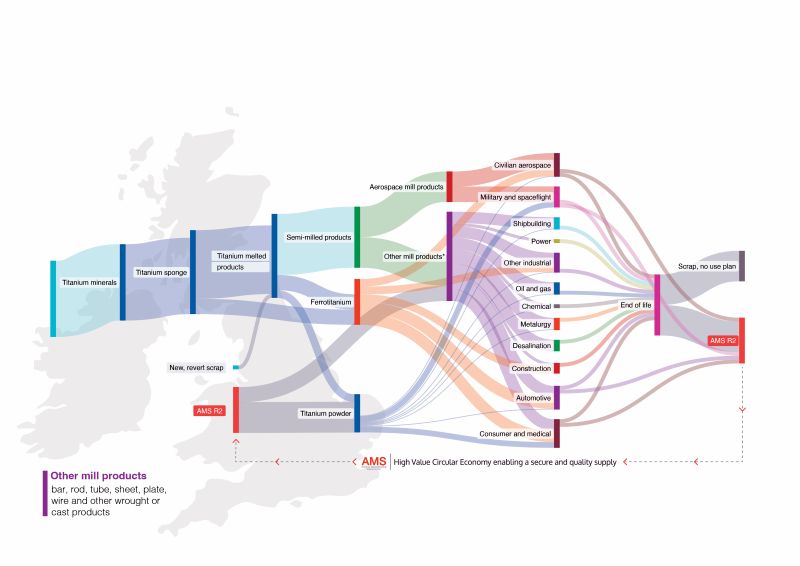
The US already has demonstrated better usage of titanium from end-of-life and onshore scrappage compared to the UK and Ireland (see diagrams below). While a positive, it does not truly support high-value manufacturing’s need for supply security, or minimise the impact that conflict can have on access and cost.
Focusing on the UK and Ireland, in the diagram we can see the relative quantities of titanium and the flow they take through processing and industrial vertical routes. Whether the end-of-life has a short-term duty cycle like wind tunnels in Formula 1, or through to full-life items on a commercial aircraft lasting 40 years, there has not been any significant recycling capability.

Powdered up
Additive Manufacturing Solutions Ltd (AMS) in Lancashire, UK, has developed a solution to the supply problems facing metal powders specifically used for additive manufacturing (AM).
The titanium powder market globally is worth just a fraction of the global titanium market, and the supply fluctuations induced by conflict have a larger impact. Over recent months, the availability of titanium powder and prices have ranged from US$150-275/kg, with lead times of up to five months for supply in some instances.
Yet, the needs for titanium and the opportunity for AM are extensive, with the Global Combat Aircraft Programme, the AUKUS alliance (Australia, UK and US) for submarine supply, and a buoyant market in the UK and US for space manufacturing. However, the risk in supply is also high.
After cutting my teeth at Airbus and years consulting in the US, I founded AMS in 2017, with one mission – to accelerate the UK’s adoption of metal AM. We wanted to close the gap across three fronts – skills, material resilience and open-source capability.
During AM, aka 3D printing, materials are selectively added together to build 3D geometry. AMS has metal-powder AM processes in-house, in which the energy source – electron beam or laser – melts the powder in selectively defined areas.
We see ourselves as a springboard in the valley of death. The UK has a notorious gap between Technology Readiness Levels (TRLs), as a new idea grows from lab-scale trials to commercial deployment. Additive is often stuck at TRL 6. We wanted to help push it to TRL 9.
As a company, we were awarded funding from Innovate UK to build technical feasibility into our theoretical approach to turn decommissioned aircraft parts into powders for reuse. The AMS’ solution is called R².
Flying in circles
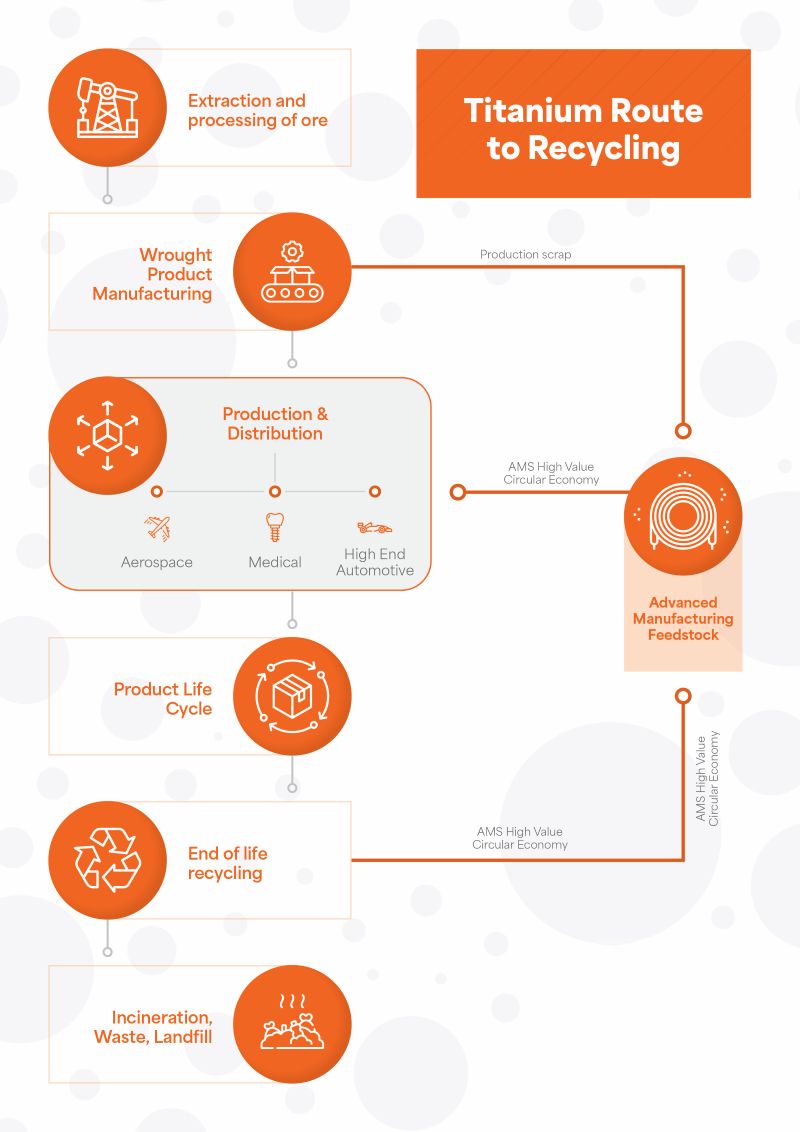
Due to the availability of old titanium aircraft parts as feedstock, the UK’s Ministry of Defence (MoD) became the first major customer in establishing a supply chain for AMS’ recycled titanium powder, either as a 100% recycled powder or in a blend. The process is shown above.
The Tornado 2 Tempest project emerged when the MoD’s Defence Recycling & Disposals Team (DRDT) reached out after seeing our reported progress. They had similar ideas around end-of-life reuse. It was the perfect match.
Aligning with the UK’s strategic push towards sustainable defence, the Royal Air Force (RAF) has now used the technology to repurpose components from decommissioned Tornado fighter jets into feedstock powder for 3D printing next-generation parts.
The initiative is funded by the UK Strategic Command’s Defence Support Organisation and is part of the MoD’s Future Combat Air System.
Titanium components from old Tornado engines – such as low-pressure compressor blades – were selected, cleaned and atomised, using them to 3D print certified aerospace parts.
Two atomisation methods were used to create fine powders – plasma ultrasonic and gas. In the former, a high-frequency plasma heat source is used in close proxmity to a solid parent part to melt and shed powders, creating spherical powders. Gas atomisation is commonly used and involves a liquid stream of molten material being disrupted by high-velocity gas jets. Rolls-Royce provided candidate parts for the recycled powder-to-part process.
A 3D-printed nose cone and compressor blades made from recycled materials are now fitted on Rolls-Royce’s Orpheus engine – a technology demonstrator for the UK’s sixth-generation Tempest fighter jet.
Tempest jets are the RAF’s next-generation combat aircraft, entering service from 2035 to replace the capabilities of the Typhoon.
The new parts were validated under rigorous safety testing.
It is the first time the MoD has adopted such a recycling process at scale, proving not only technical feasibility, but also a path forward for circular economy in defence. Implications include the potential to save millions in taxpayer funds, reduce environmental impact and boost the UK’s sovereign control over critical materials.
Breathing new life in scrap
The success of the Tornado 2 Tempest initiative lies in precision control of the recycling process, especially for reactive metals like titanium. Titanium absorbs oxygen like a sponge, so oxidation had to be managed at every step to maintain mechanical integrity.
AMS has trialled both plasma and gas atomisation methods, favouring the latter for its reliability and compatibility with aerospace-grade titanium. Importantly, it allows the feedstock to be isolated as the only changing variable – crucial for gaining Rolls-Royce’s confidence.
People ask, 'Is recycled powder really viable for critical parts?' Our answer is yes – if you can control every variable and prove traceability, which AMS has done.
A Digital Product Passport records material provenance and lifecycle data, further enhancing certification efforts and anti-counterfeiting protections.
For AMS, the environmental impact was never a side effect – it was a key motivator. By demonstrating a closed-loop cycle where retired defence assets can be repurposed into new aerospace components, the Tornado 2 Tempest project has shown that sustainability and performance need not be mutually exclusive.
Additive manufacturing is often touted as a sustainable manufacturing process due to its minimal waste. However, one could argue that the energy used to create powders
versus the energy waste in the production of scrap from a machining process, for example, makes them similar.
Then again, the opportunity to remake powders to create a fully circular opportunity does provide a potentially significant energy saving.
The feedstock does not need to be mined, sponge created, cast, wrought and moved thousands of miles, so the footprint left by the material reduces significantly.
A Life Cycle Assessment, as per ISO14040/44, highlights a like-for-like process with at least 93% less embedded carbon, with additional gains possible when using lower-energy atomisation to find just 3% of the CO2e from the recycled material.
We were able to quantify the embedded carbon savings between two different atomisation methods. The differences were substantial and pointed to the wider commercial and environmental feasibility of this approach.
The Tornado 2 Tempest project is therefore opening entirely new opportunities in AM supply chain resilience for the UK’s MoD and across multiple industrial segments.
AMS estimates that between defence surplus and end-of-life assets, Europe may already hold 20 to 30 years’ worth of recyclable titanium stock capable of feeding the entire powder market. The challenge lies in accessing, certifying and processing it effectively.
The long road to acceptance
The process of qualifying parts for aerospace use is an uphill battle – even more so with recycled material. Additive manufacturing prevents simple decisions. You can’t just ask,
‘Is this part good or bad?’ There are layers of data that have to be interpreted.
There have been heated debates about CT-scan resolutions and certification standards for titanium parts. It is frustrating that AM is held to a different, sometimes unfair, standard.
We can’t compare apples to oranges and expect parity.
Still, we are persistent. With each successful trial, we can build more data, generate more trust and inch closer to when recycled powders may become standard inputs, not outliers. Regulations are always open for change, provided there’s data and confidence. And we’re generating both.
With one 3D-printed nose cone already tested and certified, what’s next? There’s definitely appetite to continue. Rolls-Royce’s Orpheus engine is designed to trial high-risk strategies quickly. It’s given us the credibility to push this further.
The implications stretch far beyond defence. From motorsport to automotive industries, every sector grappling with rising carbon regulations could benefit from this model. If we start with titanium – the most challenging material – the rest becomes easier. Indeed, AMS is now preparing to introduce Inconel powders, a less reactive and easier-to-handle alloy than titanium, broadening the application spectrum.
Future developments are underway for alternate critical metals, and other forms, like rod and wire. The firm is also creating a deployable variation, for point-of-need capability.
Motorsport, industrial tooling, even marine applications, are all asking about recycled materials. These industries may become proving grounds for larger-scale applications, gradually building acceptance for recycled metal AM across verticals.
Did you know?
Following the withdrawal of the Royal Air Force (RAF)’s Tornado F3 fleet from service in 2010, BAE Systems created the Reduce to Produce programme. The scheme, based at RAF Leeming, strips down the decommissioned F3 fleet and recycles parts that can be used as spares for the UK’s in-service GR4 fleet. The teams have been able to recover 800-1,200 parts per airframe, creating a huge saving for the RAF.Source: www.baesystems.com/en-uk/product/tornado-gr4