Sponsored by

|

|
SSET-2026 - Surface covers everything
The 2nd International Conference on Surface Science, Engineering & Technology (SSET) will be taking place on 6-9 October 2026 in the beautiful city of Manchester, the world’s first industrial city. SSET established itself as the UK’s premier international conference in the fields of surface technology, including thin film deposition, thermal spray coatings, surface modification, advanced characterisation, and their application in tribology, corrosion, and functional performance. The dedicated sessions will cover state-of-the-art materials and processes, and their application to industrial challenges aimed at achieving sustainable development goals.
Plenary Speakers

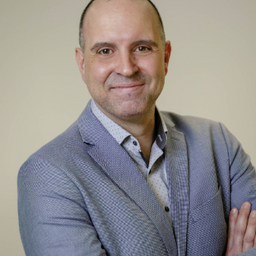
Brian Hazel
Presentation:
Real World Drivers to the Durability of Coating & Material Systems in Gas Turbines

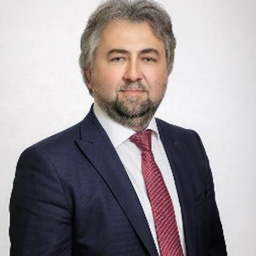
Professor Christian Mitterer
Abstract: Engineering the Future: Plasma-Enabled Multi-functional Surfaces for Energy and Health
During the last decades, plasma-assisted vapor deposition has emerged as a powerful tool for design and synthesis of novel multifunctional surfaces, reshaping the landscape of tribological coatings for high-performance tools, automotive and aerospace components. Today, as we face global challenges ranging from climate change to emerging pandemics, the demand for new surface functionalities is accelerating and unlocking opportunities for entirely new application domains.
In this talk, I will illustrate how advanced plasma-assisted surface engineering strategies are driving innovation in two rapidly advancing fields: next-generation energy storage and medical diagnostics. Although hydrogen is widely regarded as an ideal carbon-free energy carrier, safe, reliable, and cost-effective storage remains a key obstacle on the path toward sustainable energy systems. Plasma-assisted modification of graphite offers a promising route by generating highly porous few-layer graphene with sub-nanometer pores suitable for cryo-sorption based H₂ storage. Moreover, reactive plasma treatments enable precise functionalization of the carbon surfaces with tailored chemical groups. Looking ahead, room-temperature hydrogen storage may become feasible through the decoration of graphene surfaces with noble-metal nanoparticles produced via magnetron sputter inert-gas condensation. Nanoparticle decoration also opens powerful avenues for medical technologies, enabling the selective detection of microorganisms such as viruses and bacteria or the development of novel sensors for hazardous gases.
These developments illustrate how plasma-assisted surface engineering is poised to play a transformative role in addressing future technological and societal needs, from clean energy systems to resilient global healthcare.

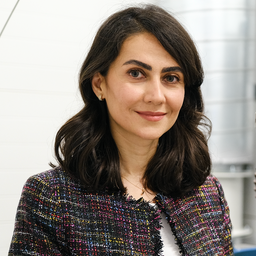
Dr Robert Quarshie
Presentation:
Collaboration and Funding Opportunities for Innovation in Surface Technologies
Invited Speakers

Prof Carsten Gachot
Presentation:
The Fascinating World of Tribology - From Textured Surfaces to High-Performing 2D Materials for Aerospace Applications

Prof Mikhail Zheludkevich
Presentation:
PEO coatings: from barrier to active protection and functionality

Dr Filofteia-Laura Toma
Presentation:
Advanced processes and surface technologies for development of high performance thermal coating solutions

Dr Andrew Ang
Abstract: Tailoring High-Entropy Alloy Powders for Cold Spray Processing
High-entropy alloys (HEAs), particularly the CoCrFeNi-based system, have gained significant attention for their exceptional toughness and resistance to wear and corrosion. However, processing these complex alloys through traditional melting methods can often lead to undesirable phase changes or oxidation. Cold spray technology offers a unique solution by depositing materials in a solid state, allowing the CoCrFeNi-based alloy to retain its superior properties without the heat-related degradation typical of other coating methods.
This talk examines the performance and microstructural evolution of CoCrFeNi-based HEA powders during the cold spray process. We explore how the high-velocity impact of particles leads to plastic deformation, resulting in coatings or deposits that can be suitable for industrial applications. By analyzing the correlations between material phase, deposition parameters and the resulting mechanical behavior, this research demonstrates how HEAs can be designed for cold spray processing. The findings provide a pathway for utilizing HEAs to create more durable and reliable surface solutions for the future of engineering.
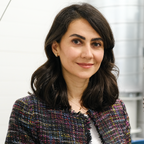
Sara Bagherifard
Abstract: Engineering Heterogeneity by Cold Spray Process
Prof Chang-Jiu Li
Abstract: Novel Atmospheric Plasma Spraying Approach for Deposition of MCrAlY Bond Coats for Substitution of Vacuum Plasma Spraying Enabled by Carbon-containing Powder Design
Novel Atmospheric Plasma Spraying Approach for Deposition of MCrAlY Bond Coats for Substitution of Vacuum Plasma Spraying Enabled by Carbon-containing Powder Design
MCrAlY coatings have been widely used as a bond coat for thermal barrier coatings (TBCs) due to their excellent high temperature oxidation resistance and the ability to minimize the mismatch in the coefficient of thermal expansion (CTE) between the ceramic top coat and the superalloy substrate. The high oxide content introduced into MCrAlY during air plasma spraying (APS) degrades thermal cycle lifetimes of the TBCs. In the present work, novel approach to deposit MCrAlY coatings with low oxide content by APS was proposed through using a deoxidizer-diamond-containing NiCrAlY powder. The results show that through the optimization of spray conditions NiCrAlYC particles can be heated to a temperature over 2300oC under which carbon deoxidizing effect is initiated to protect alloying elements in in-flight molten droplets from oxidation. The NiCrAlY coating presents a low oxygen content of 0.9wt% and tensile adhesive strength of 157 MPa on a polished superalloy substrate. The residual carbon within NiCrAlY coating was transformed into chromium carbide, which reduces NiCrAlY coating CTE. The results reveal that the TBCs with the present APS NiCrAlYC bond coat show a higher thermal cycling lifetime than TBCs with VPS NiCrAlY bond coat. It will be demonstrated that following the novel approach it is possible to substitute the VPS by APS for high quality bond coat deposition when using carbon-containing MCrAlY powders.

Dr Emanuel Tack
Abstract: Mechanical-Technological Digital Twinning of DLC Coatings

Dr David Stewart FIMMM
Abstract: Hard Facings for Nuclear Plant: A Sustainability Viewpoint
SSET-2026
At SSET, leaders of surface technology sectors from academia, industry and public bodies will convene to contribute to the advancement of fundamental science and engineering applications. Join us in Manchester, at the heartland of the north of England and a footstep away from the Peak District, to network with peers & discuss advances in all aspects of surface technology to achieve innovative solutions towards 21st-century global challenges.
SSET will include more than 70 high-profile contributing speakers, invited speakers, plenary, and keynote speakers, along with daily social events. Additionally, attendees will have the option to register for a masterclass on thermal spray coatings.
It is strongly encouraged that you begin your visa process immediately to avoid any disappointment.
Why attend?
- Surface modification enables reduced life-cycle costs of infrastructure
- The correct surface increases operational uptime of manufacturing industries
- Surface engineering is critical for efficiency gains & sustainability of a modern plant
- The science is exciting! Its adoption is trailblazing with commercial opportunities.
Who should attend?
- Scientists, engineers & managers will value attending & contributing to this conference
- Early career researchers, including Masters and PhD students, are especially encouraged to attend & present their work. They will have the opportunity to mingle with world authorities & uncover their career potential.
Benefits of attending
- The conference is a timely opportunity to consolidate the latest trends & advances within the surface science & engineering disciplines
- The programme offers an attractive set of pre-conference activities followed by three-days of lectures, posters, exhibitor sessions and social events
- Engineers & scientists, both emerging & mature, will network with peers & learn from leading experts engaged with surface engineering
Previous conference edition: