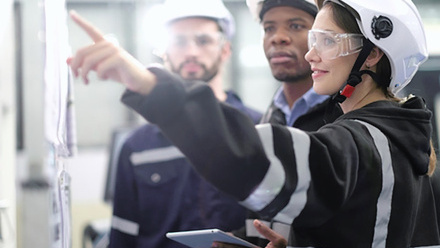
Team work and workplace dynamics
SEC Committee members share their thoughts on workplace dynamics and the challenges of team work.
Ollie Thomas | University of Oxford
Workplace dynamics can be challenging to navigate and yet success often depends on a team working well together towards a common goal. Beyond that, a supportive work environment helps us all better negotiate the obstacles life can throw at us and remain happy and healthy. I would argue that this is even more the case in the materials, minerals and mining sector due to the highly collaborative and multidisciplinary nature of what we do. This is further complicated by the international work environment we operate in where communication styles and social norms can vary wildly.
I have learnt that, for me, working well with others is as much about understanding myself as those around me. My own insecurities about ‘not wanting to nag’ and fear of failure have, in the past, impacted on my ability to coordinate with colleagues and receive feedback. I have learnt from this and am now able to manage both mine, and my supervisors, time and expectations more effectively but I still have much to learn. In light of this I thought to gain some insight from some of my colleagues on the SECC who are more experienced in the world of work:
Dr Matthew Wadge MIMMM | Manchester Metropolitan University
Whether you have experience working within academia or have heard whisperings from those who do, managing upwards is an essential skill that can make or break the workplace dynamic; one which is highly demanding on success markers, such as publications, research income, metrics, and more. As a Research Fellow, I’ve found that navigating these dynamics requires more than just technical expertise; it demands strategic interpersonal awareness.
I have learnt several ‘dos and don’ts’ from working with, and being managed/mentored by, colleagues at various career stages, from fresh academics and researchers, through to Pro-Vice Chancellors and beyond. The bottom line being, you need to look outwardly, understand what their drivers are, how they measure successes, and understand how to align your goals to their priorities, without detracting from your own ambitions/goals and impacting your mental health (something that is commonly overlooked!).
This doesn’t mean compromising your values; it means communicating effectively, anticipating needs, and building trust. Managing upwards is collaborative. It’s about recognising that your success is often interdependent with those above you. When done well, it fosters mutual respect, clearer expectations, and a healthier, more productive workplace culture. For me, it’s been a cornerstone of professional growth and resilience in academia, as well as better managing my own mental health.
Dr Michael Kenyon MIMMM | Vice-Chair, SEC Group
I am now in a position of management, which I have built up to over the past 7 years of work following my PhD. I enjoy managing as I naturally enjoy working and collaborating with people of all walks of life. I have (thankfully), always had very good managers myself. Even as a teenager, I do believe my Saturday café job, has helped me form my own management style within the consultancy I now work at.
I don’t actually like the term manager. I consider myself to have traits more aligned with a leader, being able to help colleagues develop professionally, while improving the standing of the company. I have always had an open-door policy. If the employees I manage need support, I am there to assist them in one way or another. It maybe that a solution can be found easily and straight forward, it might be that some difficult conversations need to happen. Even these challenges I consider an experience and something to learn from.
On a completely different subject regarding workplace dynamics, I recently attended a lecture on neurodivergence and neurodiversity. I learnt a lot about conditions such as ADHD, dyscalculia, dyslexia and a few others. A key message I took away was that these conditions are brains processing and working in different ways to the same environment. With that in mind, I was given some great advice on how workplace interactions would affect people differently who are neurodivergent and would encourage others to learn more.
Treating everyone with respect and professionalism is paramount in any workplace, regardless of your position, whether as a managing director or a junior employee just starting out.
Antonia Fan CEng CSci MIMMM | BAE Systems
Every morning in the shipyard, I’m reminded of the weight and purpose of this work. Steel under construction, vessels taking shape, and teams united by a shared mission. As a young materials science engineer in defence, I’ve found that credibility isn’t about age or gender, it’s about knowing your craft and delivering results. Technical clarity, data-driven decisions, and reliability speak louder than anything else, and in that environment, respect comes naturally.
This industry is built on structure, expertise, and teamwork. Leadership here isn’t about titles, it’s about being present on the deck plates, solving problems alongside tradespeople, and taking responsibility for your decisions. I’ve seen how experienced engineers and skilled workers are quick to support anyone who shows commitment, curiosity, and competence. Collaboration bridges generations, whether it’s a seasoned welder sharing practical insight or a young engineer introducing new materials or technologies.
What keeps me here is the purpose behind the work. Every material selection, crack analysis, or corrosion assessment contributes to something real, safety, reliability, and national capability. What makes this place special is the culture of pride in doing things right, together. The shipyard may be rooted in tradition, but it’s evolving, driven by engineers, tradespeople, and leaders who believe that progress comes from shared knowledge, innovation, and mutual respect.
SEC Committee opinion pieces