Systemic change in engineering
Engineers Without Borders UK drives forward globally responsible engineering
When John Kraus became Chief Executive of Engineers Without Borders UK in 2022, he stepped into an organisation that was already charting an ambitious course for the next decade.
Building on a strong history of community-focused projects, the charity had set its sights on tackling the systemic changes needed across the engineering sector to meet the global challenges of the 21st Century – from climate breakdown to deepening social inequality – recognising that project-by-project change would no longer be enough.
'The profession has huge potential to be a force for good,' says Kraus, 'but we can’t keep teaching and practising engineering the way we did 30 years ago. The world has moved on. So, how can we influence the profession to move with it?'
That question now runs through everything Engineers Without Borders UK does – from the way it works with universities to the role it plays in professional development.
'We’re trying to change the culture and the systems engineers work in,' Kraus continues. 'Because if you change those, you change the decisions engineers make every day.'
The criticality of this approach is recognised in the sector. Duncan Wanblad FIMMM, Chief Executive of Anglo American, whose Foundation has been the leading supporter of Engineers Without Borders UK for more than a decade, says: 'Our aim is to reliably and responsibly provide metals and minerals that form the building blocks of modern life and are essential to progressing the decarbonisation of our planet. Engineers Without Borders UK helps to reduce the risk of delays to critical mining projects by educating engineers to thoughtfully consider all stakeholder interests, in particular those of local communities, from the inception of a project.'
Systems Change Lab
Many changes that the charity advocates for happen when people who don’t normally talk to each other meet to share ideas.
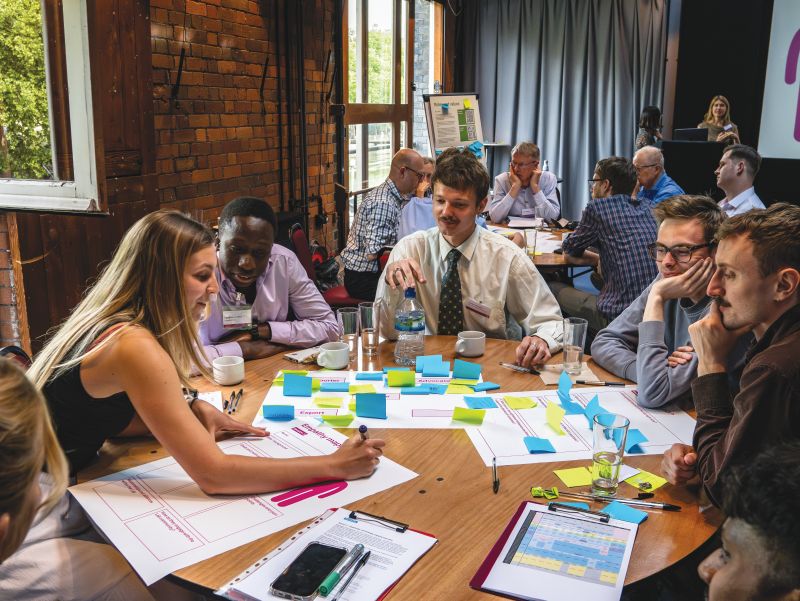
Kraus points to a recent Systems Change Lab event in Glasgow, Scotland, that brought together educators, students, professional body representatives and practising engineers to unpick what a more globally responsible profession might look like.
The Lab runs as a series of events throughout the year, each building on the previous one.
'We start by exploring the issues from different angles, then focus on where we think change is possible, and finally work together on concrete ideas,' says Kraus. 'It’s not about consensus – it’s about surfacing the range of perspectives and using that to generate better solutions.'
Those ideas can be surprisingly practical. Task and Finish groups within the Lab are currently looking at how professional standards shape behaviour, how to create a coherent approach to lifelong learning, and how to reframe engineering’s public image.
Mapping the future direction
One tangible outcome from the Lab’s first edition in 2023-24 is the Reimagined Degree Map. It is an interactive tool that helps engineering departments at universities to embed ethics, sustainability and inclusion across their courses, and prepares students for 21st Century challenges.
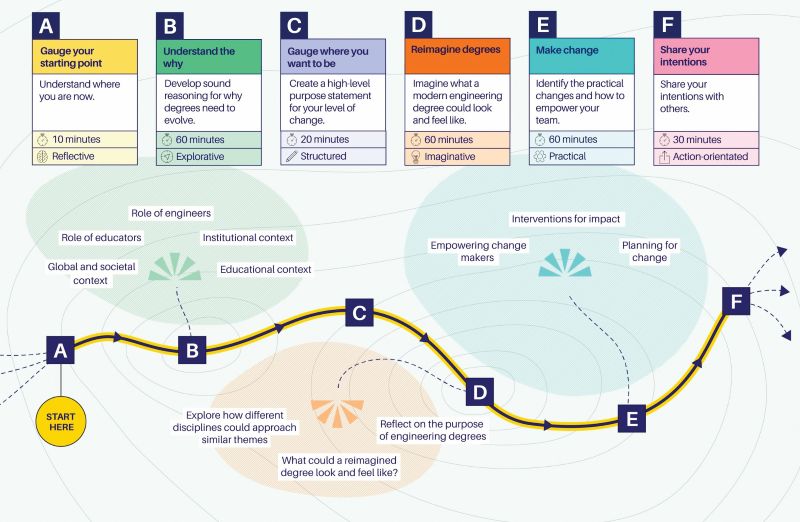
The Institute of Materials, Minerals and Mining is among the professional bodies to have endorsed it, praising its value in preparing graduates for the 'future demands of society'. 'It’s one of those resources that helps turn good intentions into a firm plan,' Kraus says.
At Sheffield Hallam University, UK, this map was rolled out as staff were rethinking their engineering degrees so they align with the University’s strategy, foster a greater student experience, and respond to a call from students and industry for more project-based learning.
'We had to make changes and the map gave us a framework to do it,' says Vicky Mellon, Associate Head of Engineering and Built Environment. Traditional exams have been cut back and replaced with more inclusive assessments such as presentations.
'There was some pushback about rigour,' she admits, 'but students don’t want an easy ride – they want to be challenged in ways that prepare them for industry. The map has really supported us to do that.'
But for many academic institutions, shifting an entire degree programme is a long-term endeavour. In the meantime, there are alternative ways to give students a taste of globally responsible engineering within the structure they already have.
This is where Engineers Without Borders UK’s flagship programme, the Engineering for People Design Challenge comes in. While the Reimagined Degree Map looks at transforming the whole degree experience, Engineering for People is designed to slot into an existing curriculum as a self-contained module.
'It’s a way for universities to give students a meaningful, globally-relevant design brief without having to restructure the entire course,' explains Kraus.
Rising to the challenge
So, what is the challenge? Every year, thousands of students take on a real brief from a community partner. The brief is an in-depth digital resource that combines key data about the local context with the voices of community members. Supported by detailed written materials, video case studies and an interactive map of the area, it invites students to respond to eight interconnected challenge areas – food, water, energy, sanitation, waste, transport, digital and the built environment – to develop design concepts that reflect the complexity of real-world systems.
This year’s brief was developed in collaboration with partners at Engineers Without Borders South Africa. It is also a return to Johannesburg, building on a relationship with Makers Valley Partnership first established five years ago.
With more than 13,000 students taking part in this year’s Challenge, the standout solutions tackled some of Makers Valley’s toughest challenges. Students had to develop solutions that were both technically sound and culturally appropriate.
The University of Warwick’s BrikCycle turned plastic waste into affordable housing bricks. The University of East Anglia’s People’s Pad Project combined menstrual health education with circular economy principles, and the University of Sheffield’s project addressed water insecurity with community-owned solutions.
'It’s not about finding the perfect design,' Kraus continues. 'It’s about developing the habits of listening, collaborating and considering the wider impact of what you’re creating. For many participants, it’s the first time they’ve been asked to consider who will use the thing they design – and what ‘success’ looks like in someone else’s terms.'
The impact on students is clear. 'Nine-in-ten students report a deeper understanding of global responsibility after the challenge, and more than 80% say they feel better equipped to address the UN Sustainable Development Goals (SDGs).'
The UN SDGs align with the 12 essential competencies that Engineers Without Borders UK is encouraging the profession to focus on through its Global Responsibility Competency Compass. This navigational tool provides a framework of skills, knowledge and mindsets that engineers need to work responsibly.
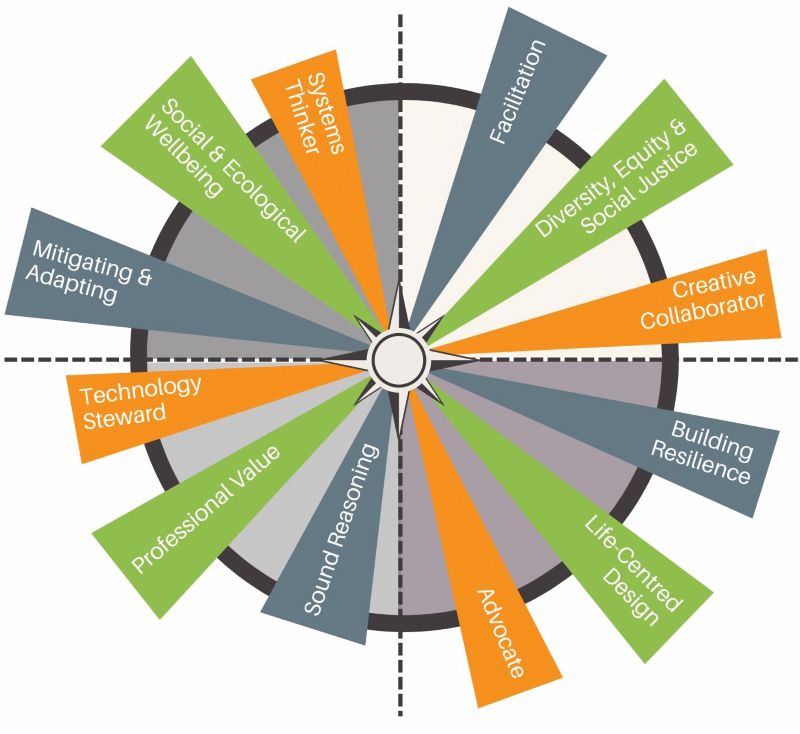
Kraus points to a London-based civil engineering consultancy that used the compass to map out their strengths and gaps. 'They came back to us and said it gave them a shared language to reflect on their work and purpose,' he recalls. 'That’s when you know you’ve made a difference – when people feel able to talk honestly about what needs to change.'
The drive to question, reflect and push for improvements runs through the organisation’s student network too. Across UK campuses, chapters – the student branches of Engineers Without Borders UK – regularly run designathons, hackathons and public events, often feeding ideas back into the national organisation.
The student voice has been integral to the charity’s development, ever since it was founded in 2001 by a group of Cambridge undergraduates who wanted to connect engineering with social and environmental justice. Two decades later, it continues to shape conversations and spark ideas that ripple through the wider movement.
Kraus cites a student champion, Kayley Thacker, who delivered a keynote at a Systems Change Lab event, challenging senior figures to rethink engineering’s values. 'It takes courage to stand up in front of experienced professionals and say, ‘we need to do better’. That’s leadership.'
He adds that by convening the Lab, supporting universities, running design challenges, equipping professionals and mobilising students, the charity is 'aiming for a tipping point where global responsibility isn’t a niche interest but is just what engineering is. That’s when the culture will have shifted'.
Strategic influencer
This approach also makes its work harder to pigeonhole. Is Engineers Without Borders UK an education charity? Is it a professional development provider, or it is a campaign group? Kraus isn’t interested in drawing lines.
'We sit at the intersections, [we sit] between education and practice, between students and industry, [and] between the UK and the global movement,' he argues. 'That’s where you can influence the system – not by staying in one lane, but by connecting the people who can make change happen.'
He continues, 'The thing that keeps me optimistic is seeing what happens when you put people with different perspectives in the same room and give them the space to think big. That’s when the possibilities open up.'
The year ahead will bring more of those conversations – and a new chapter in the charity’s governance, with sustainability engineer and activist Georgia Elliott-Smith stepping in as Chair of the charity’s board.
Known for her track record of turning advocacy into tangible change, Kraus sees her appointment as another opportunity to deepen the organisation’s influence across the sector.
'Georgia’s career is built on challenging norms and driving systemic change,' he says. 'That’s exactly the kind of leadership we need as we push for that tipping point.'
Whether you’re a student, educator, practitioner, policymaker or simply curious, you can take part. Join a Systems Change Lab; volunteer as a design reviewer for the Engineering for People Design Challenge; connect with your local student chapter; or use the Global Responsibility Competency Compass to reflect on your own practice and start conversations in your organisation.
Whether you’re a student, educator, practitioner, policymaker or simply curious, you can take part. Join a Systems Change Lab; volunteer as a designer reviewer for the Engineering for People Design Challenge; connect with your local student Chapter; or use the Global Responsibility Competency Compass to reflect on your own practice and start conversations in your own organisation. Find out more about Engineers Without Borders UK.