Deep dive into seabed mining
How deep sea mining is caught between commercial opportunity and environmental caution.

The global seabed mining industry is at a crossroads. Despite decades of research, exploration missions, trial harvesting tests and technological innovation, commercial exploitation has yet to officially begin.
After the most recent International Seabed Authority (ISA) summit in Kingston, Jamaica, in July, the industry remains stalled in uncertainty, caught between those who see deep-sea resources as essential for the green energy transition and those who fear irreversible damage to fragile ocean ecosystems.
The regulatory framework that would permit large-scale extraction – known as the Mining Code – is still not complete.
Hopes were high earlier this year, especially following political signals in key countries, including a decree by US President Donald Trump in April expressing urgent support for resource exploitation. The US, having not ratified the UN Convention on the Law of the Sea (UNCLOS) and also not part of the ISA, remains a major and powerful player in the global arena.
However, the ISA did not adopt the exploitation regulations. The central point of contention remains environmental safeguards. The call for a moratorium has grown into a movement supported by more than 35 countries worldwide. These governments argue that, until the science is clearer, mining the seafloor could cause widespread and irreversible harm to deep-sea ecosystems.
The concerns are not unfounded – sediment plumes, ecosystem disruption, biodiversity loss and carbon release from the seabed remain poorly studied.
Meanwhile, despite environmental disputes, certain countries remain firmly committed to advancing seabed mining. These are primarily countries that have already made substantial financial and technological investments and are now far ahead in terms of exploration. Chief among them are China, Russia, India, Japan and South Korea.
On the other side of the divide are states that are sceptical or outright opposed. These include the UK, Mexico, Peru and New Zealand. None of these countries are technological leaders in seabed mining, and many are currently lagging far behind in exploration or test activities. As such, their opposition – while framed as environmental – also reflects economic positioning.
Mixed ambitions
Currently, 30 out of 31 contracts issued by the ISA remain active. However, overall momentum has slowed, and very few new applications have been filed over the past year. India submitted two applications for new contracts in 2024, but as of now, both are still awaiting approval.
Meanwhile, some countries are even scaling back earlier ambitions. For instance, Russia – one of the pioneers in obtaining large exploration concessions – has already relinquished two-thirds of its initially allotted area, citing cost and feasibility concerns.
Other states, in contrast, are eager to expand, and interest is broadening beyond polymetallic nodules. Contracts and studies are increasingly targeting ferromanganese crusts that are rich in cobalt, nickel and copper, as well as seafloor massive sulphides (SMS) that contain gold, silver, zinc and copper. These resources are technically more difficult and environmentally riskier to access, but they promise lucrative value if harvesting becomes viable.
Turning on the taps
Analysts estimate that seabed resources, especially polymetallic nodules, represent a gross metals value exceeding US$20trln. This figure is based on global market prices for nickel, cobalt, copper and manganese, and also accounts for the revenues of the final products. Of these metals, nickel alone represents about 40% of that value, making it by far the most important component of seabed mining economics, followed by copper, cobalt and manganese.
From a technical perspective, the industry has made meaningful progress in recent years.
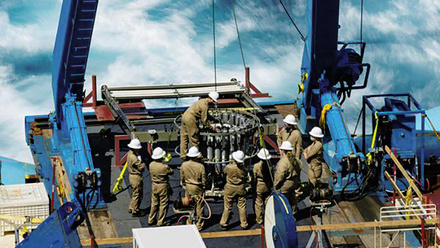
Companies such as The Metals Company (TMC) are experimenting with large-scale pilot systems, including nodule collectors and riser-and-lifting systems that pump nodules from the seabed up to production vessels. Another contender, Impossible Metals, is developing autonomous robots to selectively harvest nodules without disturbing sediment unnecessarily.
At the bottom of the sea
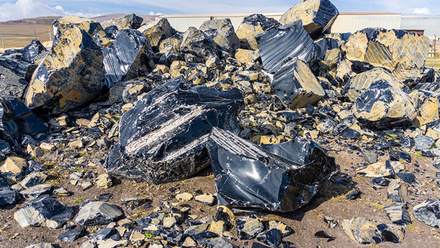
According to The Metals Company (TMC), polymetallic nodules, or manganese nodules, contain four essential base metals – cobalt, nickel, copper and manganese in a single ore. TMC says that, unlike land nodules, these do not contain toxic levels of any heavy elements, and there is potential to ‘productise’ nearly 100% of nodule mass, with a metallurgical flowsheet that generates no tailings and leaves almost no solid waste streams. They say that EV batteries made from these nodules are expected to generate 90% less CO2e emissions than land-based mines.
The World Resources Institute also notes the polymetallic sulphides and metal-rich crusts on underwater mountains. And, despite decades-old commercial interests, they are only now feasible to extract due to technology advancements. The bulk of the most attractive deposits are the vast abyssal plains, such as the Clarion-Clipperton Zone in the Pacific Ocean.
Processing technologies
Collecting nodules is only half the value chain. Processing is equally central and often more challenging. Recent deals illustrate active innovation in this field. Nodules are rich, but their metallurgy is complex. Technologies under discussion and pilot testing include:
- Pyrometallurgical rotary kiln-electric furnace processes to produce manganese products and nickel-cobalt-copper matte.
- Selective hydrometallurgical high-pressure acid leach, followed by selective flotation, to obtain refined battery-grade nickel and cobalt.
- Hybrid approaches that blend smelting and hydrometallurgical refining.
One of the most notable recent developments came from a deal between TMC and Korea Zinc, valued at US$85.2mln. Korea Zinc ranks among the world’s largest non-ferrous metal refiners and is a leader in precursor cathode active material technology, which is critical for battery supply chains.
Stuck between a rock and a hard place
The future of seabed mining remains uncertain. On the one hand, never before have the economic incentives been greater. The demand for critical minerals will grow exponentially as the world accelerates its transition to electric vehicles, renewable energy and high-density energy storage. On the other, environmental concerns have never been more prominent, with many governments unwilling to risk long-term ecological stability.
For now, the seabed mining industry remains in limbo. It boasts significant promise, advanced technology and enormous estimated values – but lacks a regulatory green light. If and when the ISA approves final exploitation rules, the industry will move quickly. Until then, the ‘treasure at the bottom of the sea’ remains locked away, caught between ambition and caution, science and politics, and conservation and progress.