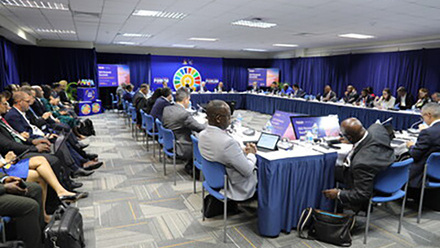
Carbon Markets Toolkit aims to support governments
The updated toolkit aims to support governments within emerging markets to optimise carbon credits.
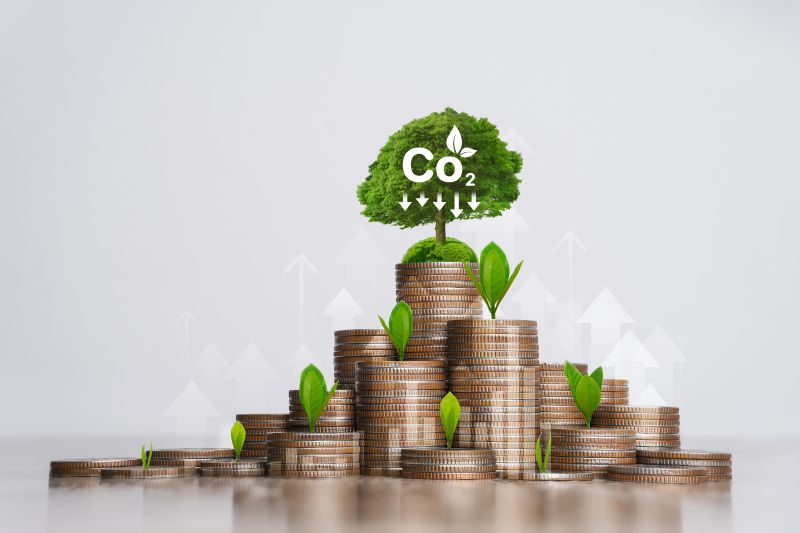
It is hoped that this will help them to access climate finance, accelerate innovation and help close the US$1.3 trillion climate finance gap, cited by the World Resources Institute.
Morgan Stanley Capital International modelling suggests that global carbon credit markets could be worth up to US$35 billion by 2030. This finance in turn could generate up to seven times as much impact in terms of additional investment, technology transfer and community benefit, according to a BeZero report.
The Carbon Markets Access Toolkit has been designed to provide a step-by-step guide for governments to decide whether and how to engage with regulated and voluntary carbon markets, as well as those facilitated under Article 6 of the Paris Agreement.
The toolkit, which is available in English, French, Spanish and Portuguese, was produced by the Voluntary Carbon Markets Integrity Initiative (VCMI) in partnership with Climate Focus and the UN Development Programme, as part of VCMI’s Access Strategies Program.
It aims to help policymakers identify how to participate meaningfully in carbon markets and access carbon finance to help fund climate plans, known as Nationally Determined Contributions, and achieve the UN’s Sustainable Development Goals.
Developing countries need an estimated US$2.7trln annually by 2030 to fund their climate and nature-related goals, with US$1.3trln needed in international support.
The toolkit is seen by its creators as a tool to guide developing markets to leverage carbon credits to address the challenges that have meant only 15 per cent of global climate finance reached emerging markets and developing economies, excluding China, in 2022, according to the Climate Policy Initiative.
The developers cite that, according to the World Bank, carbon markets could halve the cost of implementing national climate strategies, and for Africa alone, voluntary carbon markets could reach an estimated US$1.5trln by 2050.
Creators believe these economies struggle to leverage carbon markets because developing the necessary policy and infrastructure requires specialised knowledge and tailored resources.
According to a new independent evaluation report, written by Arden Climate (formerly Pollination Law), the programme has supported governments across the Global South to access carbon markets through a total of 20 projects, including national initiatives in Benin, Brazil, India, Kenya, Mexico, Pakistan, Panama, and Peru.
For example, VCMI worked with Inter-American Institute for Cooperation on Agriculture to raise awareness and capacity among agriculture ministers across Latin America to tap into the potential for mitigation and carbon finance in agriculture. This led to the creation of the Partnership for Agricultural Carbon to provide ongoing support to agricultural ministries and the agriculture community across the region.
‘Emerging markets and developing economies urgently need finance to support climate-positive growth and drive the global transition to net zero,’ said Mark Kenber, Executive Director of VCMI.
‘Carbon markets provide significant opportunities for governments to channel international private sector finance towards national and global climate goals by leveraging new sources of capital, technology and skills. However, their complexity often presents a major barrier to participation and reduces the potentially transformative impact they can have.
‘This toolkit provides a clear and comprehensive roadmap for governments to determine the most appropriate level and type of engagement according to their national circumstances and priorities and so ensure that carbon market activities deliver truly transformational outcomes.’
For more like this...