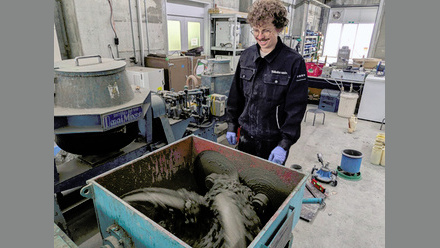
Calls for improved support for female researchers
UK Science Secretary urges research funders to back better maternity leave and flexible working support.

In an open letter, Secretary Liz Kendall is urging funders and institutions to back a voluntary charter, which includes commitments to paid maternity leave for PhD students and more support for returning to work and flexible hours.
Improved parental leave support is a key focus of the charter’s design, shaped by views from the research sector.
This involves a firm expectation that all PhD funders, including businesses, charities and other government bodies, commit to meeting or exceeding parental leave offers provided by UK Research and Innovation (UKRI).
Currently, this includes 52 weeks of maternity leave at full stipend for 26 weeks and a further 13 weeks of support, commensurate with statutory maternity pay.
The charter also addresses issues of sexual discrimination and harassment by stipulating ‘the creation of safe, inclusive working environments free from harassment or discrimination’.
This comes as the government pledges to more than double its funding for the Daphne Jackson Trust, which helps people restart their research careers.
This will increase its support from £1.7mln to £4mln per year.
The Trust provides tailored fellowship support for those who have taken a career break for two years or more for family, caring or health reasons.
Current UKRI support allows for up to 15 fully funded fellowships per year, and the additional government support will fund up to 10 new fellowships.
The Trust will also launch up to 15 new Research Technical Professional Fellowships per year – this programme retrains and reskills research technicians on their return to R&D.
Since its launch in 1985, the Trust has awarded more than 500 fellowships. Reportedly, more than 70% of former fellows remain in research for five years after their fellowship and win £3.50 of additional research funding for every £1 invested.
Examples of vital work it has supported include Professor Pia Ostergard’s lymphoedema research and Dr Catherine Elton’s work on parasite proteins and vaccine development.
A study published in Nature has found ‘even in scientific areas where women are well represented, they are up to 40% more likely than men to leave research within 20 years’.
Meanwhile, analysis from the Intellectual Property Office shows that the number of patents filed by female inventors has more than doubled over the past 29 years, but women continue to account for just over 10% of all inventors named on UK patents.
The voluntary charter and additional Daphne Jackson Trust funding seek to improve these outcomes for women in research.