

Life Cycle Assessment
One-day course providing an insight into the principles of Life Cycle Assessment and how to interpret a report
Book before 8 October to receive a 10% early bird discount on course fees.
This is in addition to the 20% discount for IOM3 members.
As global demand for clean energy solutions continues to rise, optimising the production of high-performance batteries has never been more important. This course is designed to broaden and deepen learners' understanding of the complex electrode manufacturing process chain and introduce the role of computational modelling in enhancing efficiency, scalability, and innovation in battery production.
This course is relevant to anyone involved in energy storage technologies, advanced manufacturing, or digitalisation in industrial processes. It will cover:
The full electrode manufacturing process: material selection, slurry preparation, coating, drying, and calendering
Fundamentals of computational modelling frameworks and their application to battery electrode production
Hands-on introduction to simulation tools used to model and analyse key manufacturing stages
Impact of process parameters on electrode structure, performance, and battery efficiency
Model-based and data-driven approaches to process optimisation
Bridging theoretical knowledge with practical challenges in industrial battery production
This course is relevant to anyone working or studying in the field of battery technologies and advanced manufacturing, including postgraduate students, early-career researchers, industry professionals, engineers, and academics involved in energy storage, electrode production, or process optimisation.
* This rate is available to Student & Apprentice, and Associate (AIMMM) member grades.
Course fees are subject to VAT at 20% where applicable.

University of Leeds

One-day course providing an insight into the principles of Life Cycle Assessment and how to interpret a report

One-day course introducing the main principles for designing for sustainability and circularity
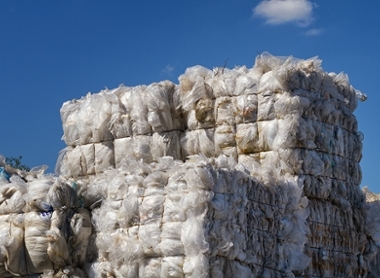
Exploring the context, principles, influences & considerations of designing, specifying & selecting more circular packaging


Specialising in artificial intelligence and machine vision for micro-structured materials characterisation. His research combines deep learning, computer vision, and physics-informed neural networks to advance porous media analysis, flow simulation, and data-driven materials design across chemical engineering applications. Leading the DataFlowLab (www.DataFlowLab.org) research group, Arash develops novel AI frameworks for 3D image segmentation, automated morphological analysis, and multi-scale modelling of transport phenomena in heterogeneous materials including fuel cell electrodes, solid oxide cells, and separation membranes. His work bridges computational modelling with experimental characterisation, including current industry collaborations on AI-assisted powder analysis and membrane pore structure reconstruction. Arash has created numerous open-source tools for pore network extraction and data-driven materials characterisation, translating cutting-edge AI research into practical solutions for energy materials discovery and microstructure-property relationships in complex porous systems.